




What to Look for During a Home Showing: 2026 Buyer Checklist
A Grounded, System-by-System Field Guide to Inspecting Roofs, Foundations, Moisture Clues, Mechanicals, Layout, and Usable Space
CRITICAL RULE: A Home Showing Is NOT a Professional Home Inspection
During a 20- to 30-minute private home tour, your job as a buyer is to observe visible clues, take structured notes, ask clarifying questions, and decide whether the property warrants the next step. Qualified licensed inspectors and specialized licensed contractors perform physical system tests, code compliance reviews, and technical diagnostics later under contractual inspection contingency rights.
Touring a prospective home is exciting. Buyers step inside and immediately notice staging, new light fixtures, fresh wall colors, quartz kitchen islands, and sunlight pouring through double-hung windows. Those aesthetic elements certainly create emotional warmth, but they rarely represent the true drivers of ongoing homeownership cost.
The most expensive and complex aspects of any house are often the quietest: roof integrity, exterior lot drainage, foundation movement, furnace and air conditioning condition, water heater life, plumbing flow, electrical panel capacity, and the day-to-day usability of the floor plan.
When you use a practical home showing checklist for buyers, you look past cosmetic staging. You evaluate how the property actually lives, identify items that require professional inquiry, and ensure you never submit an offer blind to major capital systems.
The Buyer Showing Framework
“LOOK • ASK • NOTE • VERIFY — Then decide whether the property deserves the next step.”
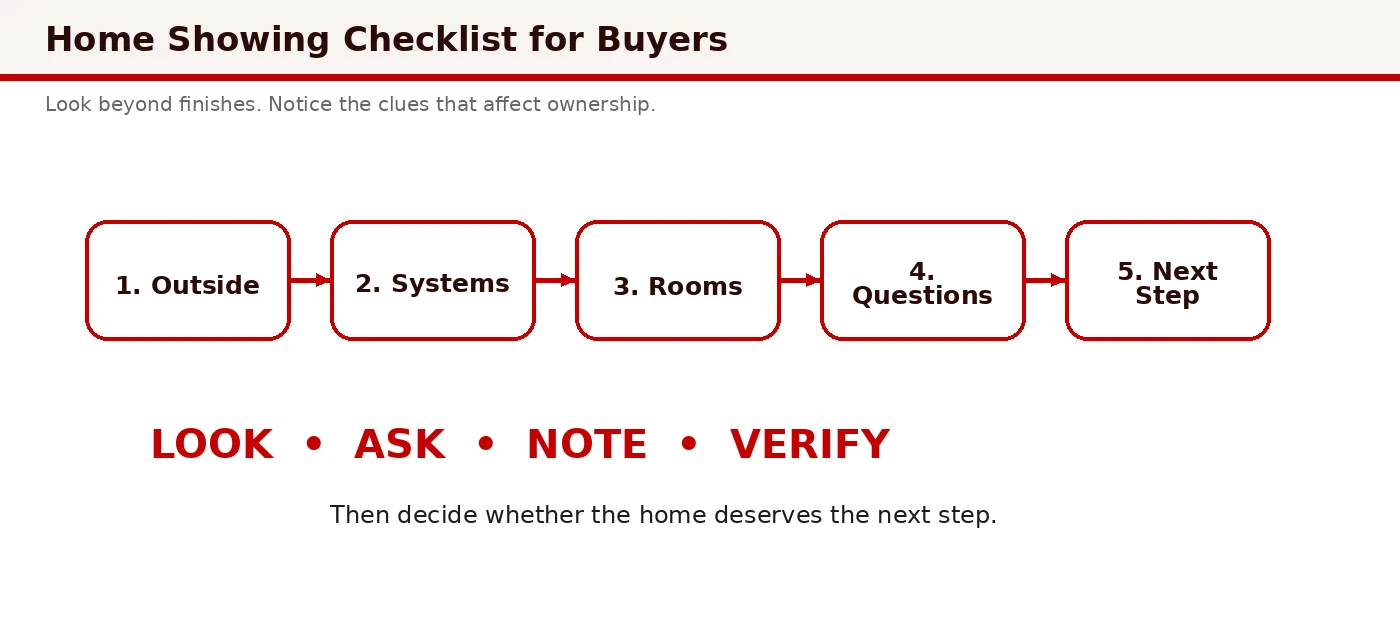
1. Start Outside Before You Walk Inside
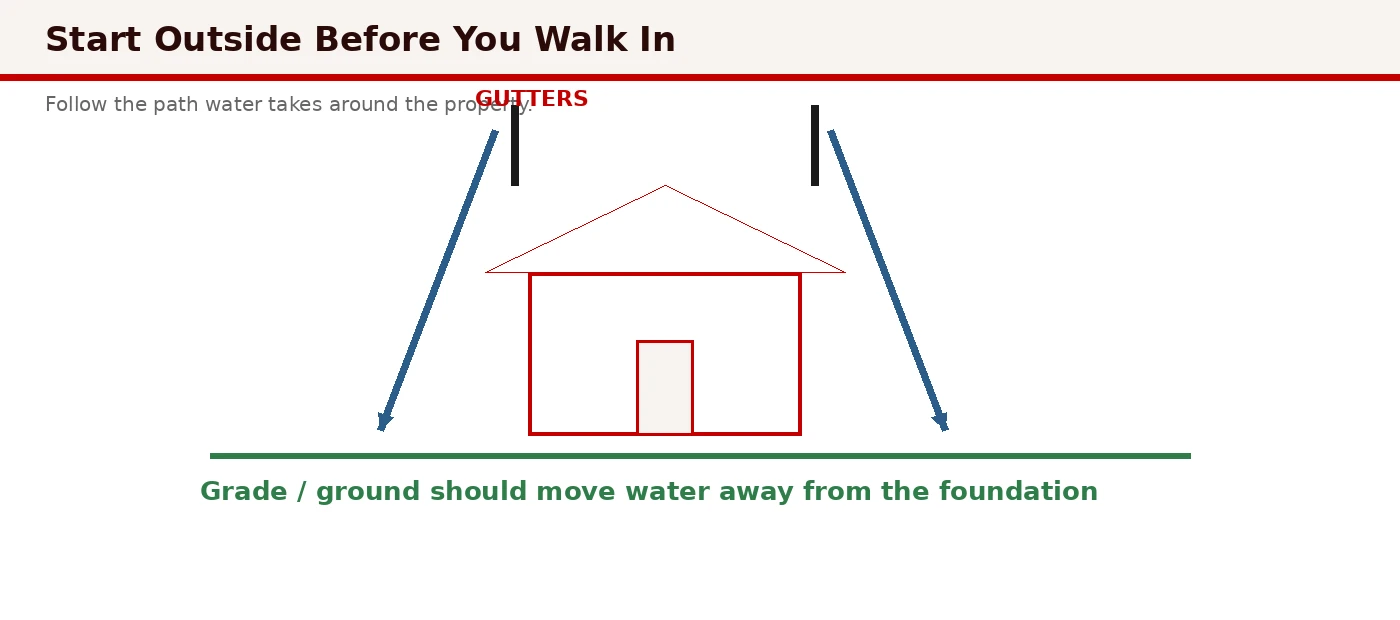
First StepThe exterior reveals grading, water flow, and general maintenance before you ever see the kitchen.
Most buyers rush immediately from their car to the front door, eager to see the interior décor. Disciplined buyers do the opposite: they arrive five minutes early, step back toward the street, and examine the property’s physical envelope.
Stand across the street and observe the home as a whole structure:
- Roofline plane: Does the roof ridge appear straight, or does it sag between rafters?
- Gutters & downspouts: Are downspouts connected and extending at least 5 to 6 feet away from the foundation walls?
- Exterior walls: Are siding panels straight, or is brickwork showing mortar cracks?
- Lot grading: Does the soil gently slope downward away from the house, or does rainwater flow directly toward the basement walls?
- Mature trees: Are heavy tree branches hanging directly over shingles, or are root systems planted immediately beside the foundation?
2. Look Up at the Roof
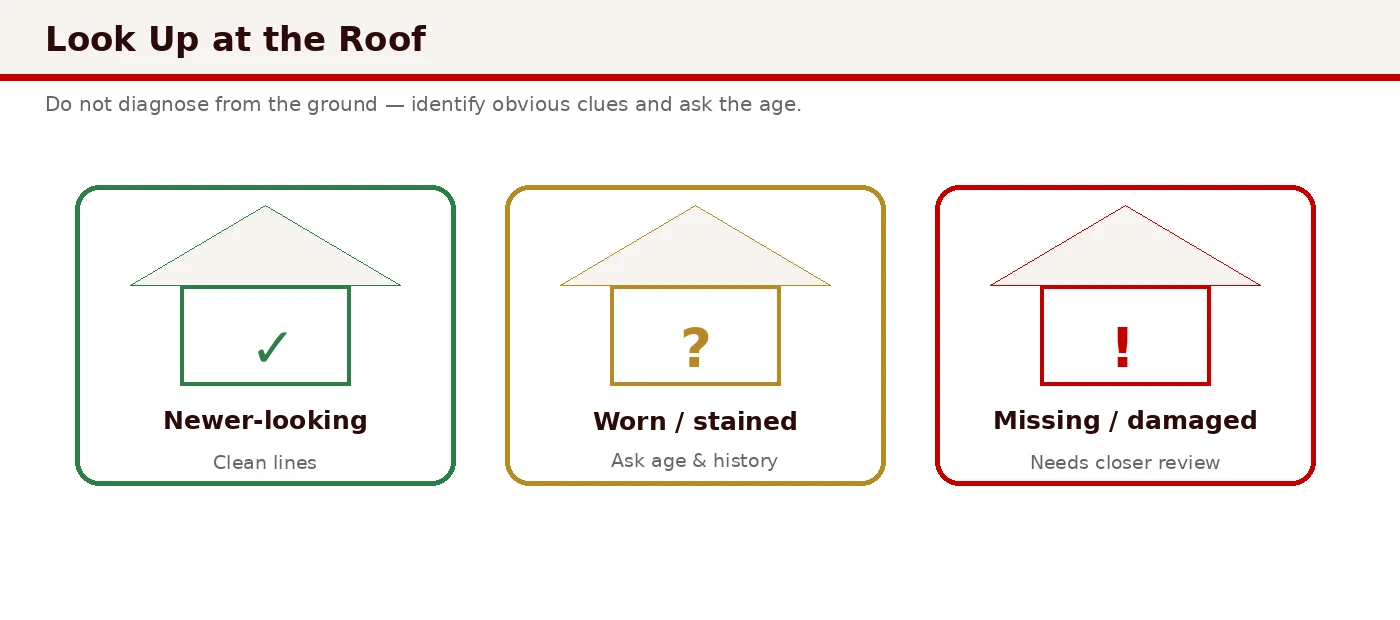
A roof is one of the most critical weather shields on any home. Collect ground-level visual clues.
Replacing an asphalt shingle or architectural roof on a typical Chicagoland single-family home represents a major capital investment. While you can never conduct a formal roof inspection from the ground, you can easily spot indicators of roof wear:
Visible Clues to Note
- Curling, cupping, or missing shingle tabs
- Heavy dark algae staining, lichen, or moss growth
- Uneven roof valleys or patchy mismatched shingles
- Loose or rusted metal flashing around chimneys and vents
Questions to Inquire
- What is the approximate age of the current roof layer?
- Was it a complete tear-off or a second overlay layer?
- Is there any transferable warranty on materials or labor?
- Has there been any past storm or hail claim documented?
3. Check the Foundation and Exterior Walls
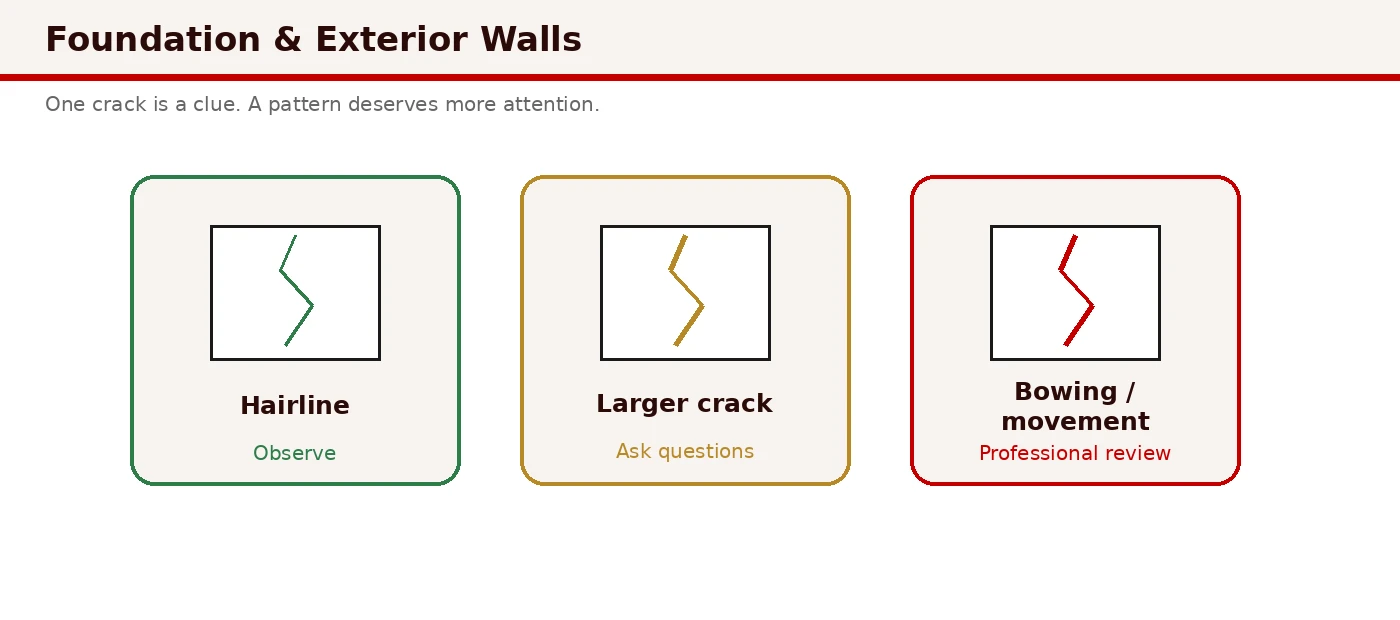
Small hairline cracks are common in older settling homes. Patterns and displacement deserve investigation.
Concrete foundations, concrete block (CMU), and brick masonry support the entire structural load of the home. During seasonal freeze-thaw cycles in northern Illinois, soil expands and contracts, which frequently produces harmless hairline settling cracks.
However, certain patterns warrant careful documentation:
- Stair-step cracks: Diagonal stair-step cracks through brick mortar or block joints often signal differential foundation settlement.
- Horizontal cracks: Horizontal cracks in basement foundation walls can indicate lateral soil pressure pushing inward.
- Displacement or bowing: If one side of a crack is pushed outward beyond the other, or if the wall bows inward, that signals movement rather than minor hairline shrinkage.
- Soil-to-siding contact: Siding or brick veneer should ideally clear the surrounding ground by 4 to 6 inches to deter moisture intrusion and wood rot.
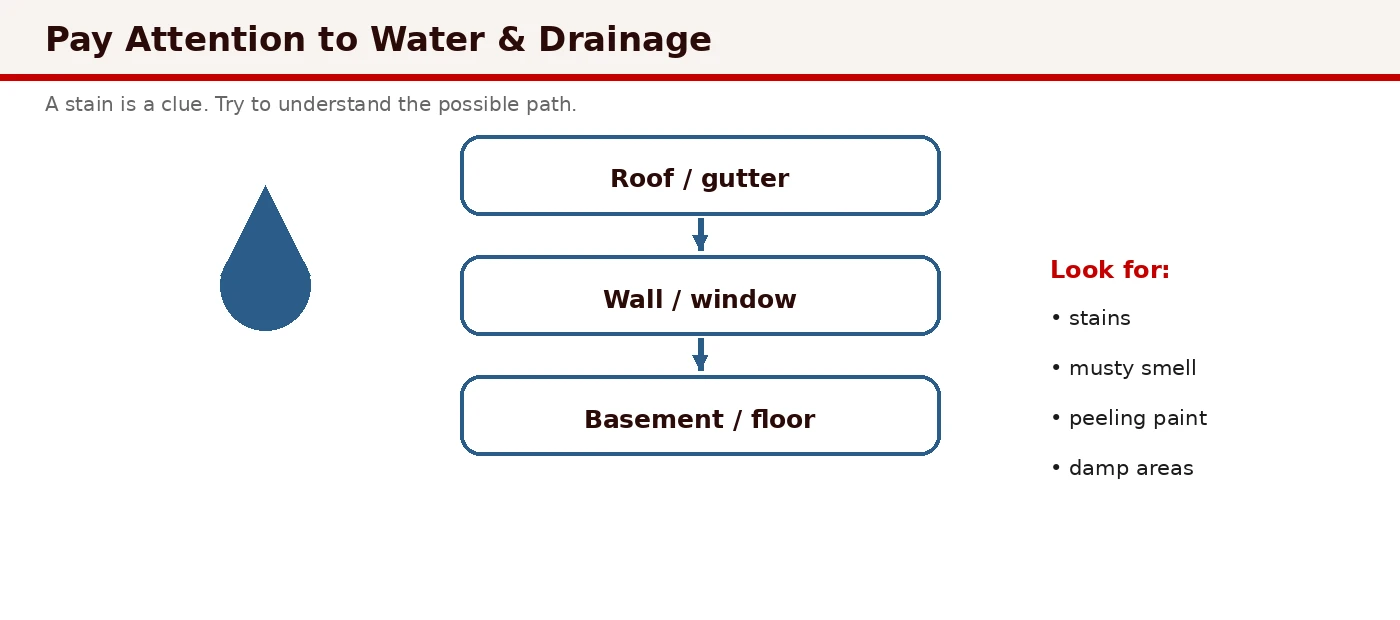
4. Pay Attention to Water and Drainage
Top PriorityWater is the single most common cause of hidden property damage. Use your eyes, nose, and hands.
Whether you are touring an entry-level starter home in Des Plaines or a larger property in Schaumburg, moisture history tells you how well the home has been protected from precipitation and plumbing overflows.
Be alert for these key indicators:
Ceiling & Wall Discoloration
Yellow, brown, or water-ring stains on drywall under second-floor bathrooms or roof eaves indicate moisture entry. Do not assume a dry stain is an old, fully resolved leak—ask what caused it and when repairs were made.
Musty Smells & Dampness
Your nose is often the most sensitive instrument in a home. A damp, earthy odor immediately signals persistent moisture, poor ventilation, or hidden mold behind drywall or paneling.
Isolated Fresh Paint
If an entire basement or ceiling is aged, but one square corner has bright white fresh primer, look closely. Was it applied to conceal a recent water leak right before putting the home on the market?
5. Spend Extra Time in the Basement
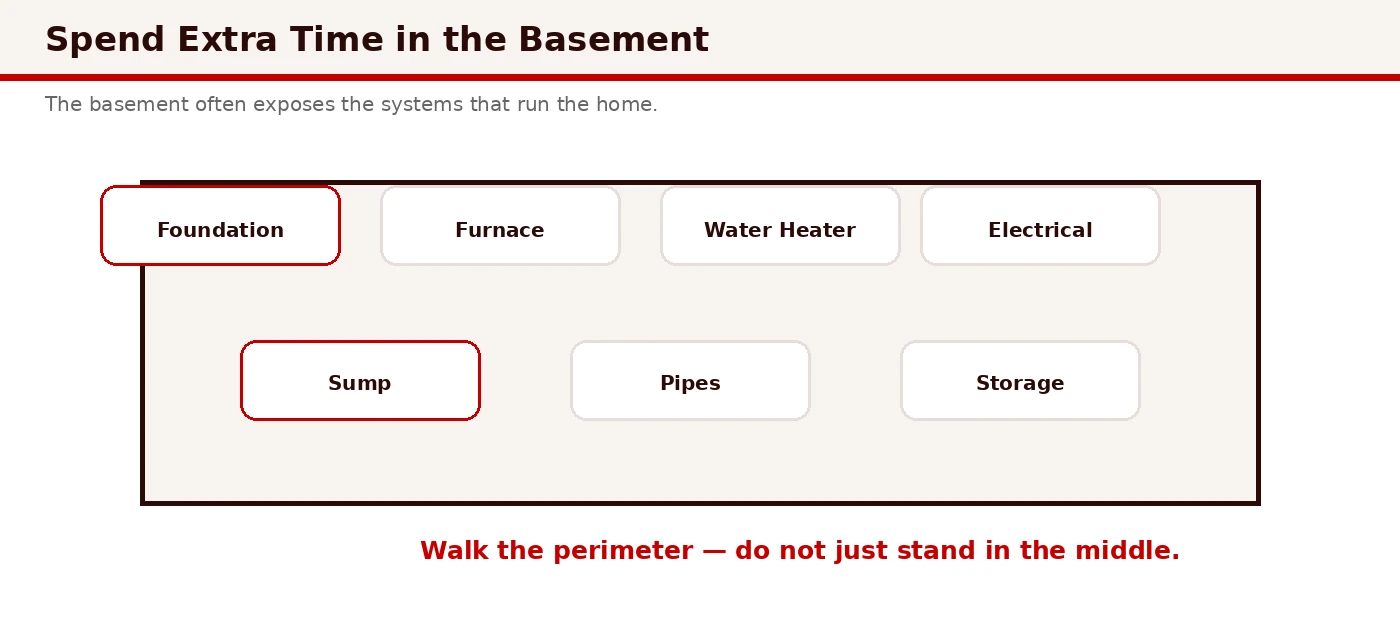
The basement often tells the true structural and mechanical story of the entire house.
While finished upper levels display pretty countertops and staged furniture, the unfinished or utility portion of the basement exposes the home’s skeleton: floor joists, subflooring, ductwork, plumbing stacks, gas lines, and foundation footings.
Do not just stand in the center of the recreation room. Walk around the unfinished perimeter when accessible:
- Look up at floor joists: Check under second-floor bathrooms or kitchens for signs of past plumbing drips or rotted subfloor plywood.
- Look at the bottom of walls: Check for efflorescence—a white powdery mineral residue left behind when moisture wicks through concrete and evaporates.
- Check storage boxes: Are seller storage boxes resting directly on bare concrete, or are they propped up on wooden pallets because the floor gets damp during spring rains?
6. Find the Sump Pump
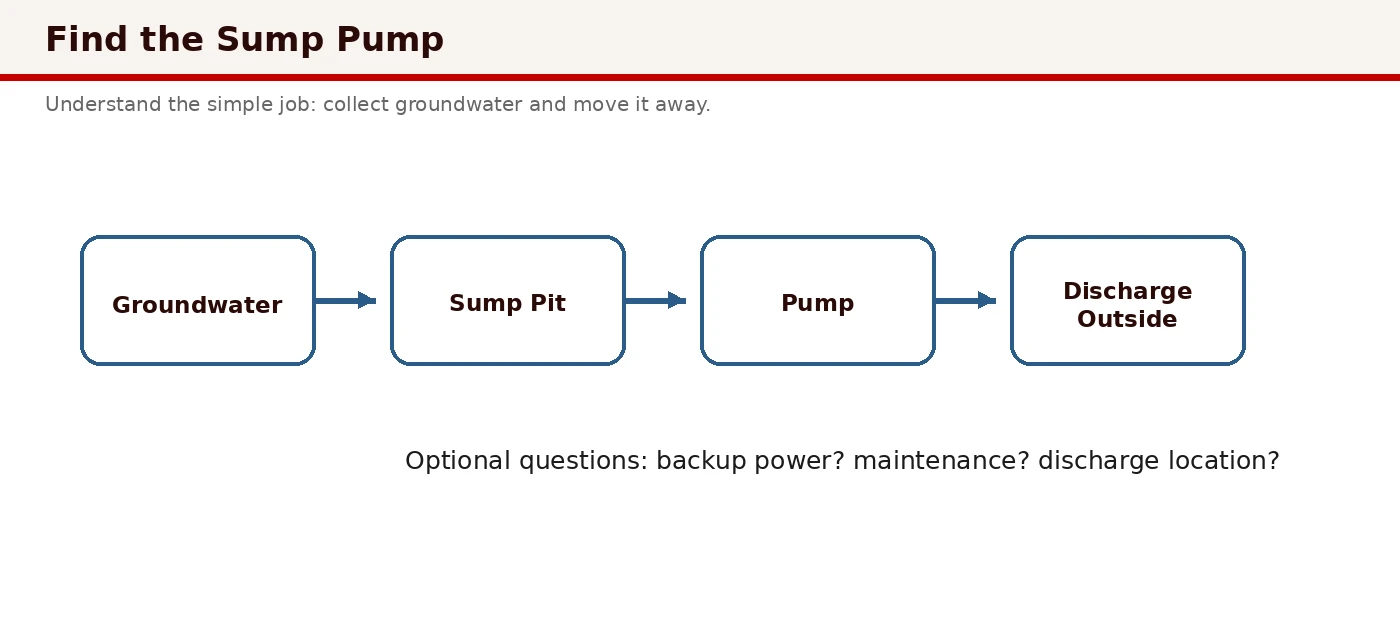
In Chicagoland basements, the sump pump is the primary defense against rising water tables.
Across the northern Illinois suburbs, deep clay soil and seasonal snowmelt require active subterranean water management. A sump system collects perimeter drain tile water into a pit and pumps it away from the home.
7. Check the Furnace and Air Conditioner
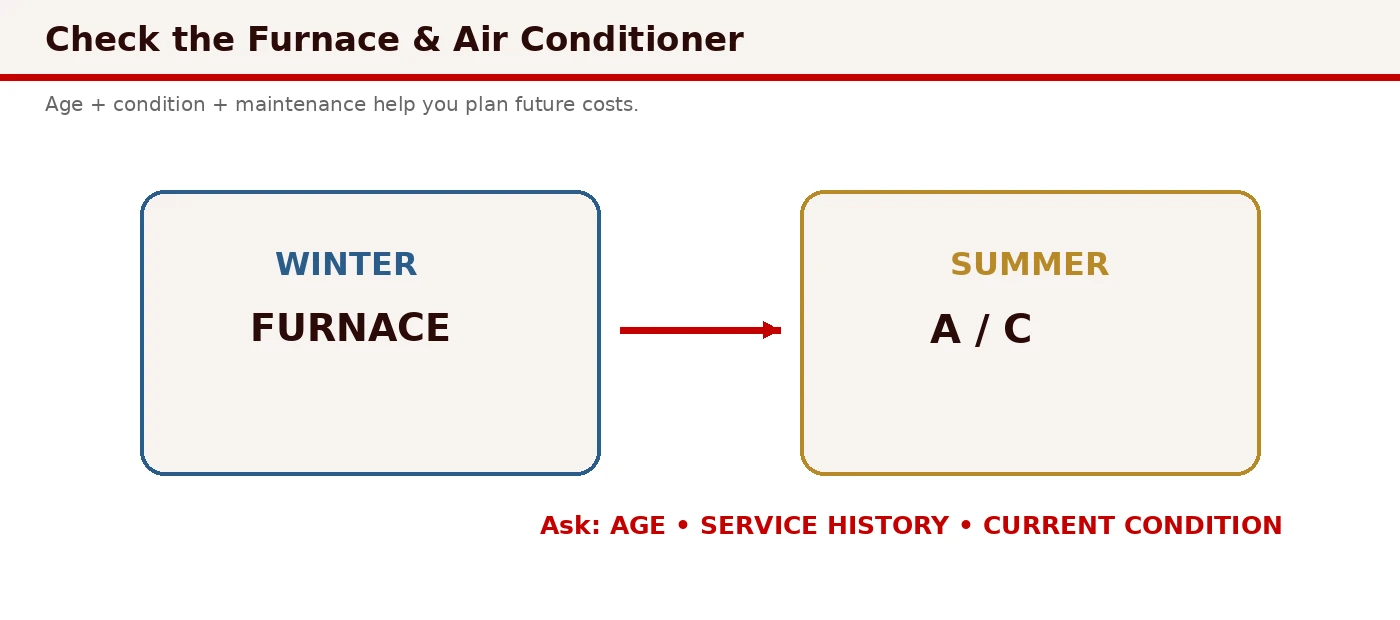
Heating and cooling equipment represents one of the largest single mechanical expenditures.
Suburban Chicago homes demand reliable heating during sub-zero January cold snaps and powerful cooling during humid July heat waves. During your showing:
- Locate the manufacturer data plate: Look for the serial number or manufacture year printed on the metal label inside the furnace cabinet.
- Check HVAC service tags: Look for technician maintenance stickers indicating annual fall furnace cleaning and spring AC checkups.
- Examine the air filter: A clean filter suggests a conscientious homeowner who maintains equipment regularly.
- Outdoor AC condenser: Walk outside to the compressor unit. Are fins bent, rusted, or buried under overgrown bushes?
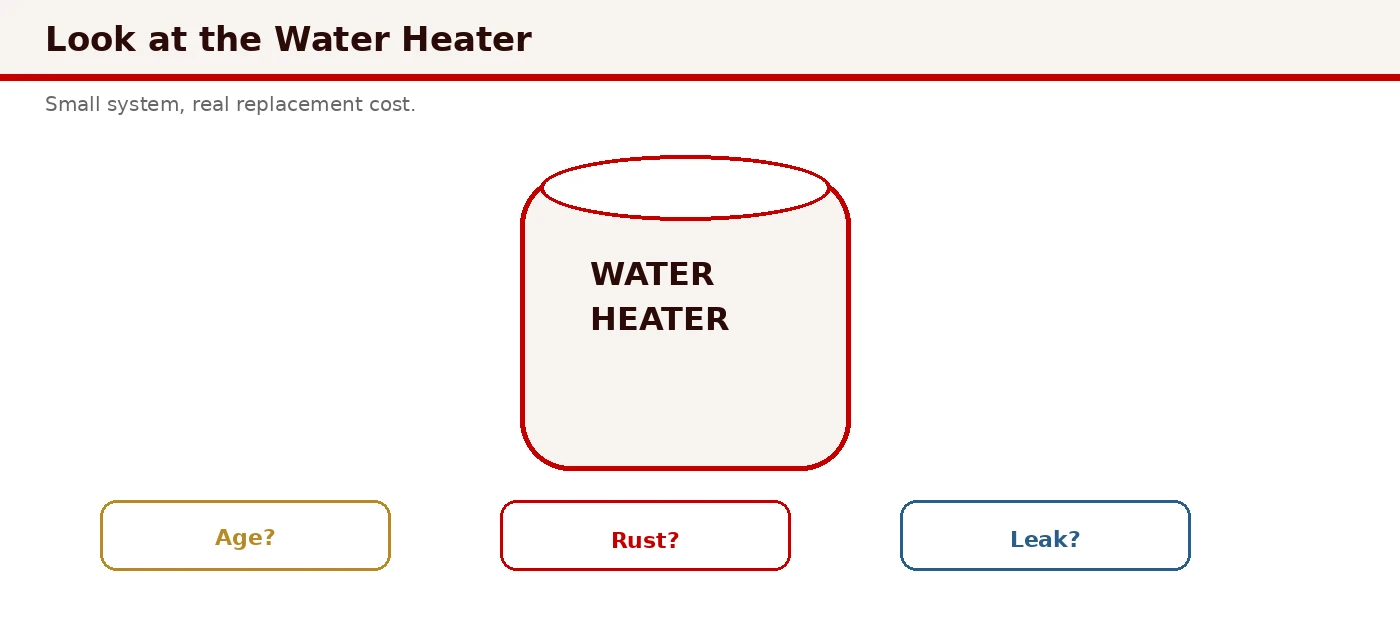
8. Look at the Water Heater
A smaller mechanical component that still impacts daily comfort and replacement budgeting.
Whether gas-fired or electric, conventional tank water heaters operate continuously under pressure. Check the manufacturer sticker for the installation date, examine the drain valve at the base for rust or mineral scaling, and check the expansion tank and emergency overflow discharge pipe.
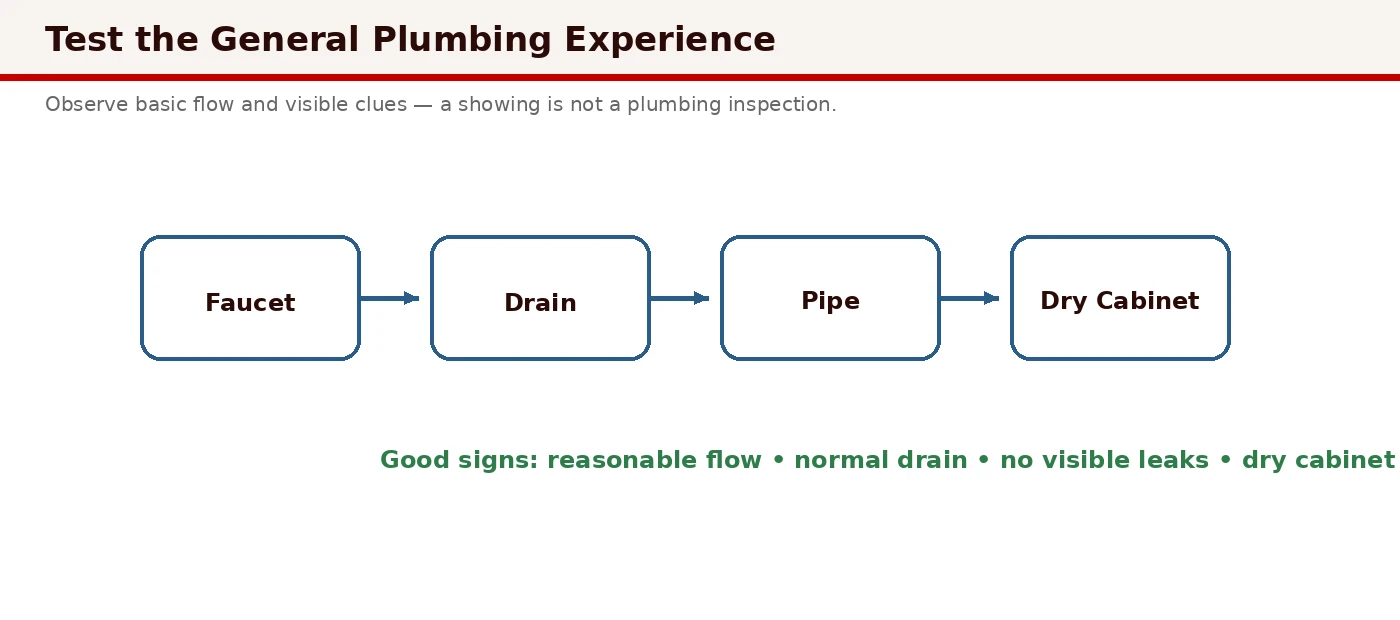
9. Test the General Plumbing Experience
Basic, respectful observations can reveal low pressure, slow drains, or cabinet leaks.
You are a prospective buyer touring a home, so always be respectful of the owner's property. However, running a bathroom faucet for 15 seconds to check water pressure and observing how quickly water drains is standard practice:
- Water pressure & volume: Turn on the primary shower or sink. Does water flow strongly, or does pressure drop noticeably when a toilet is flushed?
- Drainage speed: Does sink water swirl away immediately, or does it back up and drain slowly?
- Under-sink vanities: Open kitchen and bathroom vanity doors. Look for damp plywood, water stains, mold, or active drip buckets.
- Visible supply lines: Are pipes copper, PEX, galvanized steel, or older lead service lines?
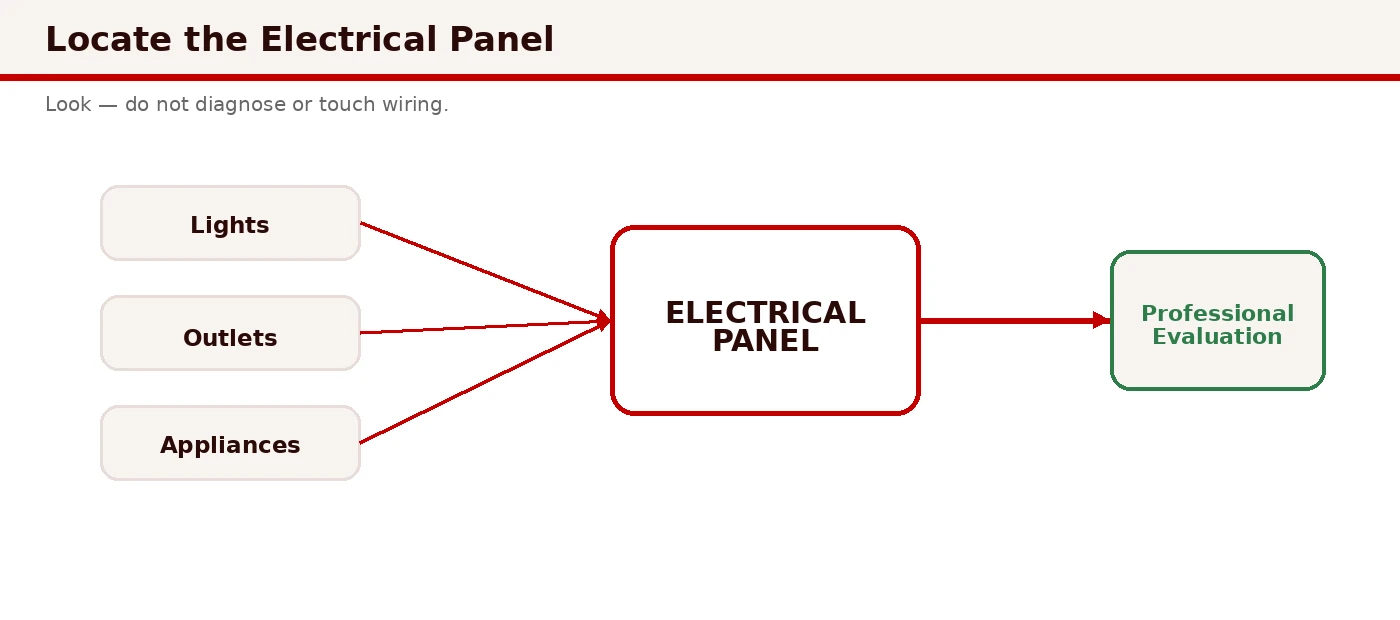
10. Locate the Electrical Panel
Safety NoticeLook at the panel location, service capacity, and general organization. Never remove the panel cover.
Modern households rely on substantial electrical capacity to power central air conditioning, kitchen appliances, home offices, and EV vehicle chargers. Locate the main electrical breaker panel:
- Panel type: Does the home use modern circuit breakers or outdated screw-in glass fuses?
- Amperage rating: Older 60-amp or 100-amp panels may require upgrades to support modern appliances or EV chargers compared to 200-amp service.
- Labeling: Are breakers clearly mapped to rooms, or is the panel unorganized?
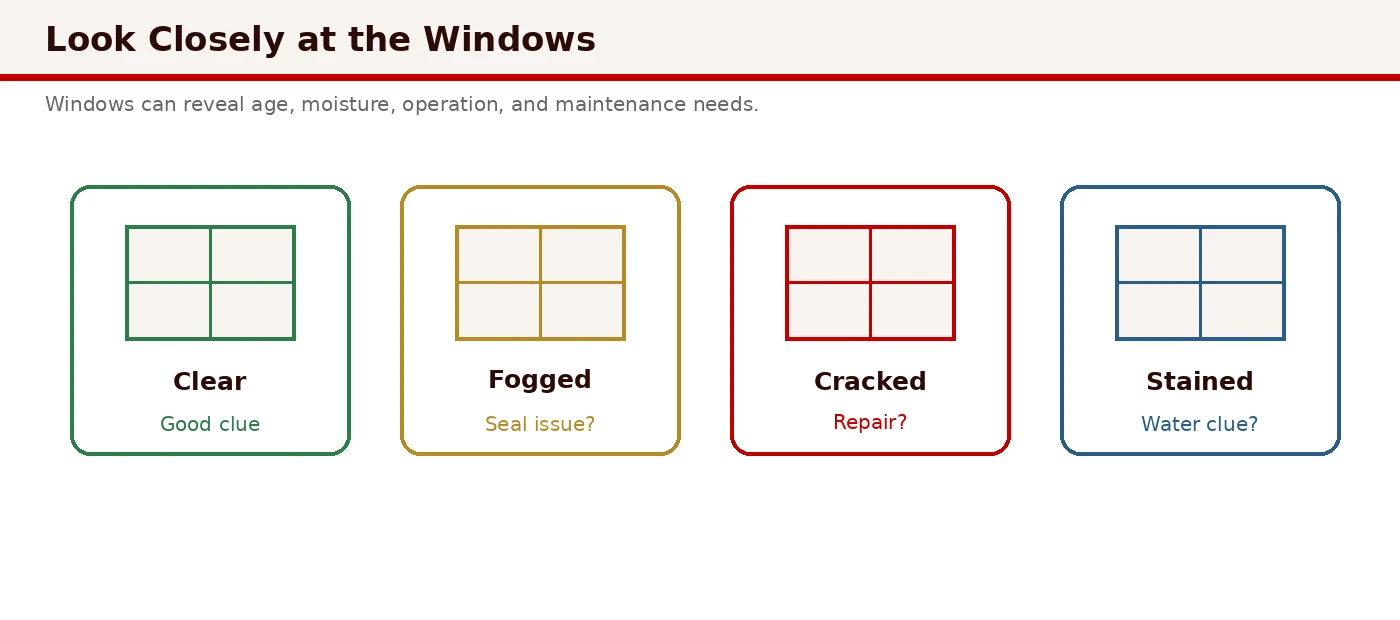
11. Look Closely at the Windows
Windows provide vital clues regarding thermal insulation, moisture seals, and upcoming replacement costs.
Replacing 20 to 30 custom windows throughout a home is a substantial expense. During your showing:
- Broken glass or cracked panes: Look for impact cracks or cracked corners.
- Fogged double-pane glass: If you notice hazy moisture or condensation trapped permanently between double-pane glass, the hermetic perimeter seal has failed.
- Wood rot on exterior sills: Press lightly on wooden window sills to check for soft, decayed wood.
- Latch and slider operation: Do windows unlock and slide smoothly, or are they painted shut?
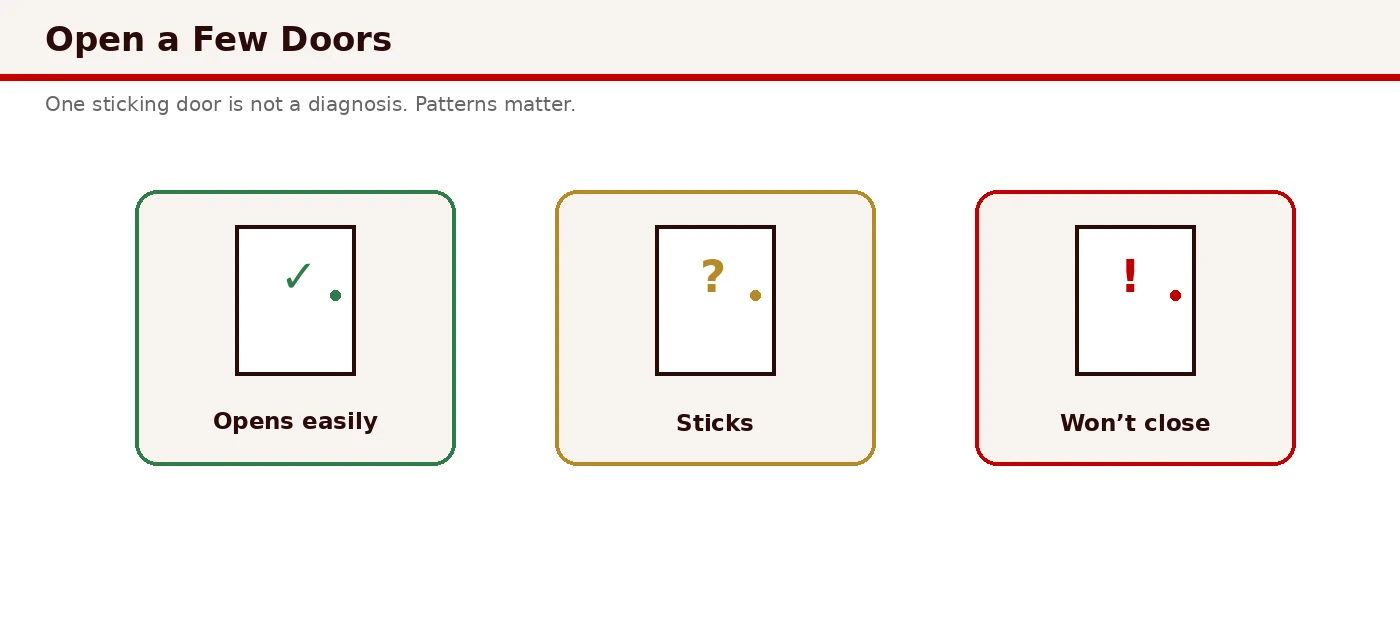
12. Open a Few Doors
Doors offer subtle indicators of frame alignment, weather stripping, and structural settling.
Walk through the house opening and closing bedroom, bathroom, closet, and exterior entry doors:
- Do doors latch cleanly? Or do they bounce open when closed gently?
- Floor rubbing or scraping: Does the bottom edge scrape heavily against hardwood or carpet?
- Door jamb squareness: Look at the gap between the door and the frame. Is the reveal uniform, or is the gap wide at the top and pinched tight at the bottom?
- Exterior weather sealing: Check exterior doors for drafts, daylight showing through seals, and deadbolt alignment.
13. Look at Floors and Ceilings
Look past attractive rug styling and examine the true plane above and below you.
Pay attention to how the floor feels beneath your shoes as you walk from room to room:
- Noticeable slopes: Do you feel yourself walking downhill toward the center of the house or an exterior wall?
- Bounce and soft spots: Does the floor feel solid, or does it flex and bounce excessively when you walk?
- Ceiling sagging: Look across ceilings at an angle. Are drywall seams cracking, or are ceiling joists bowing downward?
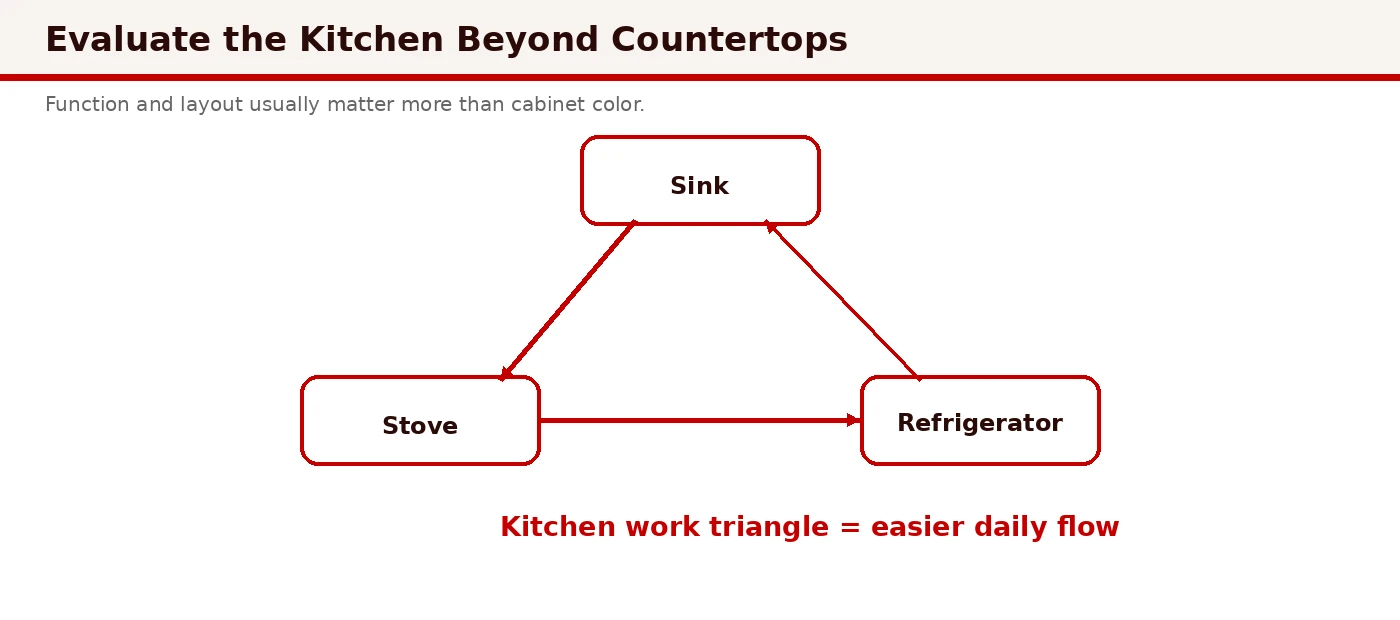
14. Evaluate the Kitchen Beyond the Countertops
Kitchen functionality matters vastly more than cosmetic cabinet hardware.
Staged kitchens look stunning with stainless steel bowls and fresh flowers on polished quartz counters. But when you prepare real meals every day, layout dictates your happiness:
The Work Triangle
Can you move smoothly between the refrigerator, sink, and cooktop without squeezing past an oversized island or blocking the main family walkway?
Counter & Storage Space
Is there uninterrupted counter space beside the stove and refrigerator to stage groceries and prepare food, plus an actual pantry for canned goods?
Outlets & Small Appliances
Are there enough GFCI outlets along backsplashes for your coffee maker, blender, microwave, and toaster without sharing power strips?
Range Hood Ventilation
Does the range hood exhaust outdoors through ductwork, or does it recirculate smoke and cooking aromas back into the kitchen?
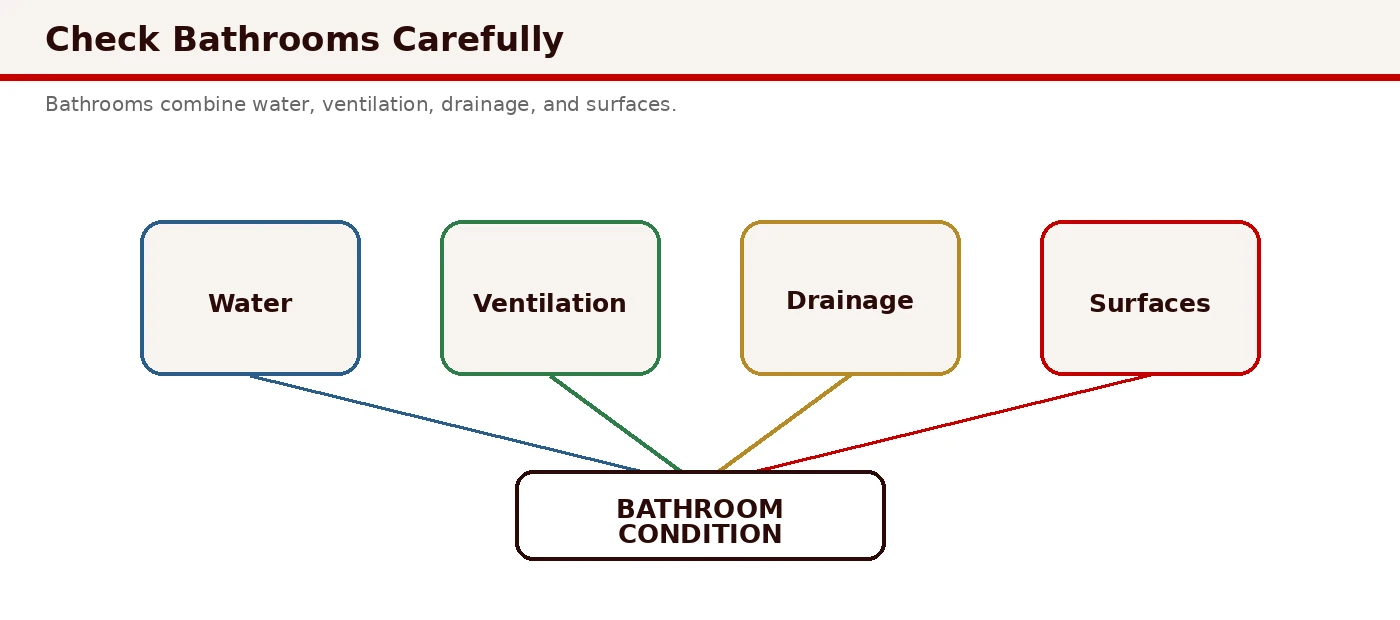
15. Check Bathrooms Carefully
Bathrooms concentrate moisture, high plumbing pressure, and delicate tile waterproofing.
Examine the condition of wet zones in each bathroom:
- Tile grout & caulk: Look at shower corners, tub surround seams, and floor baseboards. Is caulk mildewed, cracking, or missing?
- Toilet stability: Gently nudge the toilet bowl with your knee. Is it firmly anchored to the floor, or does it rock, indicating a deteriorated wax ring?
- Exhaust ventilation: Is there a functioning exhaust fan that vents humid shower air outside, or is moisture condensing on ceilings?
- Vanity condition: Look around the sink faucet base for mineral buildup and check drawers for smooth sliding.
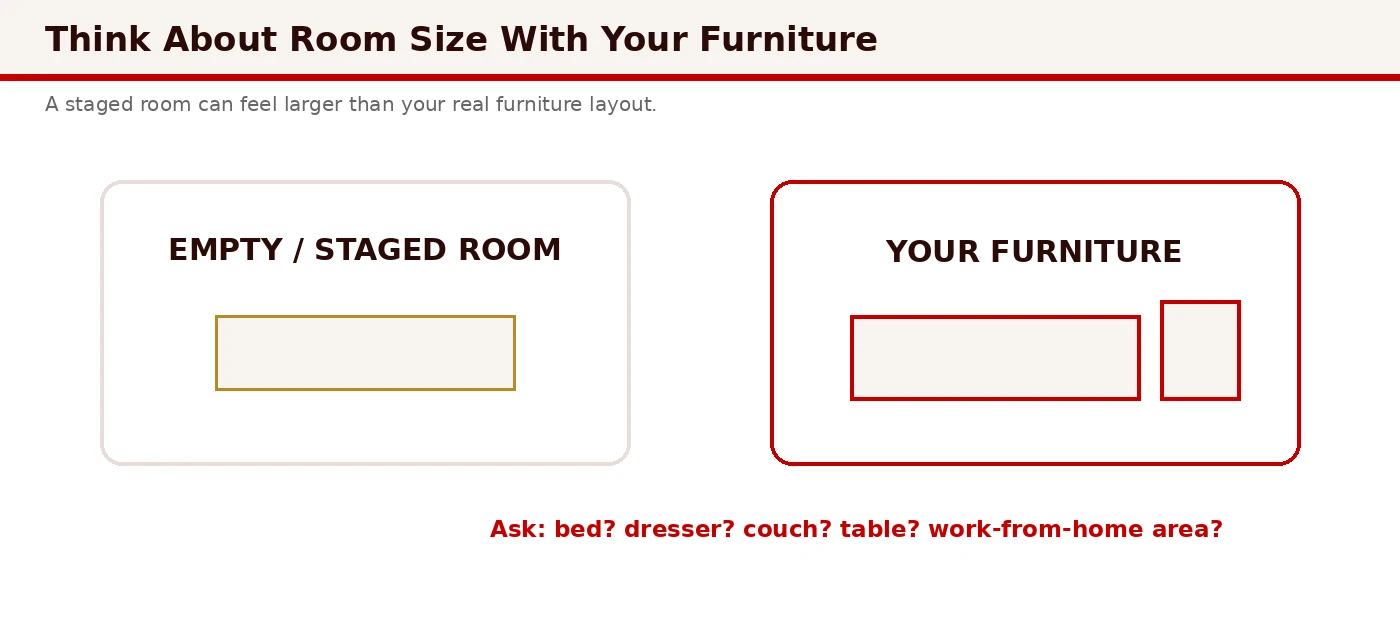
16. Think About Room Size With Your Furniture
Professional staging is designed to make spaces appear larger than they will feel with your real belongings.
Stagers frequently use undersized beds, armless sofas, glass tables, and omit dressers to maximize open floor space. Mentally place your real furniture into each space:
- Primary Bedroom: Will your King-size bed, two nightstands, and tall dresser fit without blocking closet doors or floor vents?
- Living Room: Where will your sectional couch sit? Is there a logical, glare-free wall for the television?
- Dining Space: Can you pull chairs out from the table without bumping into the back wall or kitchen island?
- Home Office: Is there a quiet room with dedicated desk and monitor space for remote work?
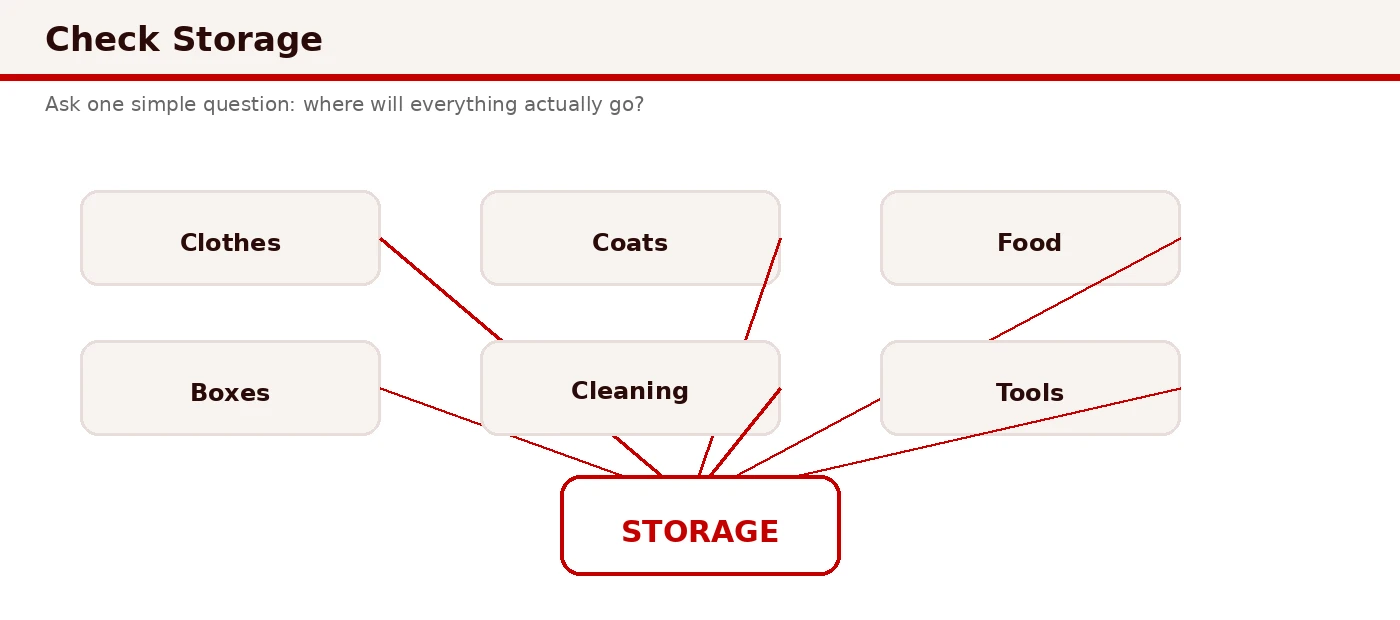
17. Check Storage
Storage is rarely memorable during a fast tour, but lack of storage becomes a daily frustration.
Open every closet door and ask yourself where your belongings will live:
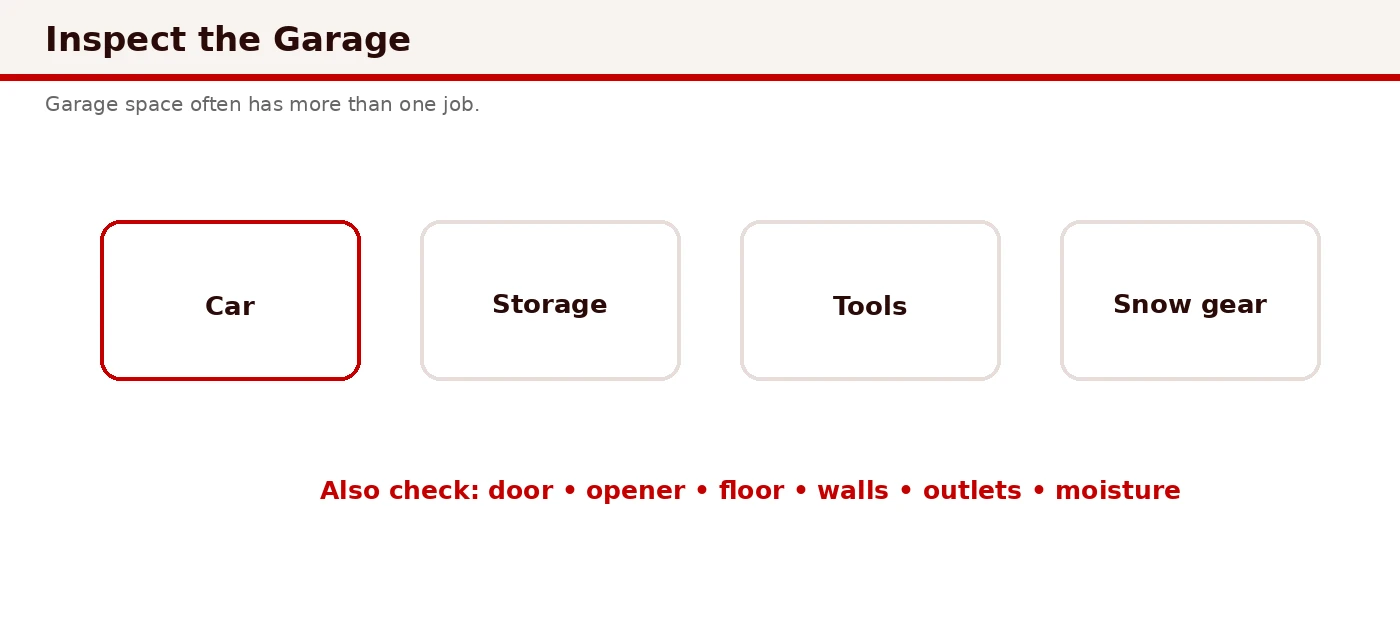
18. Inspect the Garage
A suburban garage must handle vehicles, winter gear, lawn tools, and trash bins.
Do not assume a listing marked "2-car garage" will comfortably park two modern SUVs:
- Actual depth and width: Measure or estimate whether your vehicles can park inside while still allowing car doors to open.
- Concrete floor condition: Look for large settling cracks, heaving slabs, or oil/chemical staining.
- Garage door opener & safety sensors: Are automatic openers installed with functioning photo-eye safety reversal sensors?
- Overhead storage potential: Is ceiling clearance tall enough for hanging storage racks or kayak lifts?
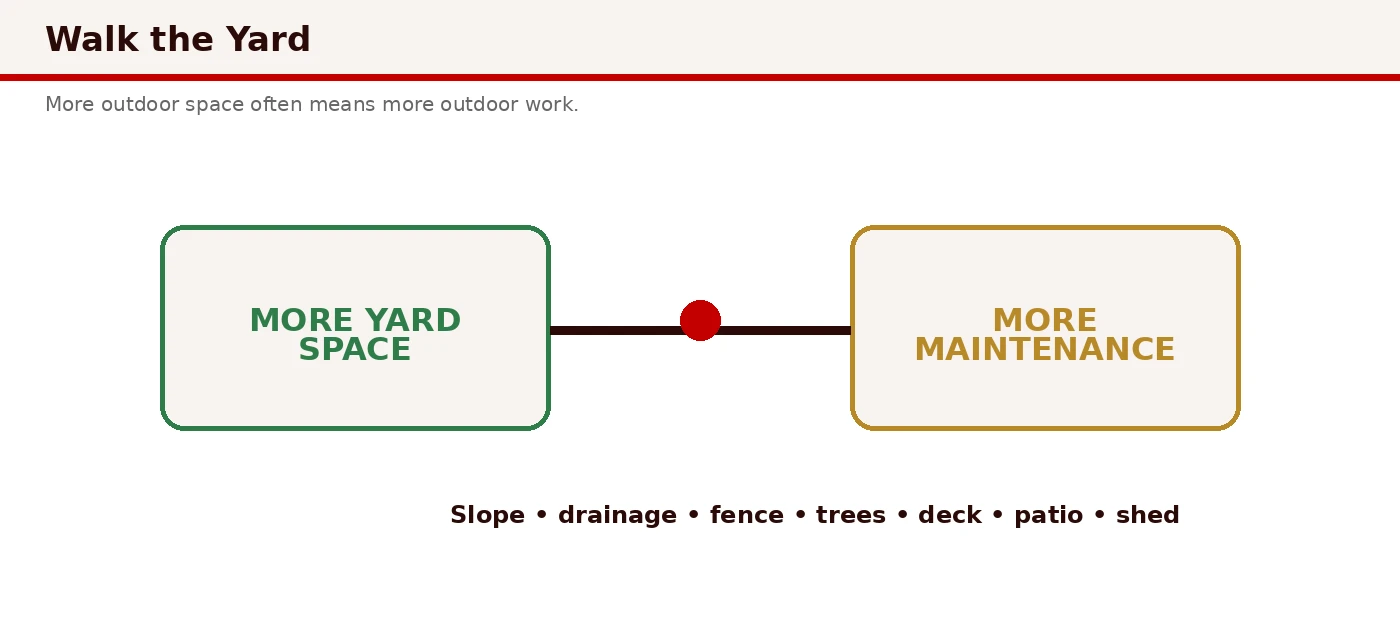
19. Walk the Yard
Outdoor space offers privacy and recreation, but brings ongoing maintenance obligations.
Walk the property lines and examine the condition of exterior lot features:
- Fence condition: Are fence posts solid, or are wood pickets rotting and leaning? If you have pets or children, will the yard require fencing repairs?
- Deck & patio stability: Walk across outdoor decks. Look for soft wood planks, loose handrails, and inspect ledger board attachment to the house.
- Retaining walls & slopes: Are landscape retaining walls bulging under hydrostatic soil pressure?
- Maintenance workload: Consider mowing time, leaf raking, seasonal weed control, and snow removal for large outdoor areas.
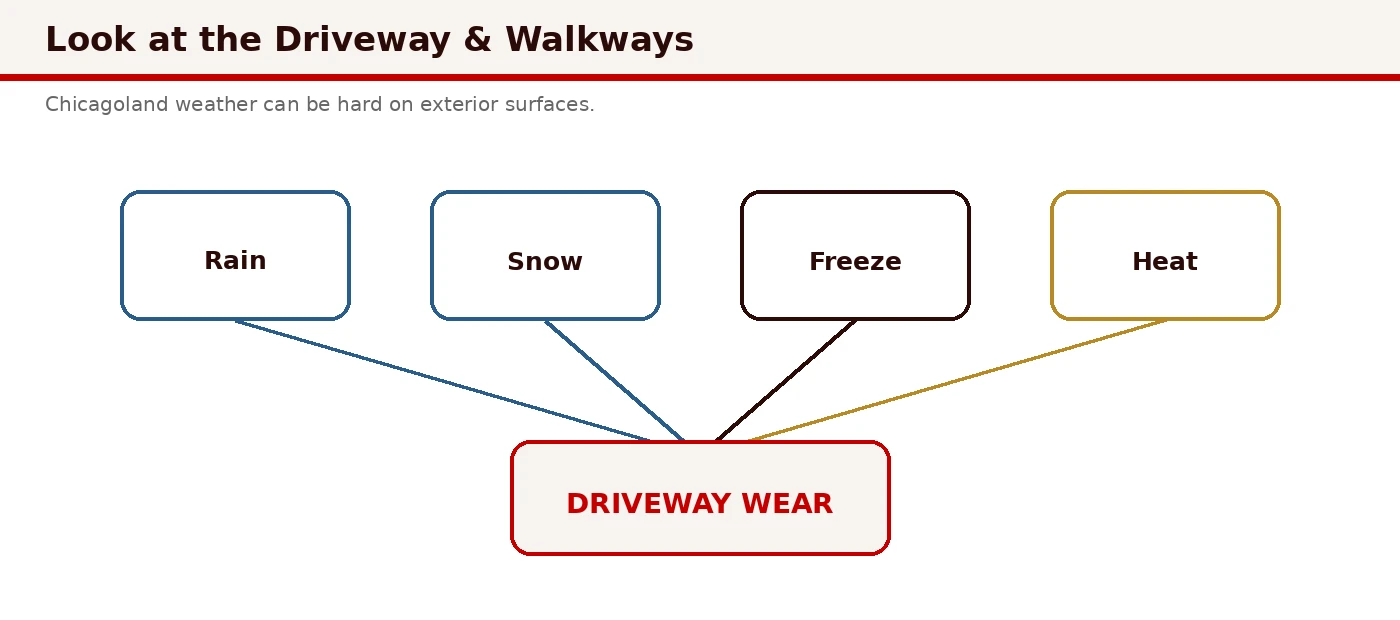
20. Look at the Driveway and Walkways
Freeze-thaw cycles, salt, and heavy vehicles take a toll on concrete and asphalt.
Check the condition of driveways, front walkways, and exterior steps:
- Trip hazards & sunken slabs: Have sidewalk slabs settled unevenly, creating 1- to 2-inch trip ledges?
- Cracks & spalling: Is concrete surface crumbling from winter de-icing salts or roots?
- Driveway slope: Does the driveway slope down toward the garage doors? If so, is there a trench drain installed to catch rain before it enters the garage?
21. Understand the Layout and Circulation
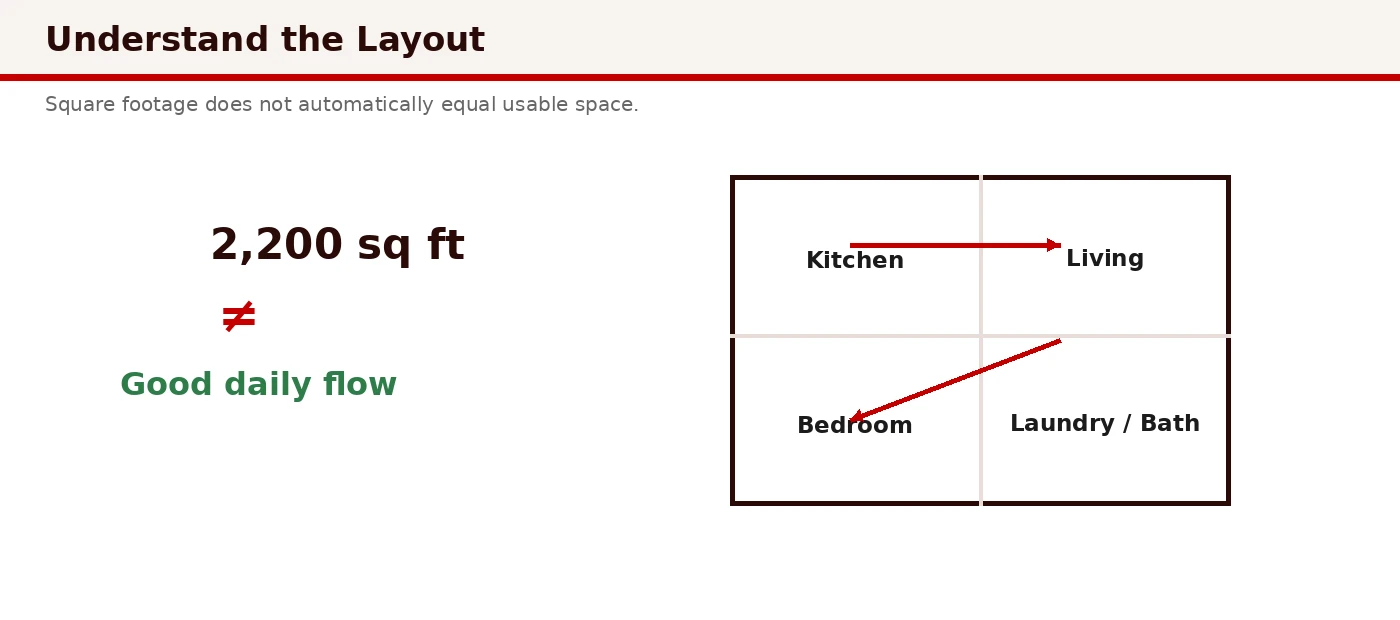
Square footage on a listing sheet does not equal usable, functional living space.
A 2,200 sq. ft. home with an intuitive, open layout often feels significantly more spacious and enjoyable than a 2,800 sq. ft. house with awkward hallways, wasted vestibules, and disjointed stairways.
- Bedroom privacy: Are secondary bedrooms clustered right outside the living room, or do they offer private buffer hallways?
- Laundry room location: Is laundry in the basement requiring two flights of stairs, or is it conveniently located on the second floor near bedrooms?
- Bathroom access for guests: Can guests use a powder room without walking through a bedroom?
- Mudroom / Garage entry: When entering from the garage with arms full of groceries, is there space to take off boots without jamming into the kitchen table?
22. Listen to the House: The 30-Second Silence Test
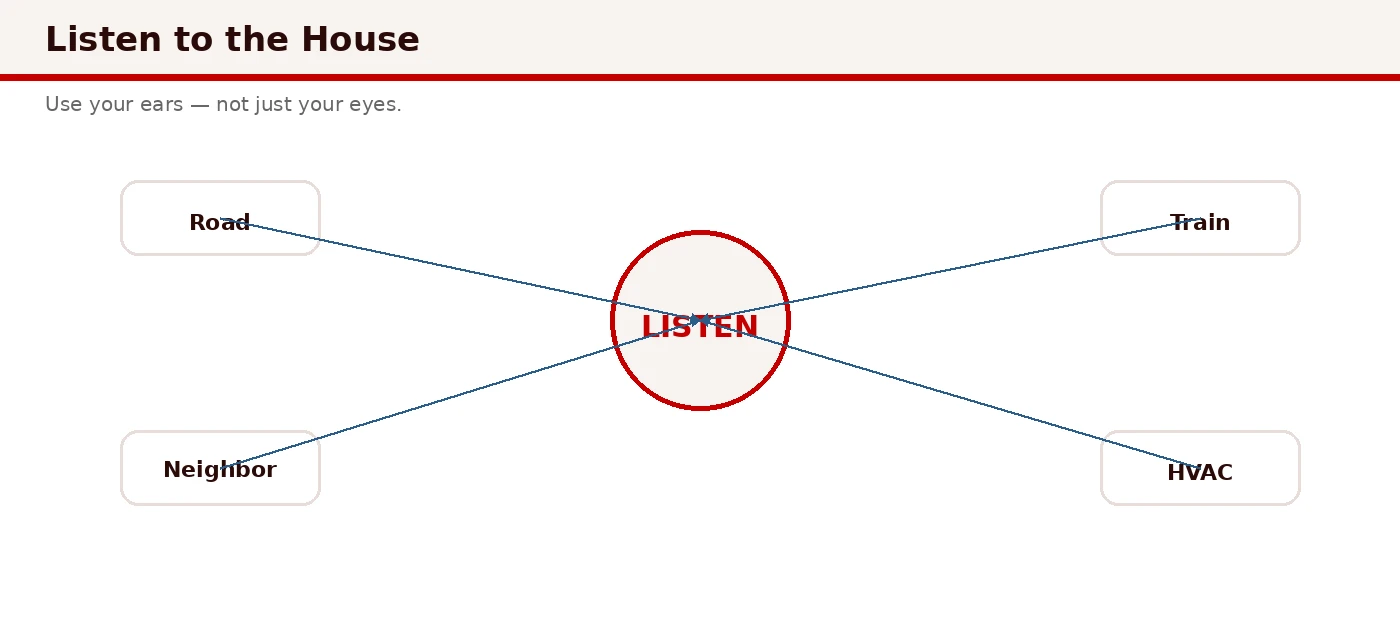
Stop talking for 30 seconds and let your ears register the environmental soundtrack.
During busy showings with family and agents chatting, background noise gets drowned out. Stand quietly in the primary bedroom, living room, and backyard for 30 full seconds:
- Expressway & road noise: Can you hear tire roar from nearby highways (e.g., I-90, I-290, Route 53) or arterial streets?
- Metra / Freight rail horns: Is the home near commuter rail lines or freight crossings with overnight train whistles?
- Flight paths: Are you beneath active approach corridors for O'Hare or regional airports?
- Mechanical hums: Does the furnace or AC compressor produce a loud vibration or metal rattle through ductwork?
23. Notice Smells: Odors Are Clues, Not Diagnoses
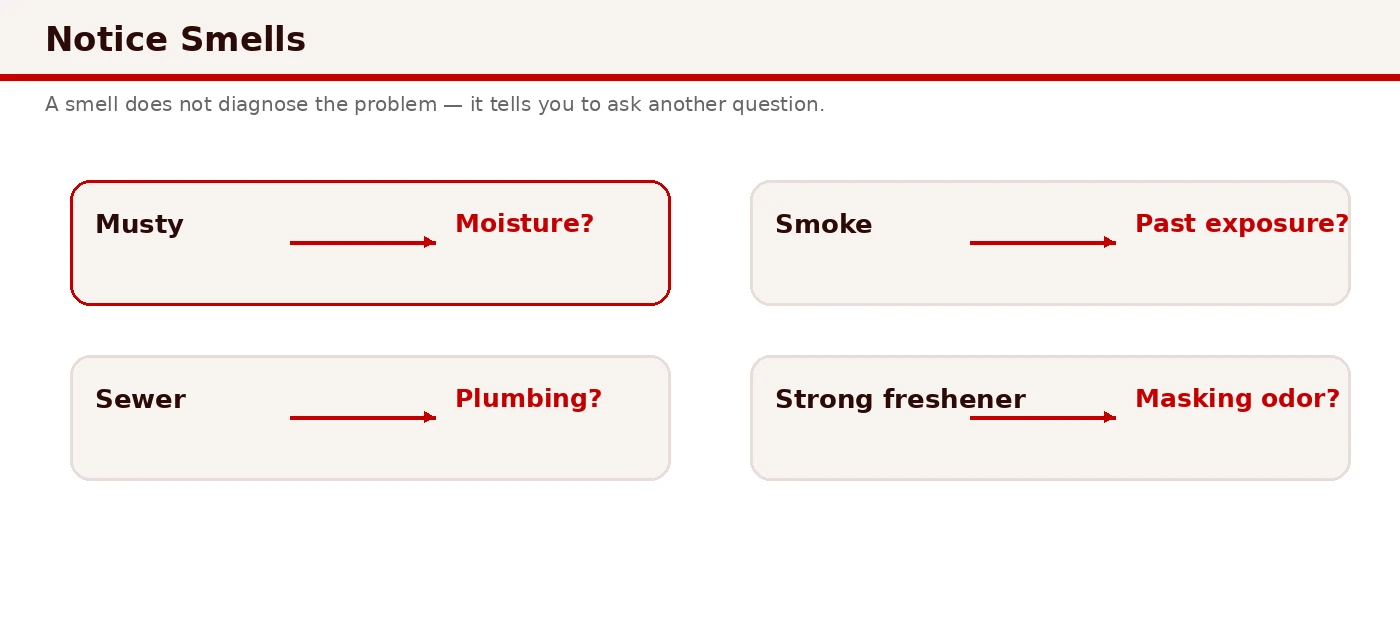
Smells indicate something deserves investigation. Notice what your nose tells you.
Smells provide critical clues about past maintenance and moisture history:
24. Cosmetic vs. System Updates
Core LessonDo not confuse surface decorating with capital infrastructure investments.
One of the most frequent mistakes first-time homebuyers make is assuming that because a home has luxury vinyl plank (LVP) flooring, new cabinet pulls, and modern black light fixtures, the entire house has been renovated.
Cosmetic Finishes vs. Capital Systems Comparison
| Category | Cosmetic Updates (Easier / Cheaper) | System Updates (Major Capital Cost) |
|---|---|---|
| Typical Examples | Interior paint, light fixtures, cabinet hardware, modern mirrors, staging | New architectural shingle roof, furnace & AC, 200A electrical panel, plumbing re-pipe |
| Cost to Change | Hundreds to low thousands; can be DIY or tackled room by room | Five-figure capital investments ($8,000 to $25,000+ each) |
| Impact on Living | Changes visual appearance and modern style | Controls comfort, structural safety, weather protection, and home insurance eligibility |

25. Ask About Major Updates
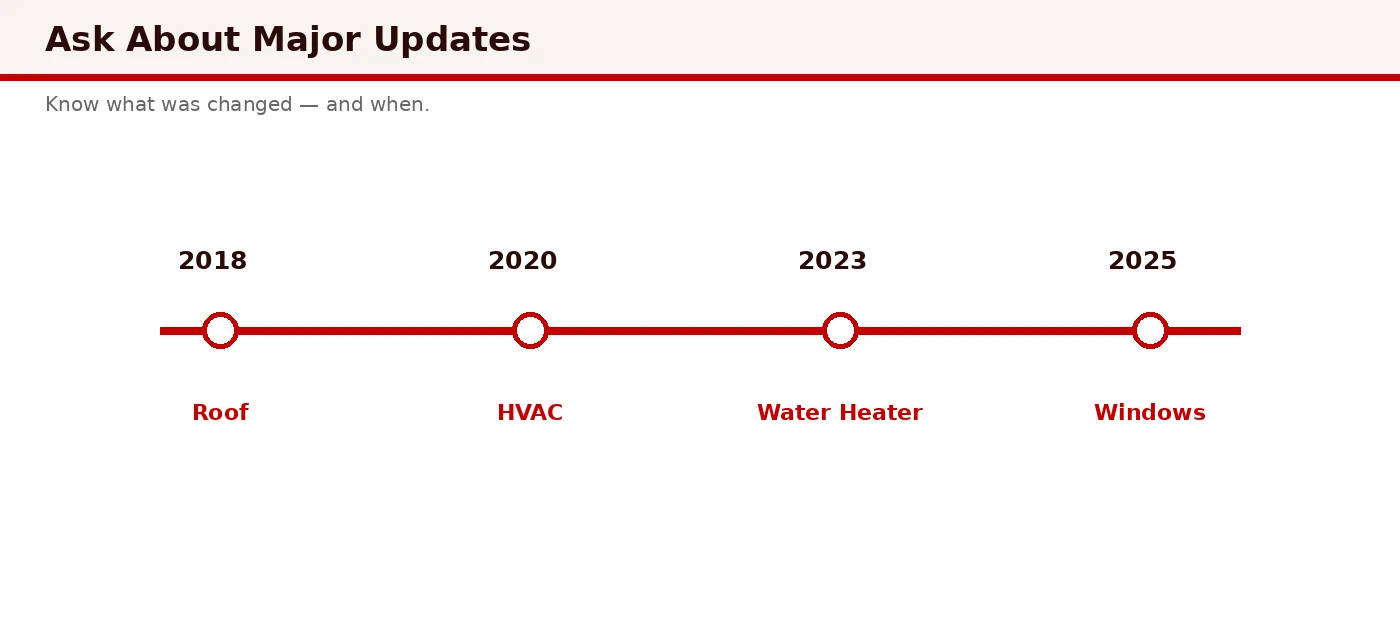
Verify installation dates and ask for permit records on major renovations.
Before submitting an offer, request the seller's feature sheet, Illinois Residential Real Property Disclosure Report, and dates for major capital components:
- Roof replacement year
- Furnace and air conditioning installation years
- Water heater age
- Window replacement history
- Sump pump age and battery backup installation date
- Permits: Were major basement buildouts, electrical additions, or room additions permitted through the local village building department?
26. For Condos and Townhomes, Look Beyond the Unit
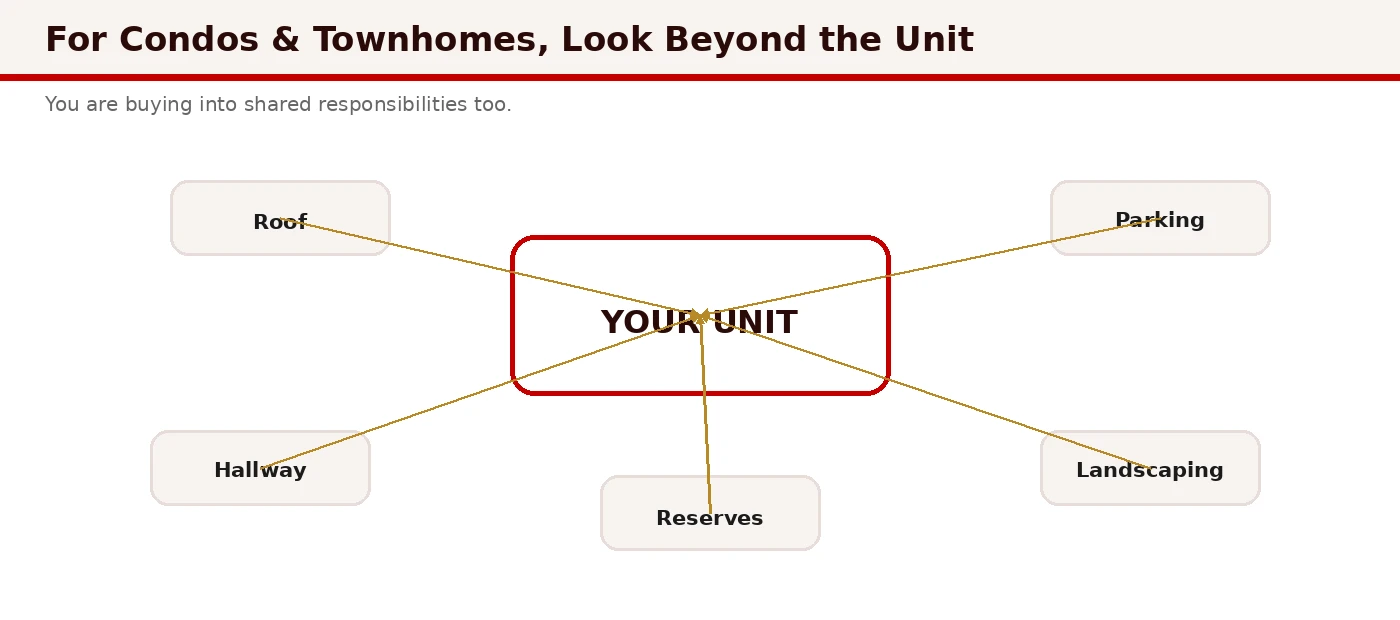
When buying into an association, you are purchasing a share of the whole building and its shared liabilities.
If you are considering attached housing in Chicagoland, explore our companion guide on what to know before buying a condo or townhome. During your showing tour, observe shared spaces carefully:
- Common hallways & entryways: Are common areas clean, well-lit, and maintained, or do carpets and paint show neglect?
- Building exterior & roofs: Does the building exterior, balconies, and parking lot show evidence of ongoing maintenance?
- Deeded parking & storage: Where are assigned parking spots located? Is storage dry and secure?
- Association financial health: Ask about monthly assessments, special assessments, and reserve fund strength during attorney review.
27. Take Notes During Every Showing: The Comparison Scorecard
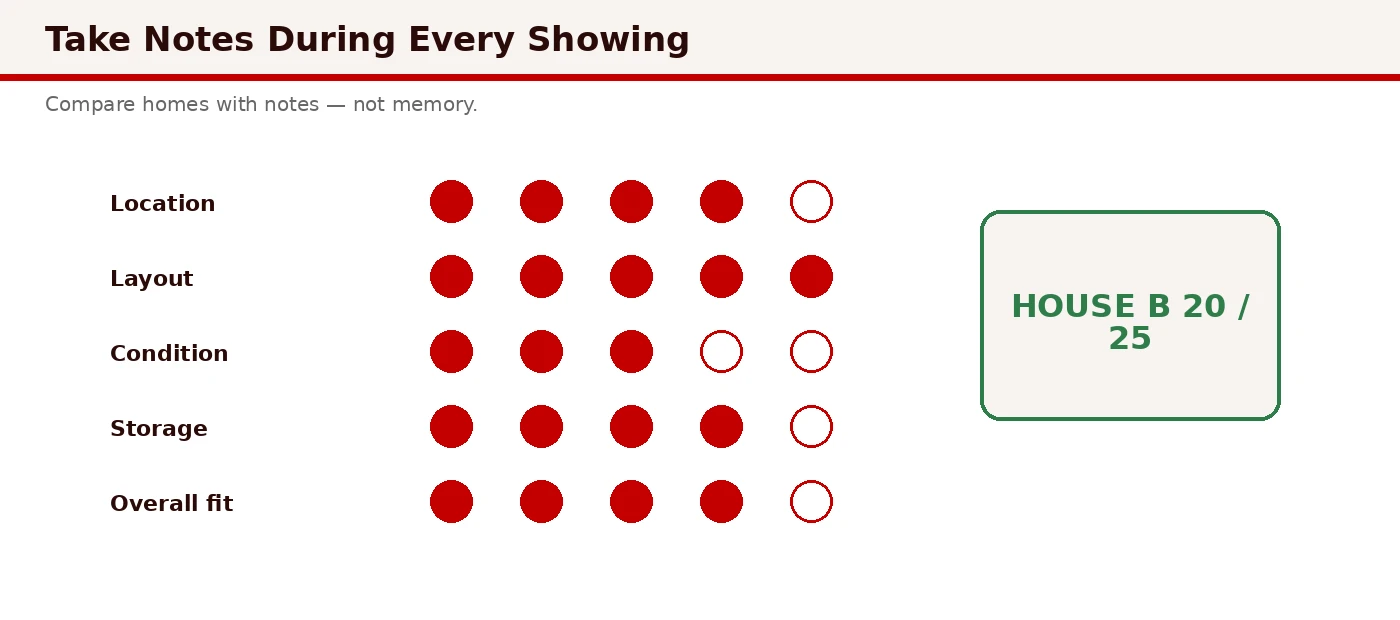
After touring four homes in a single afternoon, memory becomes unreliable. Keep written notes.
Buyers often think they will remember every detail, but by dinner time, the kitchen in House #2 blends into the basement in House #3. Rate each home on a consistent 1-to-5 scale across 10 core dimensions:
28. Separate “Can Fix” From “Hard to Change”
One of the simplest frameworks for making smart long-term real estate investments.
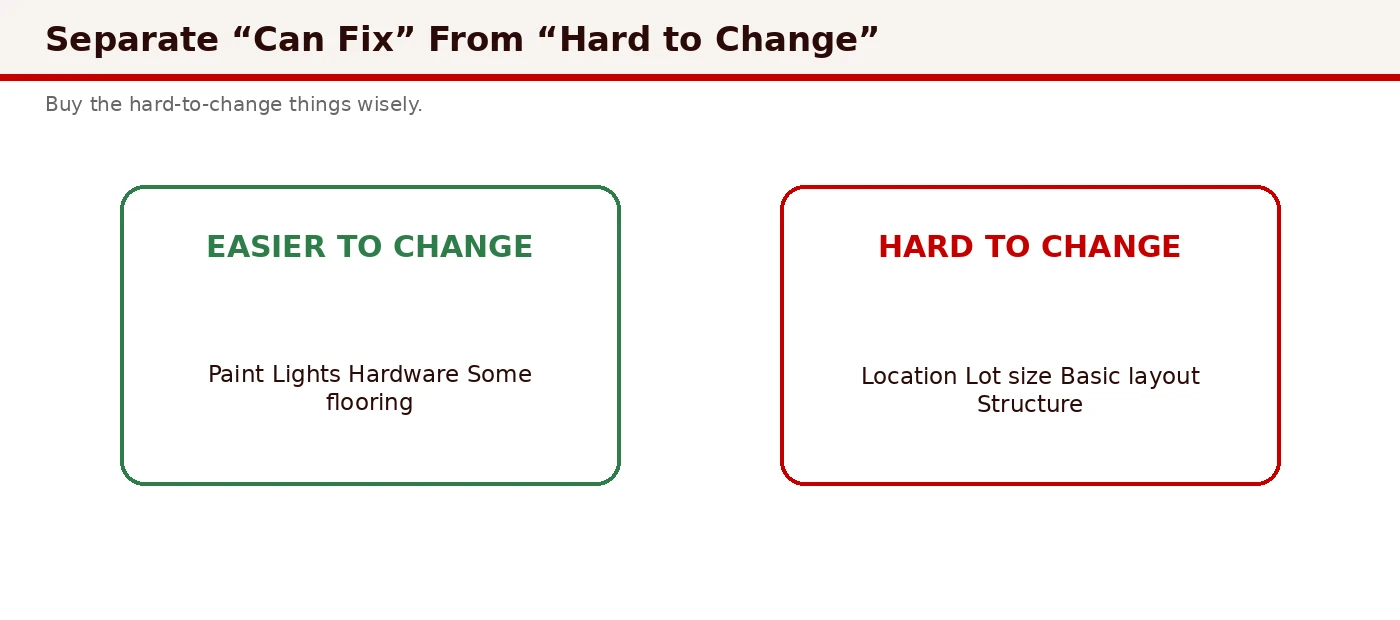
Before rejecting a home or stretching your budget, sort flaws into two categories:
EASIER & CHEAPER TO FIX
- Paint colors and dated wallpaper
- Cabinet hardware, doorknobs, and light fixtures
- Old carpets or worn flooring
- Basic landscaping, shrubs, and mulch
- Appliance updates over time
VERY HARD OR IMPOSSIBLE TO CHANGE
- The home’s geographical location and school district
- Lot size, yard slope, and proximity to busy roads
- Basic structural floor plan and load-bearing walls
- Ceiling heights and foundation footing design
- Sun orientation and lot privacy
If a house has great location, a functional floor plan, and solid mechanicals, do not be intimidated by cosmetic flaws. Conversely, beautiful granite countertops cannot fix a home sitting 20 feet from an expressway off-ramp. If you are comparing fixer-upper properties, see our analysis on buying a fixer-upper in the Chicago suburbs.
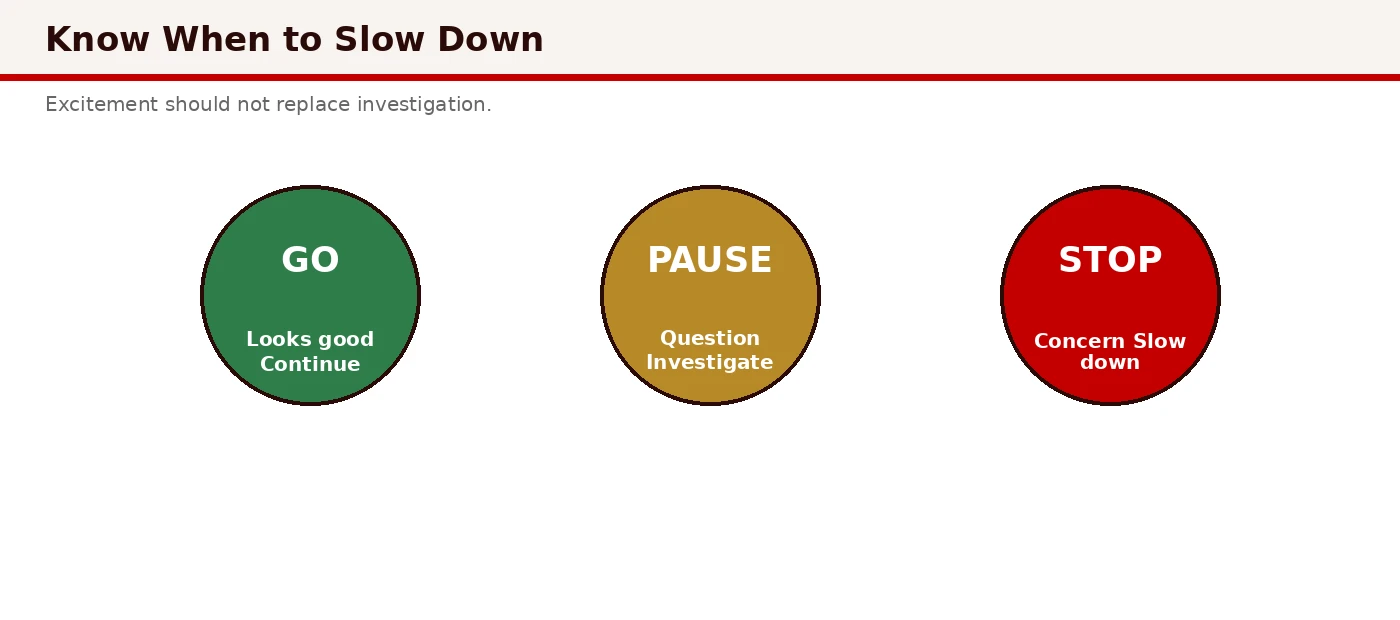
29. Know When to Slow Down: Green, Yellow, and Red Signals
In competitive markets, fear of missing out can lead to hasty decisions. Use a traffic-light filter.
30. Showing vs. Professional Inspection
Core DistinctionA showing finds questions. An inspection helps find answers.
Never confuse your initial buyer showing with a professional home inspection:
The Home Showing
Pre-Offer Tour (20 to 45 Minutes)
- Conducted with your licensed real estate agent
- Observe visible aesthetic and functional clues
- Evaluate layout, storage, room size, and neighborhood feel
- Formulate questions to ask the listing agent and seller
- Goal: Decide whether the property deserves an offer
The Professional Inspection
Post-Contract Contingency (2.5 to 4 Hours)
- Conducted by a licensed home inspector & specialists
- Operate HVAC, test outlets, run appliances, test water heaters
- Crawl through attics, mount roofs, check crawlspaces
- Generate 40+ page documented condition report with photos
- Goal: Identify safety hazards and negotiate contract repairs
For an end-to-end overview of how inspections fit into the entire purchase journey, review our First-Time Homebuyer Checklist for Illinois.

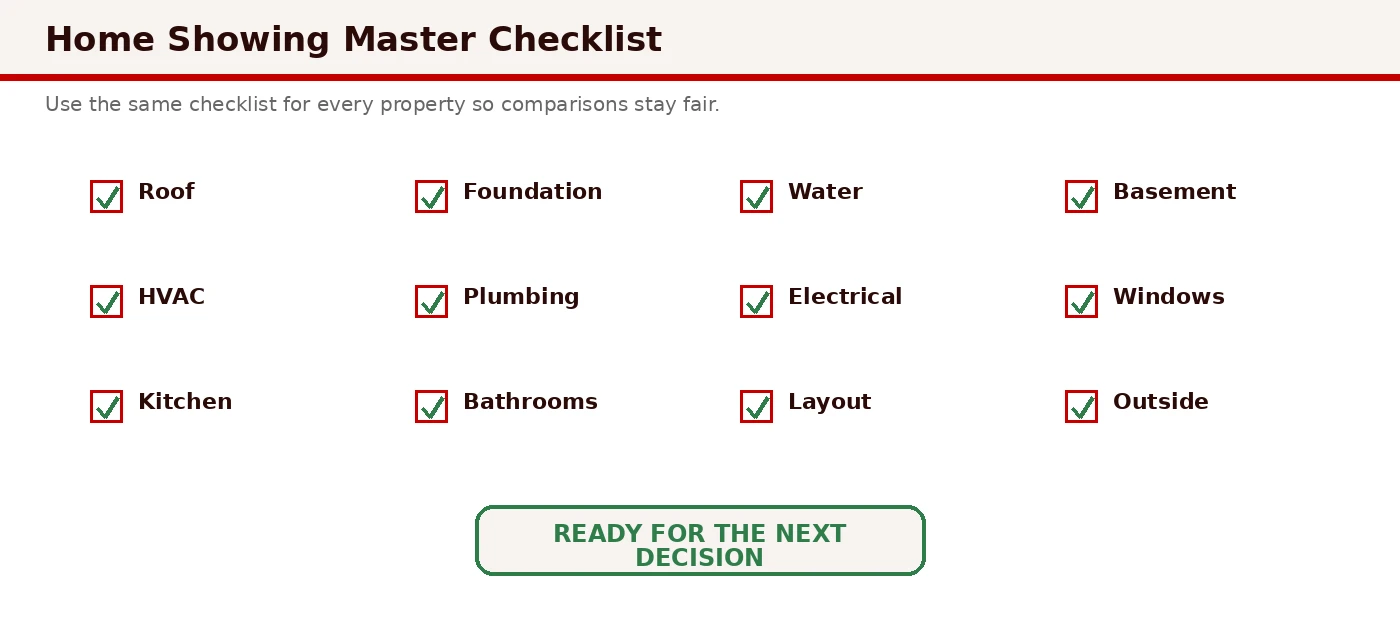
Master Home Showing Checklist for Buyers
Use this field checklist during your showings. Check items as you verify them, monitor progress, or print for property tours.
Roof & Gutters Visible Condition
Look for missing, curled, or worn shingles, moss, uneven planes, sagging lines, and ensure downspouts direct water away from the foundation.
Foundation & Exterior Walls
Observe siding, brick, or stucco for stair-step masonry cracking, wide vertical gaps, visible bowing, or fresh unpainted patches.
Lot Grading & Surface Runoff
Verify that ground slopes away from exterior walls and that neighbors’ drainage does not pool against your foundation.
Water Clues & Moisture Marks
Check ceilings, walls, windowsills, and baseboards for water stains, peeling paint, efflorescence, or fresh isolated paint patches.
Basement Perimeter & Framing
Walk the entire basement perimeter. Look at sill plates, joists, foundation corners, and check for dampness or musty smells.
Sump Pump & Backup System
Confirm presence of sump pit, pump installation, check discharge line location, and look for secondary battery backup equipment.
Furnace & Air Conditioner Age / Service
Note approximate unit age on data plates, inspect visible service maintenance tags, air filter access, and thermostat setup.
Water Heater Condition
Check tank vs. tankless, look for corrosion around inlet/outlet valves, moisture around the bottom pan, and note age sticker.
Plumbing Pressure & Drains
Turn on faucets to observe flow and drain clearance speed, flush toilets, and check under sink vanities for dampness or corrosion.
Electrical Panel Accessibility
Locate panel, verify it is accessible and clean with breaker switches (not outdated fuse boxes or exposed DIY wiring). Never open panel covers.
Windows & Double-Pane Seals
Examine for cracked glass, cloudy condensation between panes (failed seals), wood rot on sills, and ease of latching and sliding.
Doors & Frame Squareness
Open and close interior and exterior doors. Check for sticking, latching, floor rubbing, or visibly racked/uneven door casings.
Floors & Ceilings Levelness
Feel for bounce, soft spots, noticeably sloping floors, ceiling sagging, or cosmetic patches over past leaks.
Kitchen Functional Work Flow
Look beyond finishes: evaluate counter space, refrigerator door swing, pantry capacity, electrical outlets, and hood ventilation.
Bathrooms & Moisture Ventilation
Inspect tub/shower tile caulk, grout integrity, toilet base stability, sink caulking, and presence of working exhaust fans.
Real Furniture Fit & Room Scale
Visualize your bed, dressers, nightstands, sectional, dining table, and work-from-home workstation with actual door swings.
Storage Capacity & Closets
Inspect coat closet, linen storage, pantry, utility closets, and determine where vacuums, luggage, and seasonal items will go.
Garage Vehicle Fit & Storage
Verify car clearance, door opener operation, concrete slab condition, ceiling height, and adequate wall space for yard tools.
Yard Upkeep & Trees
Assess yard slope, fence stability, deck/patio condition, retaining walls, and note large trees whose roots or branches hang close to rooflines.
Driveway & Walkways Safety
Note concrete trip hazards, asphalt crumbling, winter snow shoveling difficulty, and comfortable turn-around space.
Floor Plan Flow & Noise Check
Pause and listen for 30 seconds: street traffic, Metra tracks, aircraft, mechanical hums, and evaluate everyday circulation.
Odors & Masking Scents
Notice musty smells, sewer odors, pet/smoke residue, or heavy synthetic plug-in air fresheners that may disguise underlying dampness.
Major-Update Dates & Permits
Ask for approximate installation dates for roof, furnace, AC, water heater, windows, and documentation of major past remodels.
Condo / Townhome Shared Items (If Applicable)
Review common corridors, exterior cladding, roof responsibility, reserve funds, parking deed, and monthly assessment breakdown.
Total Monthly Ownership Reality
Combine mortgage principal & interest with parcel property taxes, insurance, HOA dues, and expected upcoming mechanical maintenance.
READY FOR THE NEXT DECISION — Not necessarily ready to submit an offer until questions are verified.
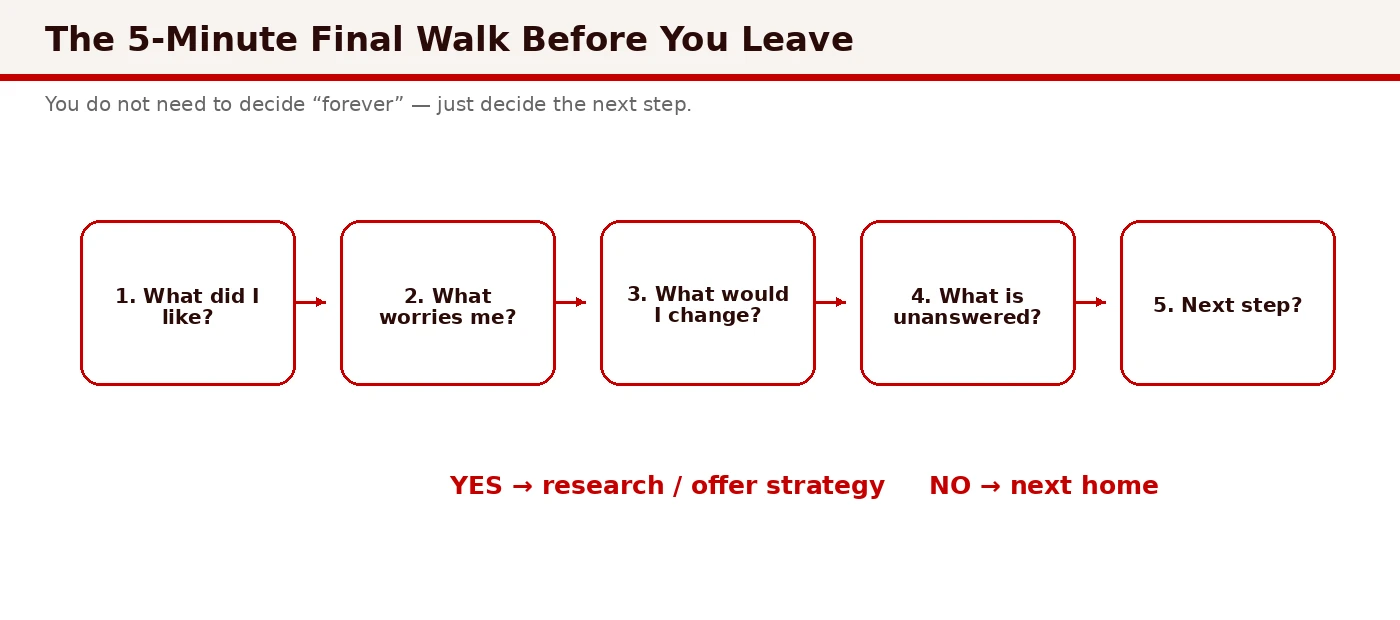
The 5-Minute Final Walk Before You Leave
Before stepping back into your car, stand quietly in the main living space and ask these five grounding questions:
What did I like most about this property?
Identify the fundamental hard-to-change feature that caught your enthusiasm (e.g., quiet cul-de-sac lot, natural light, kitchen layout).
What worries me most?
Be honest with yourself about concerns: aging roof, musty crawlspace, narrow secondary bedrooms, or highway hum.
What would I have to change immediately to live here comfortably?
Estimate preliminary repair or decorating costs (e.g., fence replacement, immediate water heater update, painting).
What critical questions still need answers from the seller?
List specific dates, permit records, property tax exemptions, or HOA reserve questions for your agent to ask.
Does this home deserve another step?
You do not need to decide if this is your "forever home" right now. You only need to decide whether it warrants comparable market analysis and offer research—or if you should move on to the next property.
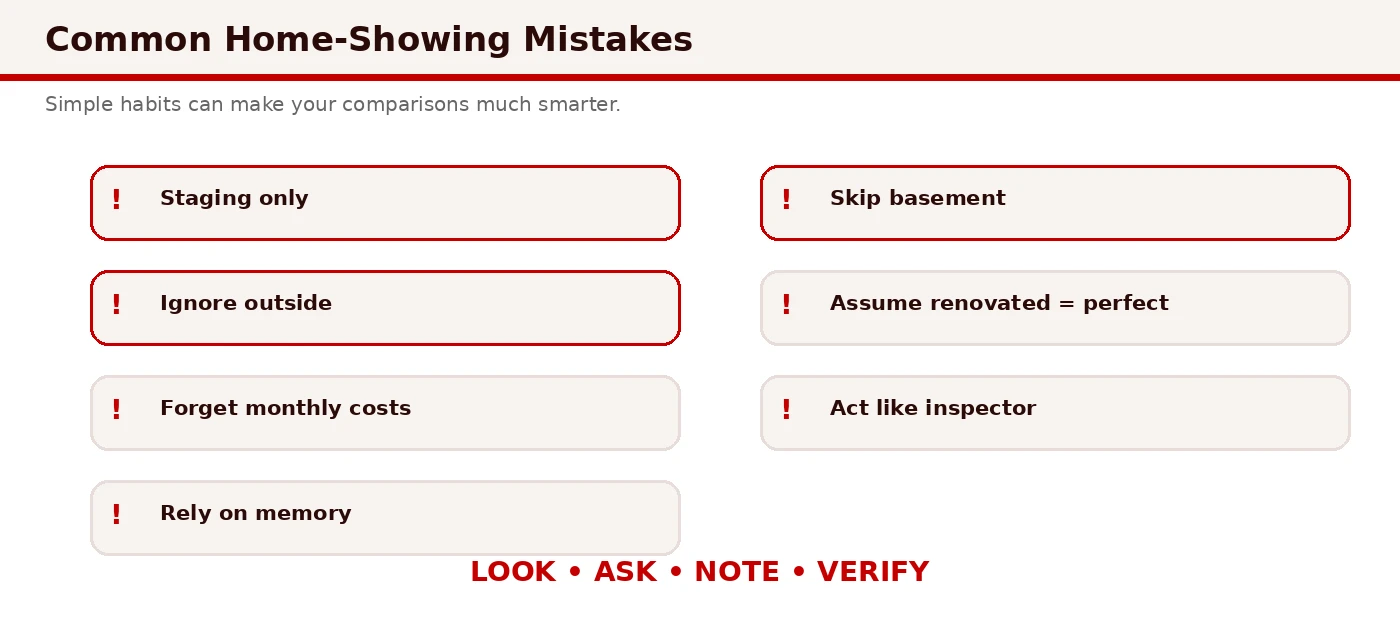
Common Home-Showing Mistakes Buyers Should Avoid
Simple disciplined habits prevent weak comparisons and emotional regrets.
Falling in love with decorative rugs, art, and stylish furniture that the seller is packing up on moving day. Always view the bare walls and mechanicals.
Spending 90% of your time in the kitchen and never walking the exterior grading or looking at the furnace, water heater, and foundation corners.
Believing that quick cosmetic flips automatically updated the 25-year-old roof, galvanized plumbing lines, or 100-amp electrical panel.
Comparing homes only by asking price while ignoring differences in property taxes, insurance, and HOA fees. In Chicagoland, two \$400,000 homes can carry very different monthly bills—learn how in our pillar guide on Property Taxes in the Chicago Suburbs Explained and our Chicago suburbs home affordability guide.
Failing to record details on a structured scorecard. After 5 showings, memories fade. Write notes on every tour.
How Homes by Bhargav Helps Buyers Tour With a Plan
Tour with a practical strategy—not just an emotional first impression.
Homes by Bhargav assists buyers across the greater Chicagoland area—including top northwest suburban markets like Schaumburg, Des Plaines, Arlington Heights, Palatine, and surrounding communities—by evaluating properties through a complete, objective framework:
If you are comparing northwest suburban communities for your family, explore our comprehensive guide to the Best Northwest Chicago Suburbs for Families or our detailed Schaumburg vs. Hoffman Estates comparison.
Educational Home Showing Disclaimer
This guide is published strictly for general educational and homebuyer planning purposes. A visual home showing conducted with a real estate licensee is NOT a professional home inspection, engineering evaluation, environmental assessment, municipal code inspection, legal review, or specialized trade diagnostic. Property conditions vary significantly by parcel. Buyers should always retain licensed professional home inspectors and applicable trades (structural engineers, licensed plumbers, licensed electricians, roofing specialists) to inspect the property during the formal contractual inspection contingency period.
Tour Homes With a Practical Plan
Ready to tour prospective homes in Chicagoland with a grounded, knowledgeable advocate? Let's evaluate layout, condition, major systems, taxes, and monthly affordability together so you can make confident, informed real estate decisions.