



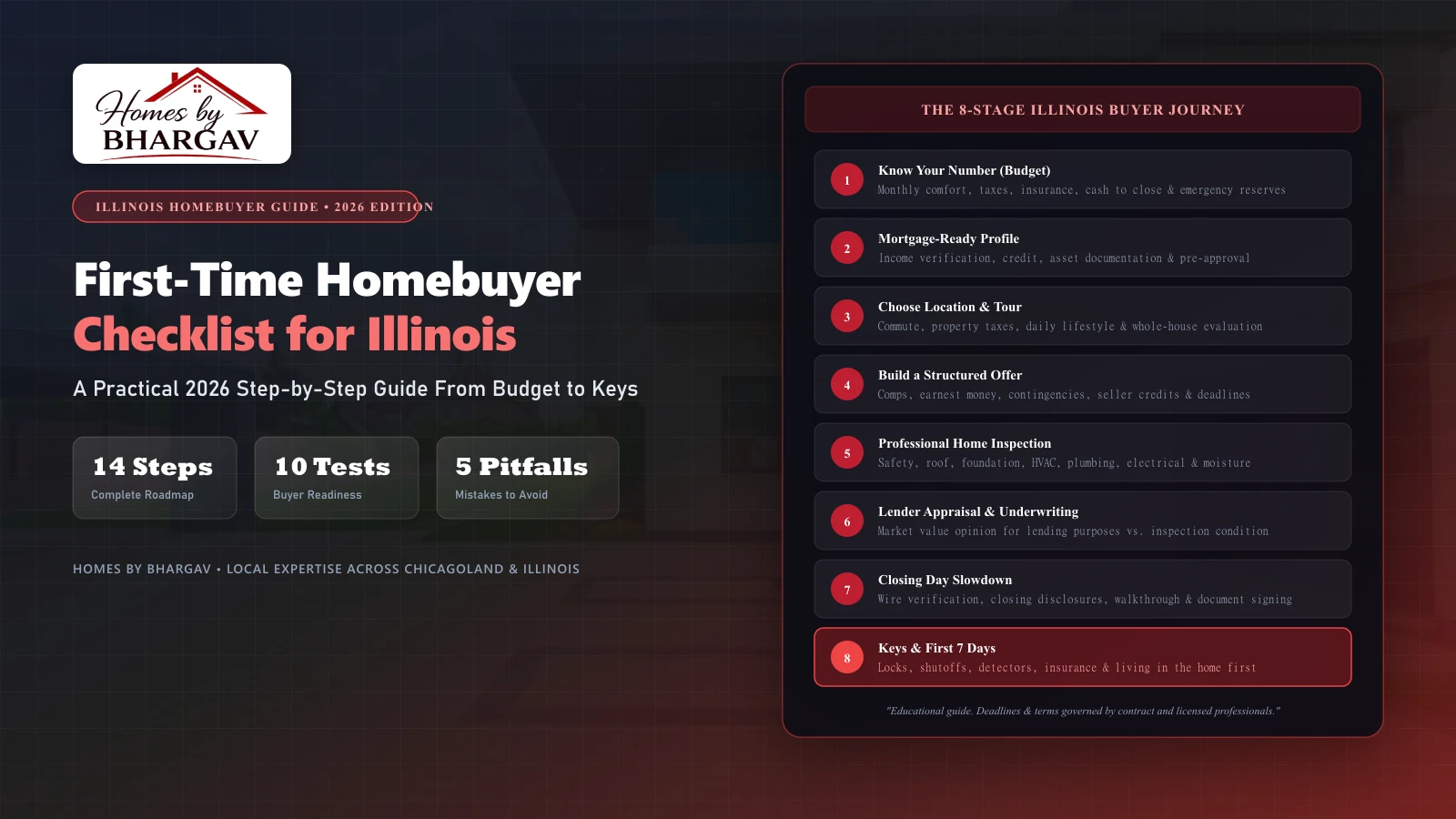
First-Time Homebuyer Checklist for Illinois: 2026 Practical Buyer Guide
A Step-by-Step Illinois Real Estate Roadmap From Budget and Pre-Approval to Inspection, Closing, and Move-In
Educational Guide Disclaimer
This guide is educational. Buyers should confirm current mortgage, tax, insurance, contract and closing requirements with the appropriate licensed professionals.
Buying your first home in Illinois is an exciting milestone, but it can quickly feel overwhelming when faced with mortgage acronyms, Cook and DuPage County property tax complexities, contract contingencies, and high-stakes negotiation deadlines.
The secret to a calm, successful purchase is simple: break the entire process down into manageable, sequential decisions. Rather than trying to solve every unknown at once, navigate your purchase along a proven path:
The Big Idea
Buying your first home becomes much easier when you break the process into small decisions:
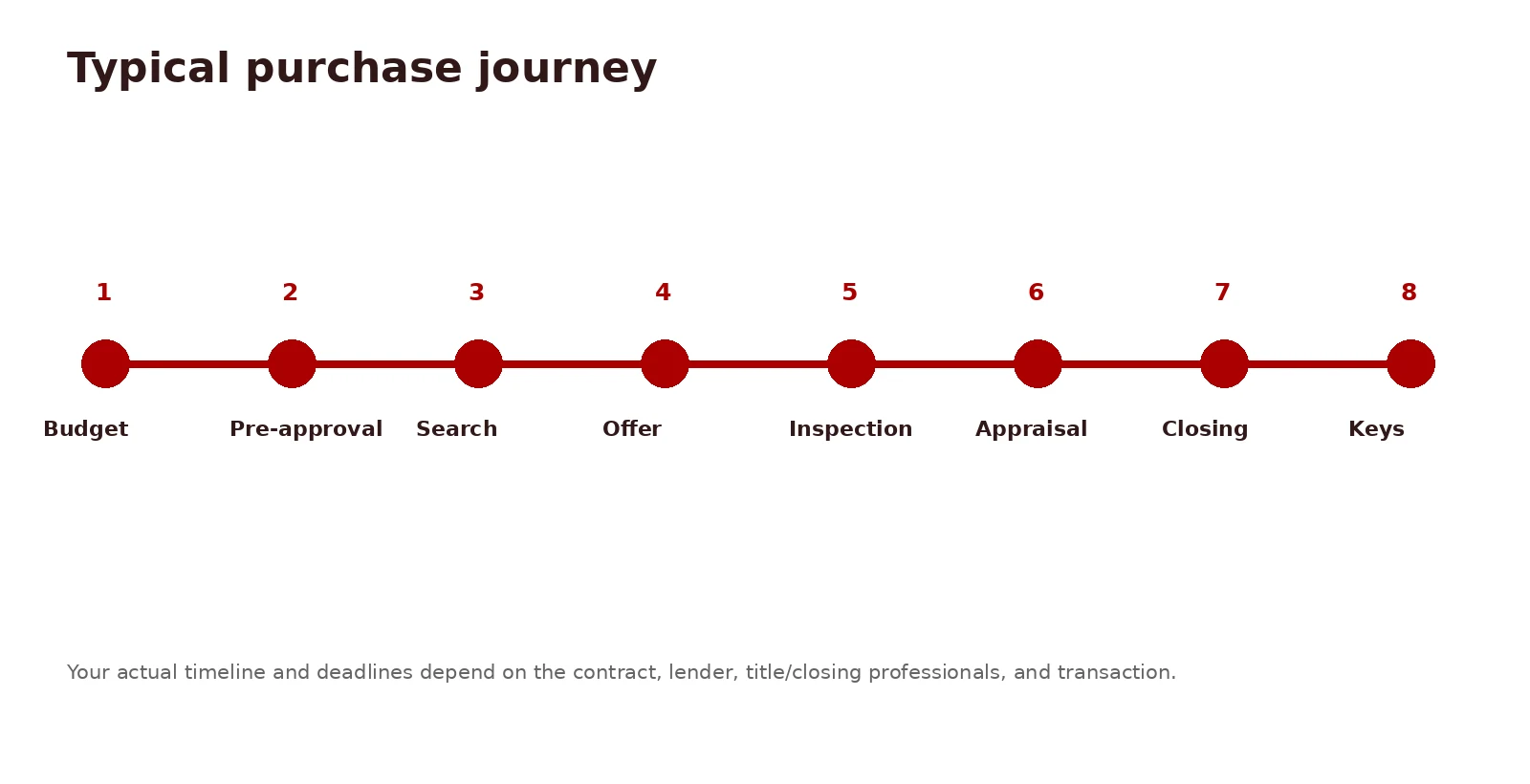
Table of Contents — Illinois Homebuyer Guide
1. Know Your Number Before You Shop
Start with the monthly payment and total cash needed—not just the listing price. A strong homebuyer budget leaves room for normal life, property upkeep, and unexpected repairs. In Illinois, focusing only on the purchase price can lead to painful surprises once local real estate taxes, hazard insurance, and reserves are calculated.
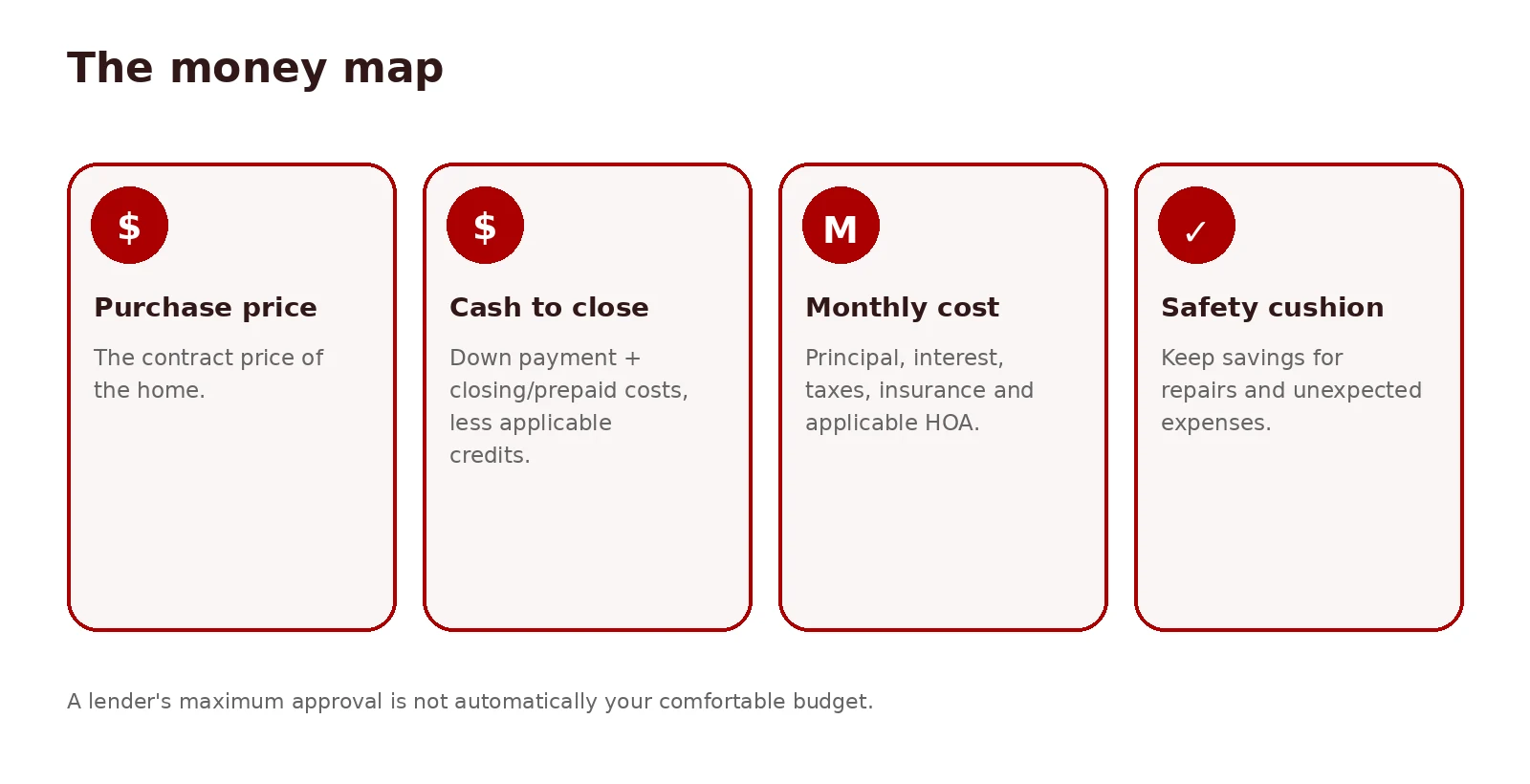
Purchase Price
The comfortable contract price of the home that does not stretch your lifestyle or eliminate your breathing room.
Cash to Close
Your down payment plus estimated closing costs, prepaid taxes, and escrow reserves, less applicable seller credits.
Monthly Cost
Principal and interest combined with Illinois property taxes, homeowners insurance, private mortgage insurance (PMI), and HOA fees.
Safety Cushion
Dedicated post-closing emergency savings left in your bank account for unexpected repairs, maintenance, and job transitions.
Your Buyer Budget Checklist
- Purchase price you can comfortably afford: Establish your spending range based on your current lifestyle rather than maximum borrowing capacity.
- Down payment amount and source of funds: Verify how much liquid capital you will contribute and document its seasoning.
- Estimated closing and prepaid costs: Plan for loan origination, title insurance, recording fees, attorney representation, and tax escrows.
- Property taxes and homeowners insurance: Factor in Illinois suburban tax rates (which vary widely between Cook, DuPage, and Lake counties).
- HOA/association dues, if applicable: Verify monthly assessments and capital reserves if looking at townhomes or condos.
- Emergency and maintenance reserve: Keep 3 to 6 months of living expenses safe in your accounts after closing.
- Moving, furniture and immediate repair costs: Budget for moving trucks, initial locks, painting, and utility setup.
Smart Rule
“If a purchase only works when everything goes perfectly, the budget is probably too tight.”
For an in-depth breakdown of how debt-to-income ratios, interest rates, and suburban taxes shape buying power, read our comprehensive guide on how much house you can afford in the Chicago suburbs.
2. Make Your Financial Profile Mortgage-Ready
A mortgage lender evaluates your complete financial picture: gross monthly income, liquid assets, recurring monthly debts, credit history, and paper documentation. Early organization makes the financing process smoother, speeds up underwriting, and eliminates last-minute surprises during mortgage approval.
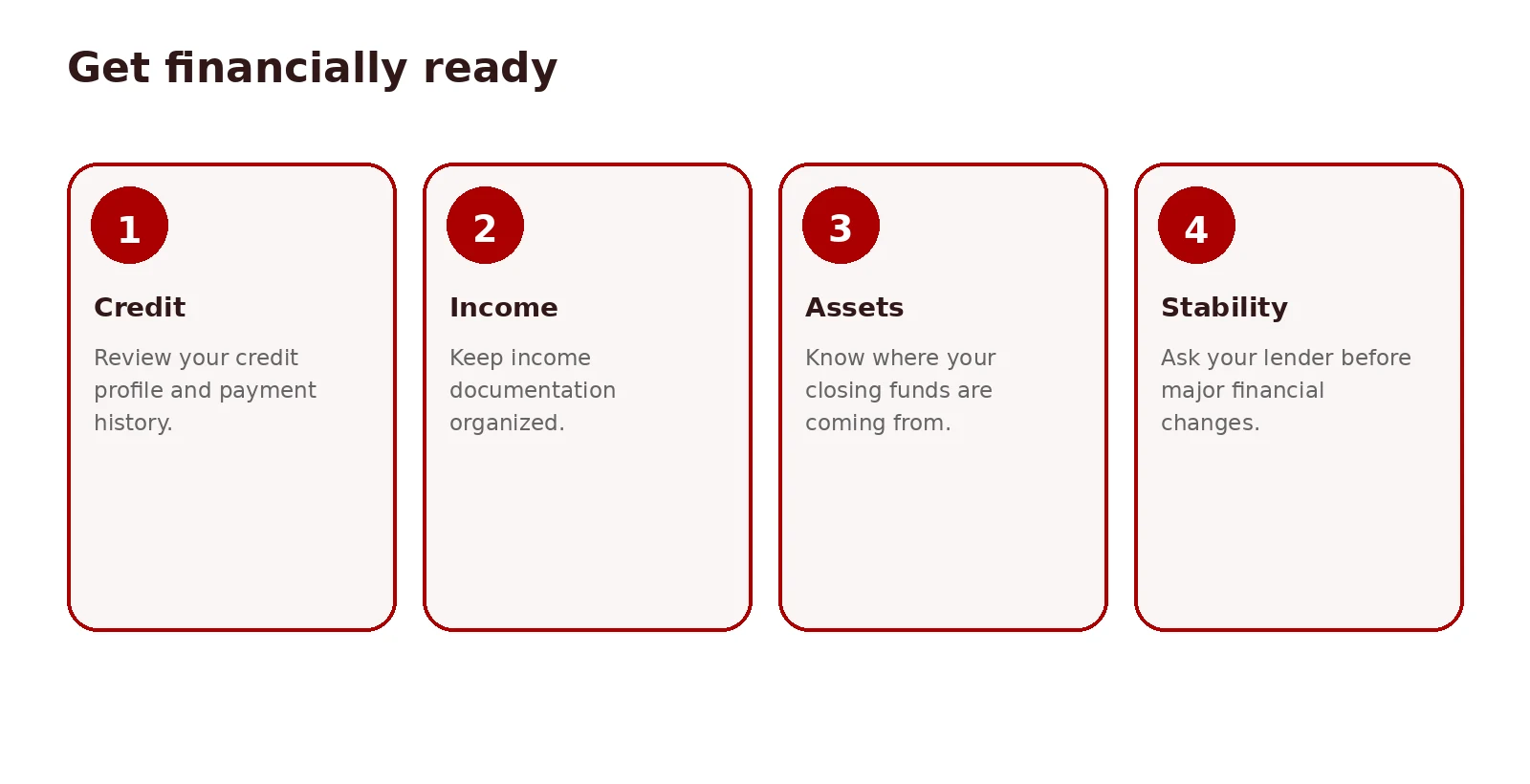
Checklist Before Submitting Your Loan Application
Remember
“Pre-approval helps define a financing range. It does not mean you should spend the maximum amount offered.”
3. Choose an Illinois Location That Fits Your Life
The best neighborhood is the one that works for your daily routine and future plans. Compare communities with the same care you use to compare homes. In Chicagoland, two towns separated by just a few miles can have vastly different property tax bills, Metra commute times, park district systems, and housing styles.
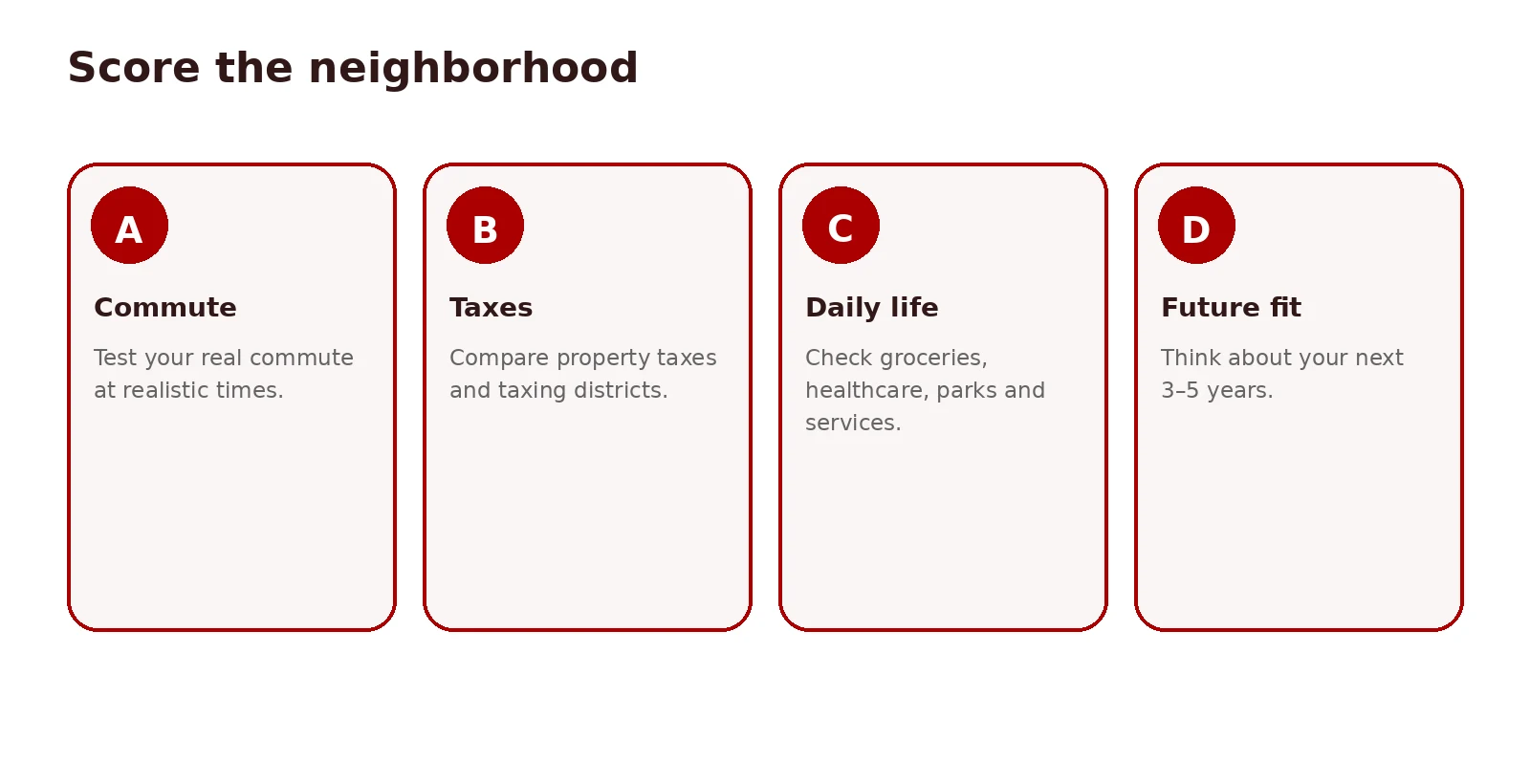
Compare These Seven Essential Community Factors
Field Test
“Visit at different times of day. A quick daytime visit may not reveal traffic, noise or evening conditions.”
Exploring specific suburban pockets? Compare top buyer locations in our guide to the Best Chicago Suburbs for First-Time Homebuyers in 2026, or dive into our dedicated community guides for Schaumburg real estate, Des Plaines real estate, and the wider areas we serve across Chicagoland.
4. Read the House Like a Buyer
A fresh coat of paint, new cabinet hardware, and stylish staging can look great online and in person. However, your responsibility as an informed buyer is to look past cosmetic finishes and inspect the expensive mechanical systems and structural components that dictate the true cost of ownership.
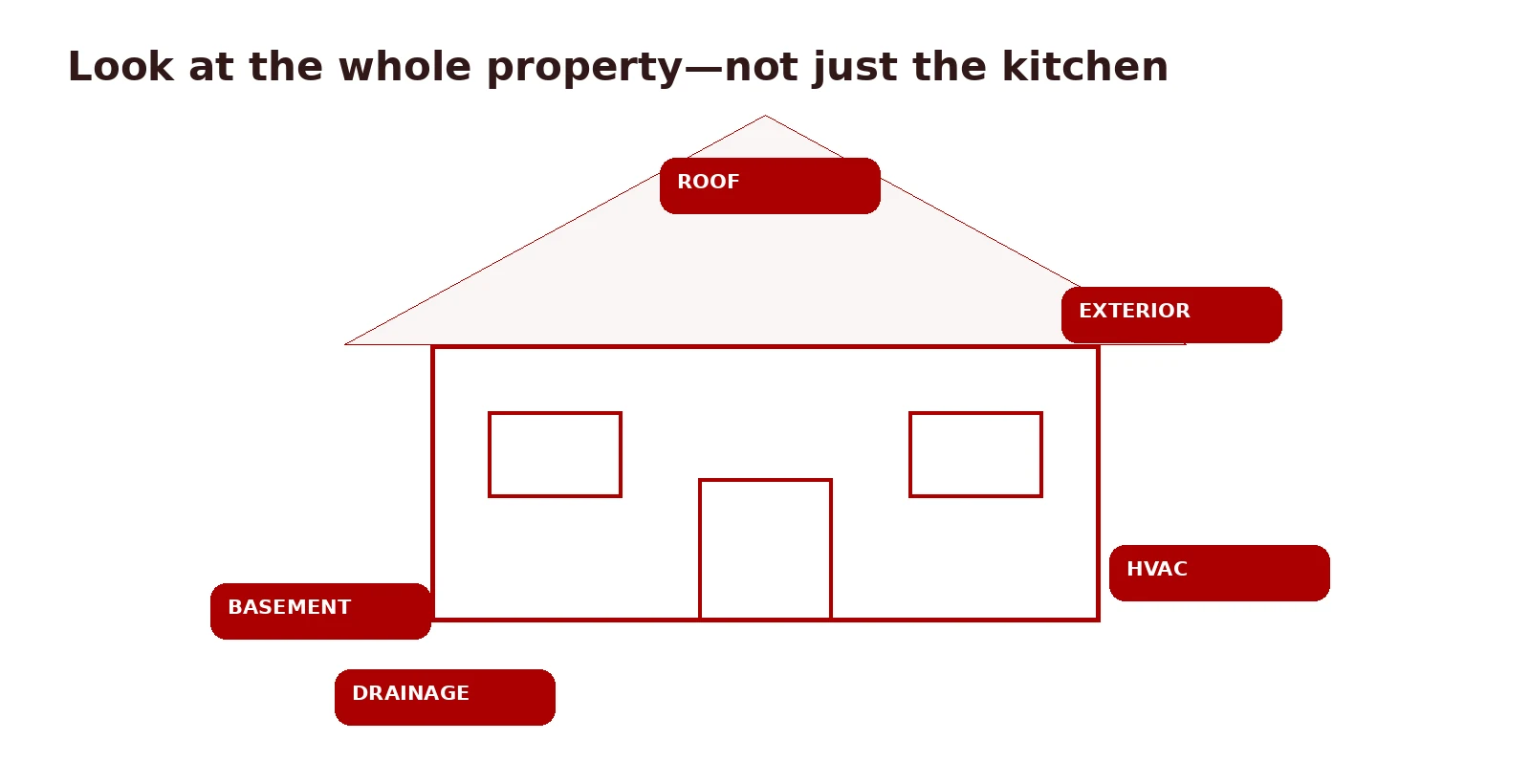
Look Up, Down, and Outside: The Physical Systems Review
- Roof age and visible condition: Check shingle flatness, missing granules, flashing around chimneys, and estimated remaining lifespan.
- HVAC age and service history: Note furnace and central AC manufacture dates, maintenance stickers, and airflow consistency.
- Basement/crawlspace moisture signs: Inspect foundation walls for efflorescence (white mineral residue), water stains, sump pump age, and backup pump systems.
- Drainage, grading, gutters and downspouts: Verify that soil slopes away from the foundation and downspout extensions discharge water safely away from walls.
- Windows, siding and exterior doors: Test for drafts, seal failure in double-pane glass, wood rot, or damaged vinyl/brick tuckpointing.
- Electrical panel and visible plumbing: Check panel brand, breaker capacity, ground fault circuit interrupters (GFCIs), and copper vs. galvanized pipes.
- Garage, driveway and site features: Assess concrete heave, asphalt cracks, retaining walls, tree root intrusion, and patio drainage.
Buyer Mindset
“Ask: ‘What will this home cost me to own?’ rather than only ‘Do I like this room?’”
Note: A buyer’s personal visual evaluation during a showing helps prioritize interest, but it never replaces a comprehensive physical evaluation performed by an Illinois licensed home inspector.
5. Build an Offer That Makes Sense
Purchase price is only one component of a successful real estate offer. A complete purchase contract defines earnest money amounts, contingency protections, attorney review periods, inspection timelines, closing dates, and seller credits. Understanding the total package before signing ensures your interests remain protected.
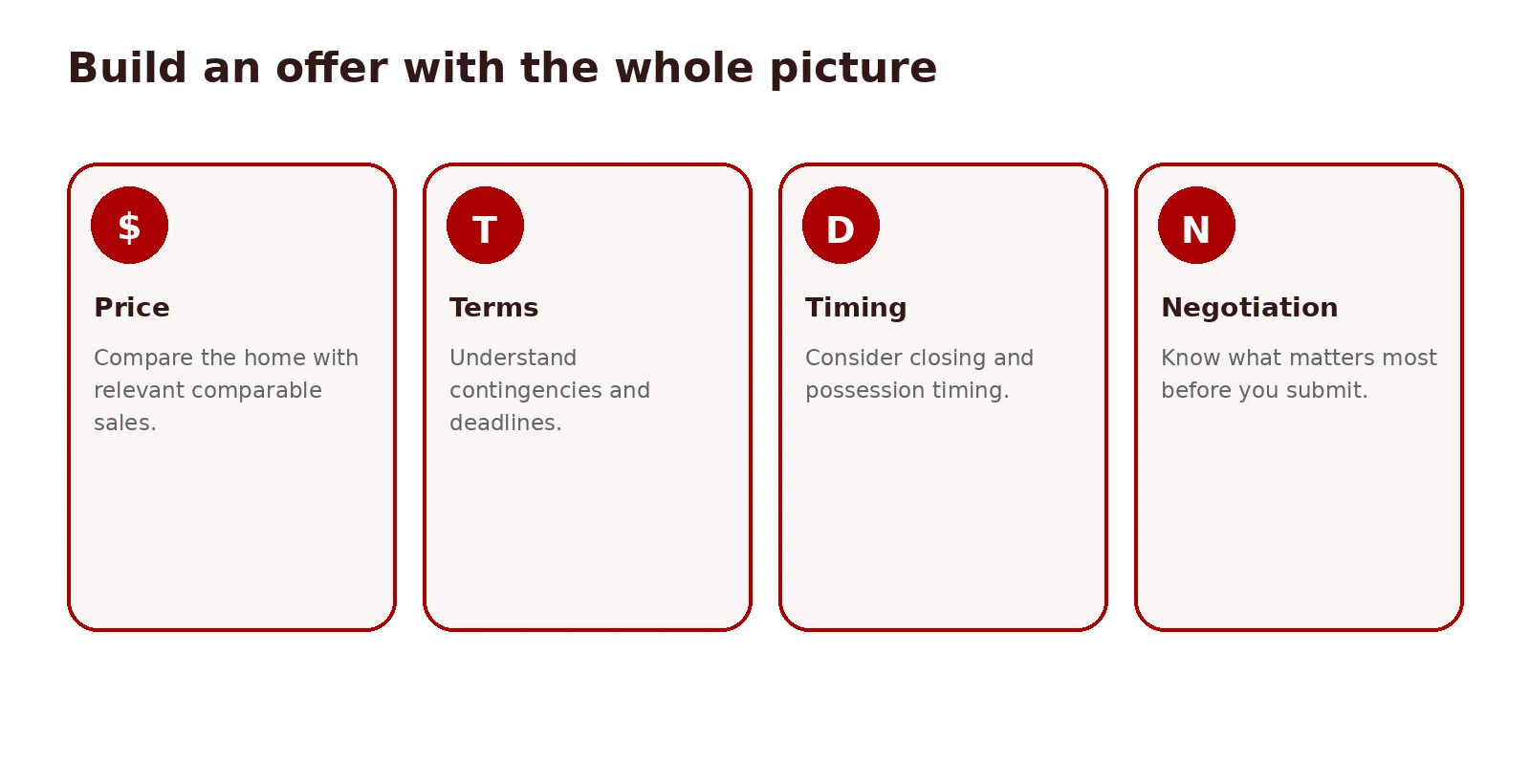
The Eight-Point Offer Review Checklist
Important
“Never sign a purchase contract you do not understand. Ask your real estate and legal professionals questions before signing.”
6. Inspection: Find the Facts Before You Commit
An inspection is an unbiased, condition-focused evaluation of the physical structure and mechanical systems. It is not an appraisal, and it is not a municipal code guarantee. Depending on the age and style of the home, specialized evaluations (such as sewer scope, radon testing, or chimney camera inspections) may also be wise.
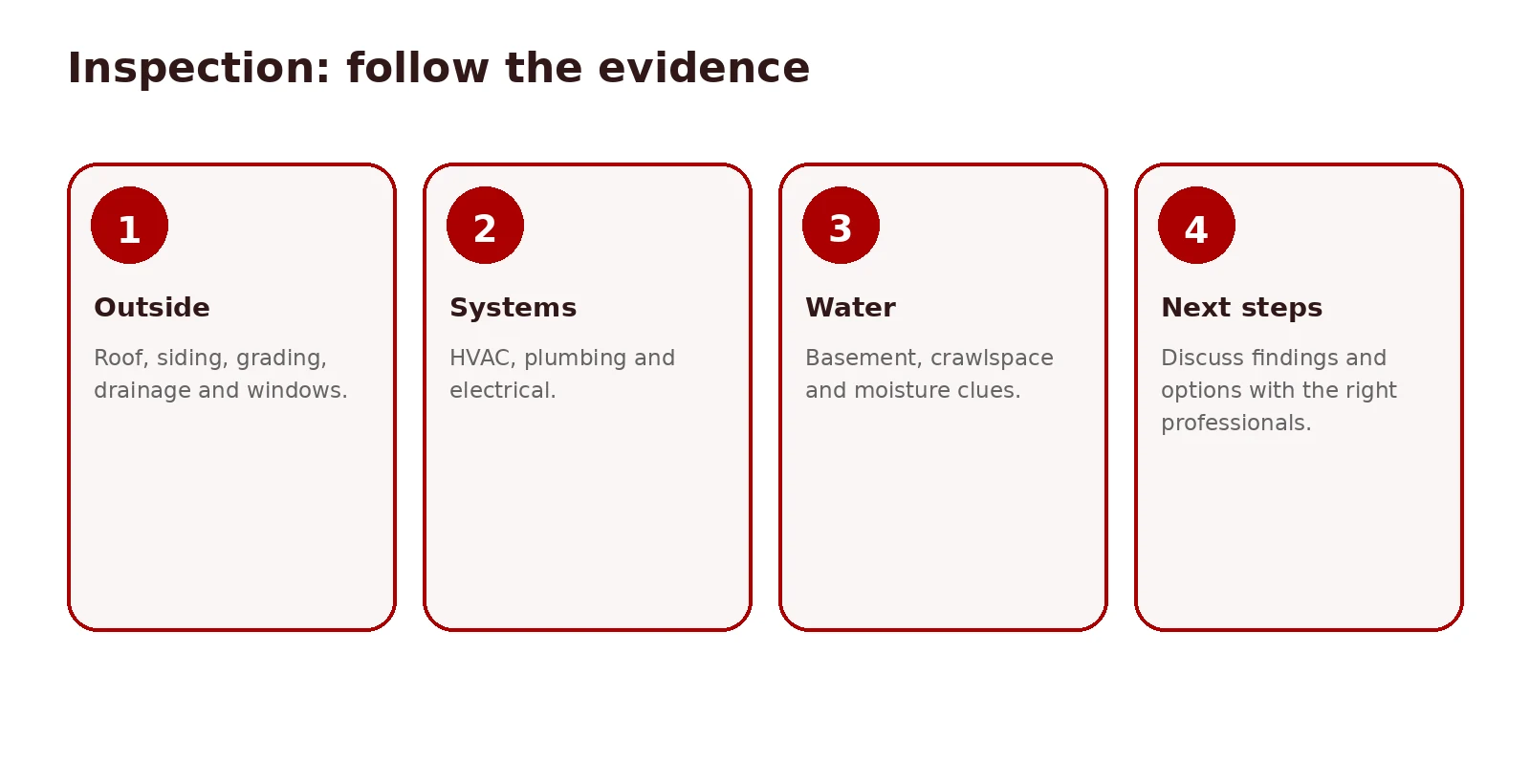
Seven Critical Inspection Zones
Don’t Panic
“An inspection report can be long. Focus first on safety, major systems, water/moisture and significant repair concerns; then discuss options with the appropriate professionals.”
7. Inspection vs. Appraisal: Two Different Questions
First-time buyers often confuse the home inspection with the lender appraisal. While both involve an on-site visit by an independent professional, they serve completely different purposes and protect different interests in the transaction.
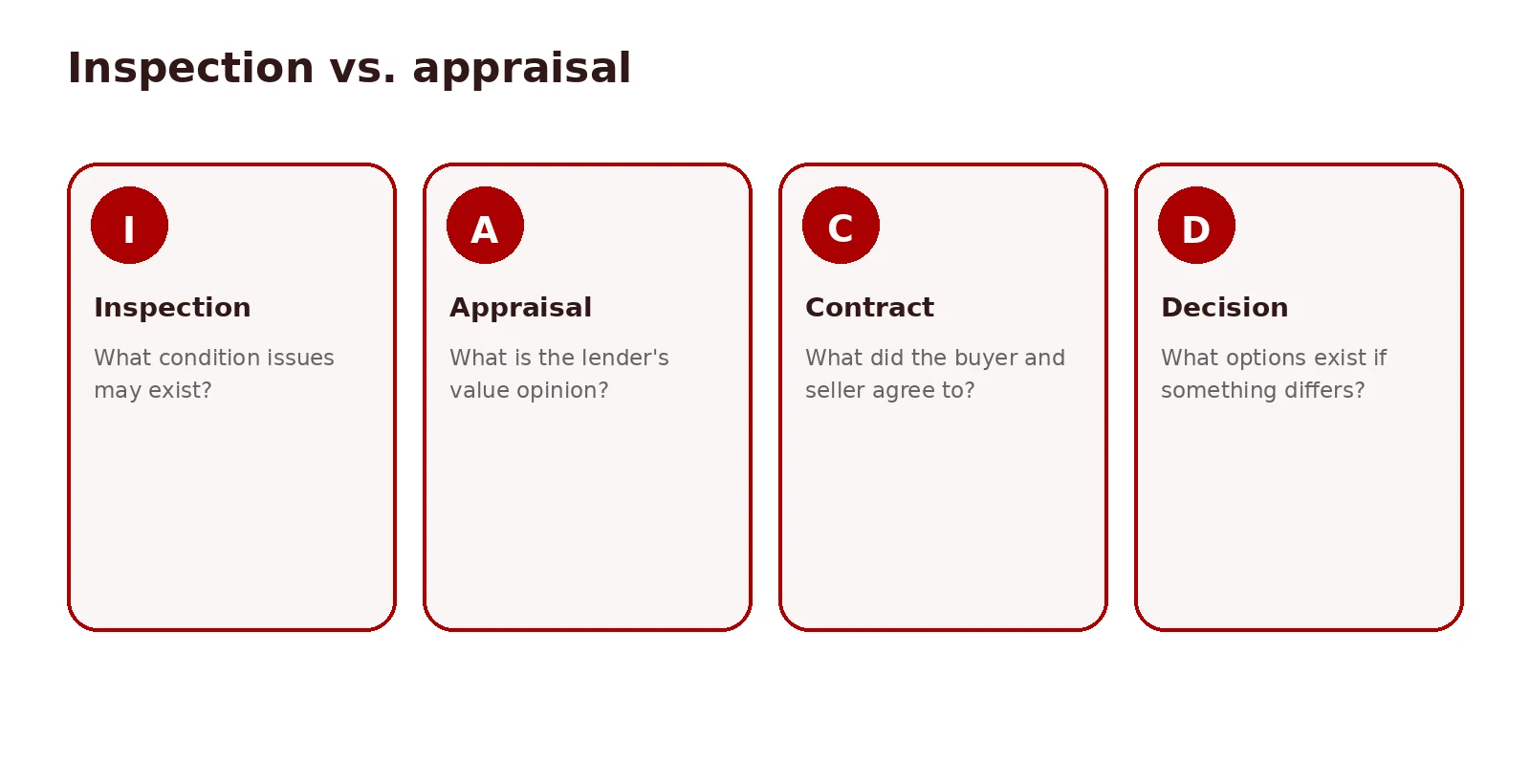
| Category | Home Inspection | Lender Appraisal | Purchase Contract |
|---|---|---|---|
| Primary Focus | Condition of the property | Value opinion for lending purposes | Terms agreed by buyer and seller |
| Core Question | What works, what is broken, and what is safety risk? | Does market evidence support the loan amount? | What are the rights, duties, and closing terms? |
| Who Orders It? | The Buyer (for buyer’s benefit) | The Mortgage Lender (paid by buyer) | Drafted by Buyer / Broker / Attorney |
| What It Evaluates | Potential defects, roof, HVAC, plumbing, moisture | Recent comparable sales, square footage, neighborhood trends | Purchase price, earnest money, contingencies, deadlines |
| Action if Issues Arise | Request repair credits or terminate under inspection clause | Negotiate price reduction, increase down payment, or contest comp selection | Enforce contractual obligations or negotiate amendments |
If the appraisal differs from the contract price, speak with your lender and real estate/legal professionals about the options allowed by your transaction (e.g., renegotiating price, making up the shortfall in cash, or exercising the appraisal contingency).
8. Follow the Deal From Offer to Keys
Once an offer is accepted by both parties, the transaction transitions into a deadline-driven project management workflow. Responding quickly to lender underwriter inquiries, title company requests, and attorney correspondence ensures your closing stays on track.
Create One Transaction Folder: The Document Checklist
Deadlines Matter
“Your actual dates come from your contract, lender and closing professionals. Do not rely on a generic internet timeline for a contractual deadline.”
9. Closing Day: Slow Down and Review
Closing day is the official culmination of your home purchase. Ownership legally transfers according to the transaction documents. Rather than rushing through signatures, slow down, compare numbers line by line against your Loan Estimate, and confirm every requirement with your closing attorney and title officer.
Critical Security Alert: Wire-Fraud Warning
Never rely only on an email for wiring instructions. Independently verify instructions using a trusted, verified phone number for your closing professional.
Cybercriminals frequently intercept real estate email threads with fraudulent wiring details. Always call your title company using an established phone number from your original paperwork before initiating any bank transfer.
The Final-Mile Closing Checklist
- Complete remaining lender conditions: Satisfy clear-to-close underwriting requirements.
- Review final loan and closing documents: Verify your interest rate, loan amount, monthly payment, and cash-to-close on the Closing Disclosure (CD).
- Confirm required funds and wiring instructions: Use verified wire instructions or obtain a certified cashier’s check as instructed by the title company.
- Confirm homeowners insurance is bound: Ensure your paid receipt and insurance binder are delivered to title.
- Complete final walk-through: Inspect the home right before closing to confirm agreed repairs were completed and condition hasn’t changed.
- Bring required identification: Carry two unexpired forms of government ID (such as driver’s license or passport).
- Keep copies of signed records: Store digital and physical copies of all executed closing papers in a secure location.
10. Your First 7 Days After Getting the Keys
Congratulations on getting your keys! Your first week as an Illinois homeowner is about learning the home, protecting your property, and establishing sensible safety routines—not immediately tearing down walls or rushing into expensive cosmetic remodels.
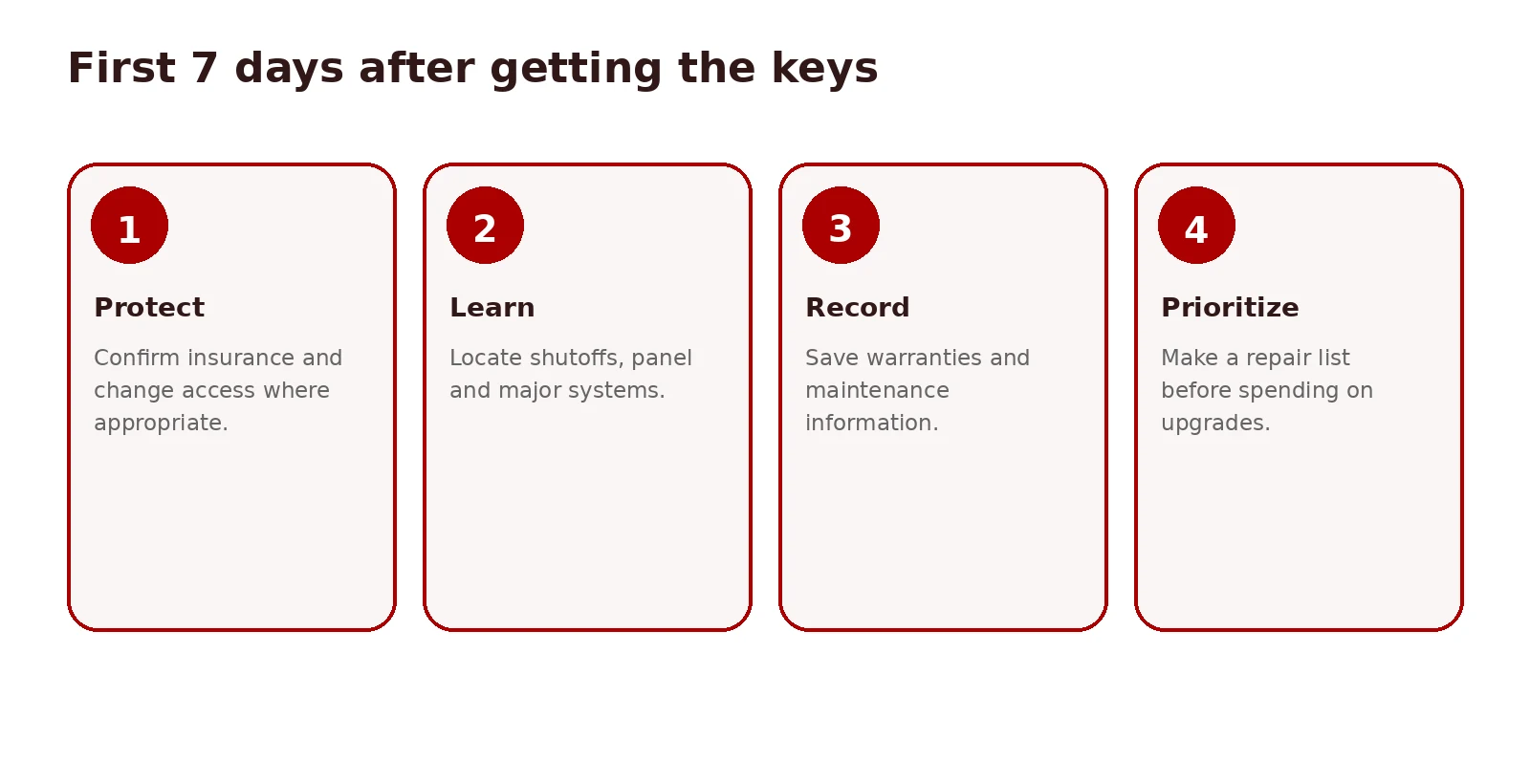
Essential First-Week Action Items
Wait Before You Renovate
“Live in the home for a little while. You may discover that the things you thought needed changing are not your highest priorities.”
11. The First-Time Buyer Readiness Test
Before you start writing offers, see how many of these ten foundational boxes you can confidently check. Use this interactive self-test to measure your homebuying preparedness:
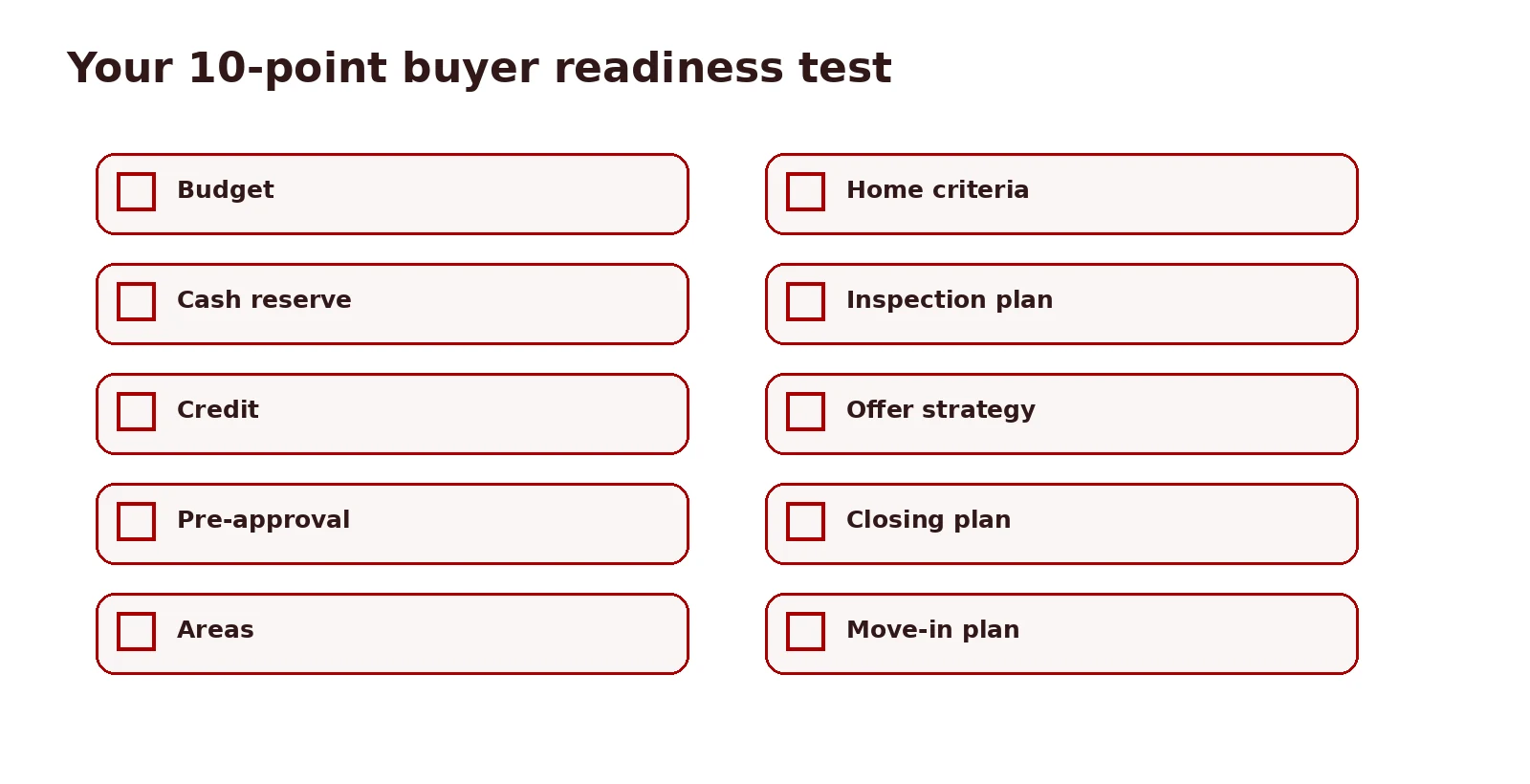
Interactive Checklist
Can You Answer “Yes” to These 10 Statements?
Take your time reviewing the financial and contract sections above before touring homes to avoid stressful surprises.
Goal
“You do not need to know everything. You need to know what to ask, who to ask, and when to ask.”
12. Five Mistakes That Can Make Buying Harder
First-time homebuyers often stumble when they move too quickly or concentrate entirely on one facet of the purchase (such as granite countertops or paint colors) while neglecting financial and legal mechanics. Avoid these five frequent mistakes:
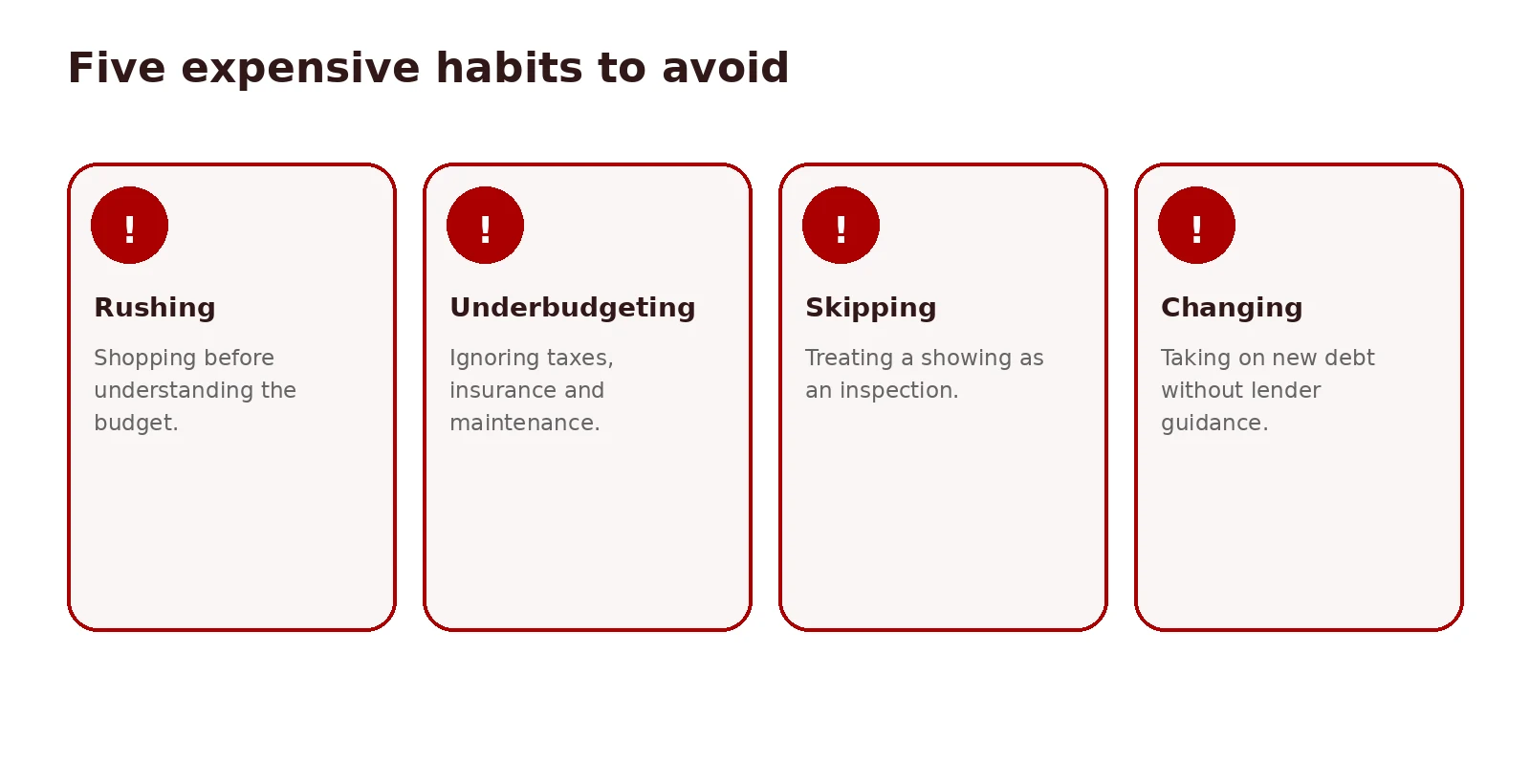
1. Starting serious shopping before understanding financing
Falling in love with houses before knowing your verified budget, down payment needs, and monthly comfort leads to emotional disappointment or financial overextension.
2. Budgeting only for the mortgage payment and forgetting other ownership costs
Ignoring Illinois property tax variations, insurance premiums, HOA dues, seasonal utility spikes, and ongoing repair reserves will quickly strain your monthly cash flow.
3. Treating a showing as a substitute for a professional inspection
A 30-minute walkthrough cannot evaluate heat exchangers, foundation moisture, electrical panels, or roof ventilation. Never skip a licensed physical inspection.
4. Making major financial changes without lender guidance
Financing cars, switching career paths, opening credit accounts, or shuffling untraceable funds between banks during underwriting can derail loan approval.
5. Missing contract, inspection, financing or closing deadlines
Real estate contracts in Illinois contain strict contractual time frames. Missing an earnest money deposit or inspection contingency window can forfeit your legal protections.
Better Approach
“Slow down at the decision points. A few good questions before signing can be worth far more than hours of research afterward.”
13. Questions to Ask Your Homebuying Team
The smartest homebuyers are not the ones who try to memorize every legal term or construction code. They are the ones who ask clear, direct questions before making commitments:
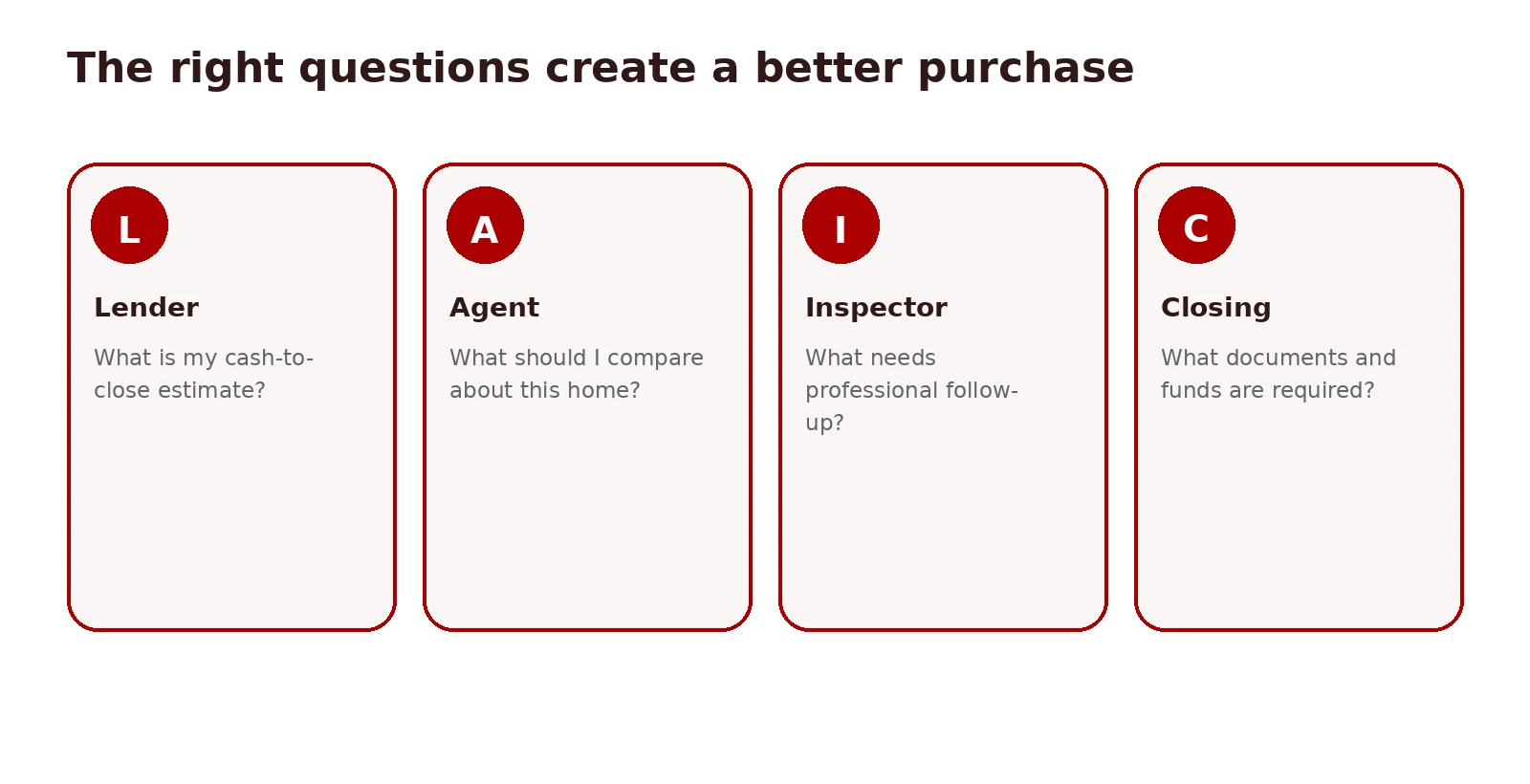
Ask Your Lender
- What is my exact estimated total cash to close?
- What is my total estimated monthly payment including taxes, insurance, and mortgage insurance?
- What interest rate or market conditions could change my figures before closing?
- What financial moves should I strictly avoid during underwriting?
Ask Your Agent
- How does this home compare with similar recent neighborhood sales?
- What micro-neighborhood factors, zoning, or tax trends should I investigate?
- What deadlines must we track after our offer is accepted?
- What terms should I understand before submitting this offer?
Ask Your Inspector & Closing Pro
- Which inspection findings deserve specialist contractor follow-up?
- What title documents or verified closing funds are needed from me?
- What items should I independently verify before signing closing papers?
14. Your One-Page Illinois Homebuyer Checklist
Keep this interactive checklist with your homebuying documents. Check off each milestone as you complete it:
Final Reminder
“Your first home does not need to be perfect. It needs to fit your budget, your life and your goals—and you need to understand the decisions you are making.”
Planning to Buy Your First Home in Illinois?
Buying your first home involves many decisions. Homes by Bhargav can help you organize the search, compare properties, evaluate neighborhood taxes, and move through the process with greater clarity and confidence.