


How Much House Can You Afford in the Chicago Suburbs?
A Practical 2026 Home Affordability Guide
How much house can you afford in the Chicago suburbs?
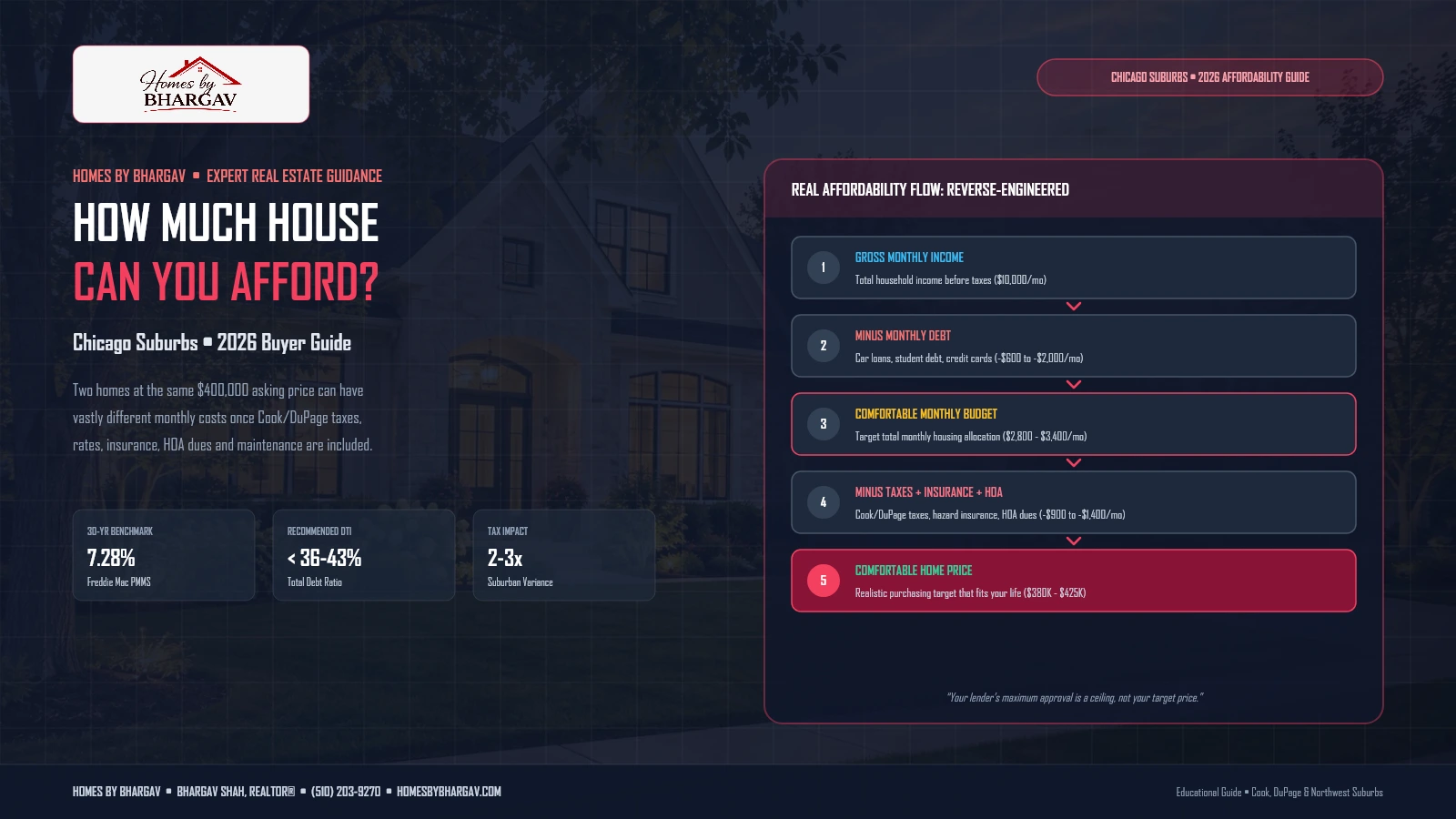
The answer is not simply the maximum amount a lender approves. Two homes with the same $400,000 asking price can produce very different monthly costs once property taxes, homeowners insurance, HOA fees, mortgage insurance, maintenance, and financing are included.
A better approach is to start with the monthly payment that comfortably fits your life and work backward toward a realistic home-price range. In 2026, when mortgage rates and suburban tax rates fluctuate significantly across Cook, DuPage, Lake, and Will counties, having a clear mathematical plan prevents costly buyer regrets.
Homes by Bhargav Core Principle
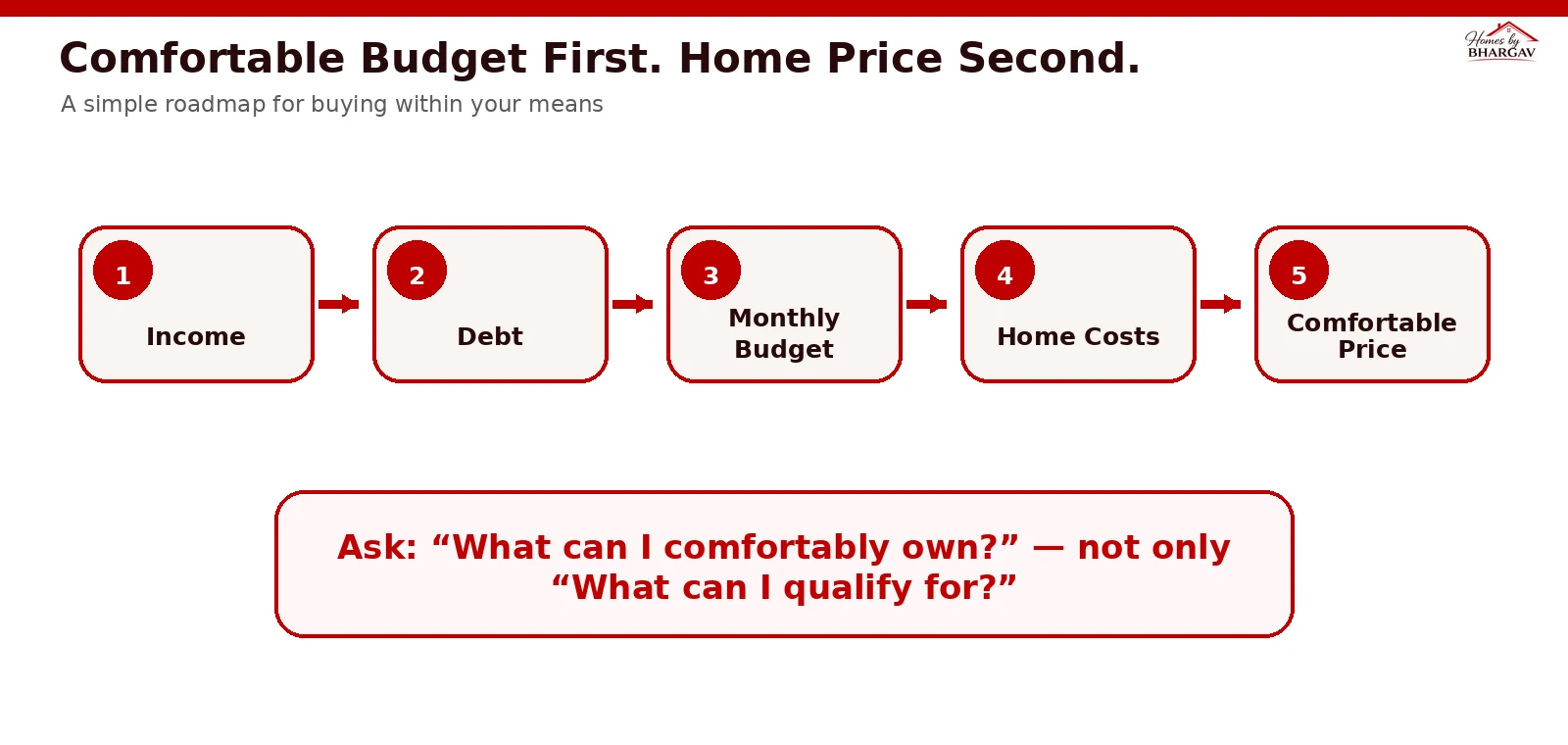
“A home should support your life. Your life should not exist only to support the mortgage. Ask: What can I comfortably own? — not only: What can I qualify for?”
Table of Contents — 20 Practical Topics
- 1. Start With the Total Monthly Cost
- 2. Income Is Only the Starting Point
- 3. Understand Debt-to-Income (DTI)
- 4. Mortgage Rates Change Buying Power
- 5. Property Taxes Change the Math
- 6. Down Payment Changes the Equation
- 7. Do Not Forget Closing Costs
- 8. Emergency Fund After Closing
- 9. HOA Fees Matter Too
- 10. Maintenance Is Part of Affordability
- 11. Maximum Approval Is Not Your Target
- 12. Interactive Affordability Formula
- 13. Compare Three Homes by Total Cost
- 14. Six Controls That Change Buying Power
- 15. If the Home You Want Is Above Budget
- 16. Five Numbers Before Touring Homes
- 17. Questions to Ask Your Mortgage Lender
- 18. Questions to Ask Your Agent
- 19. The Best Home Fits Your Life
- 20. Ready-to-Shop Checklist
1. Start With the Total Monthly Cost
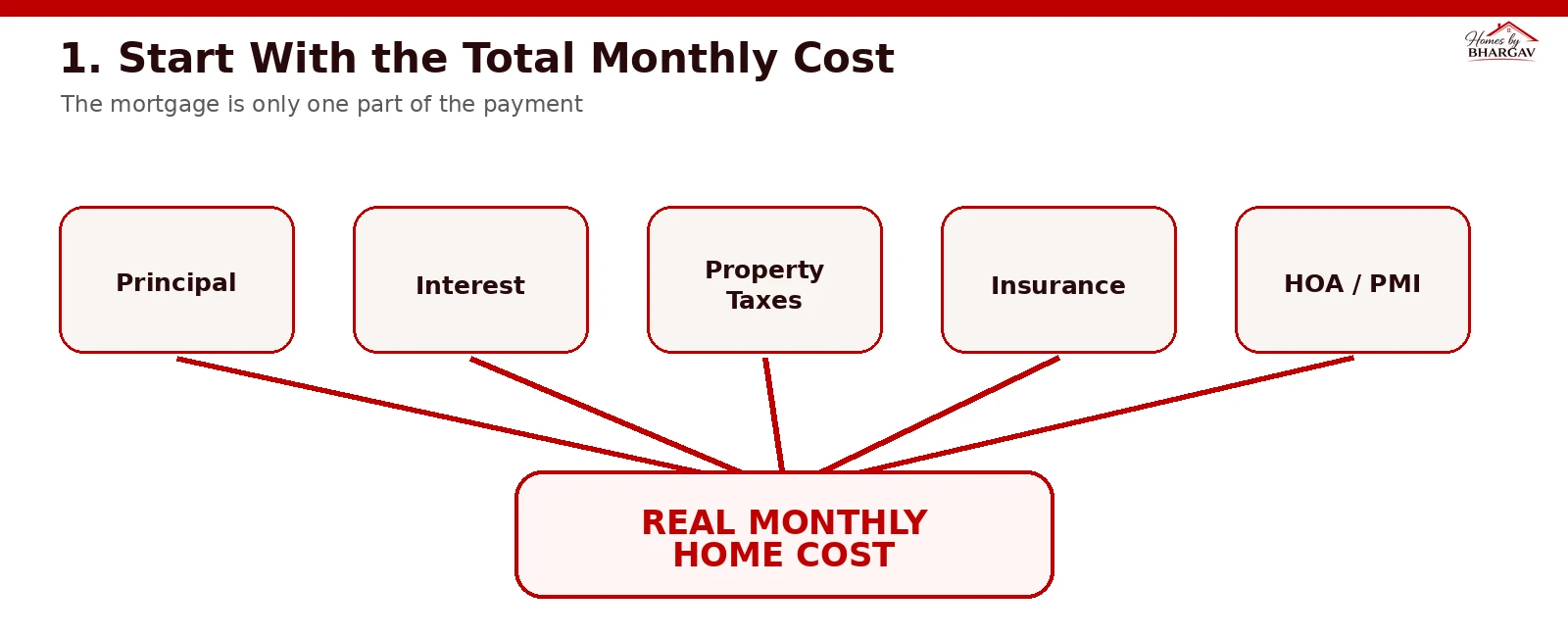
The list price is not the same as the monthly cost of owning the home. A buyer may see a $400,000 listing in a community like Schaumburg or Des Plaines and think only about principal and interest. In reality, your actual housing bill bundles multiple recurring line items:
2. Your Income Is Only the Starting Point
Two people can earn the exact same salary and still have radically different buying power.
Suppose Buyer A and Buyer B both earn $10,000 per month before taxes ($120,000 per year). Buyer A has a $350 car payment and $250 in student loans ($600 total monthly debt). Buyer B has two car payments, higher student debt, and credit card minimums totaling $2,000 per month.
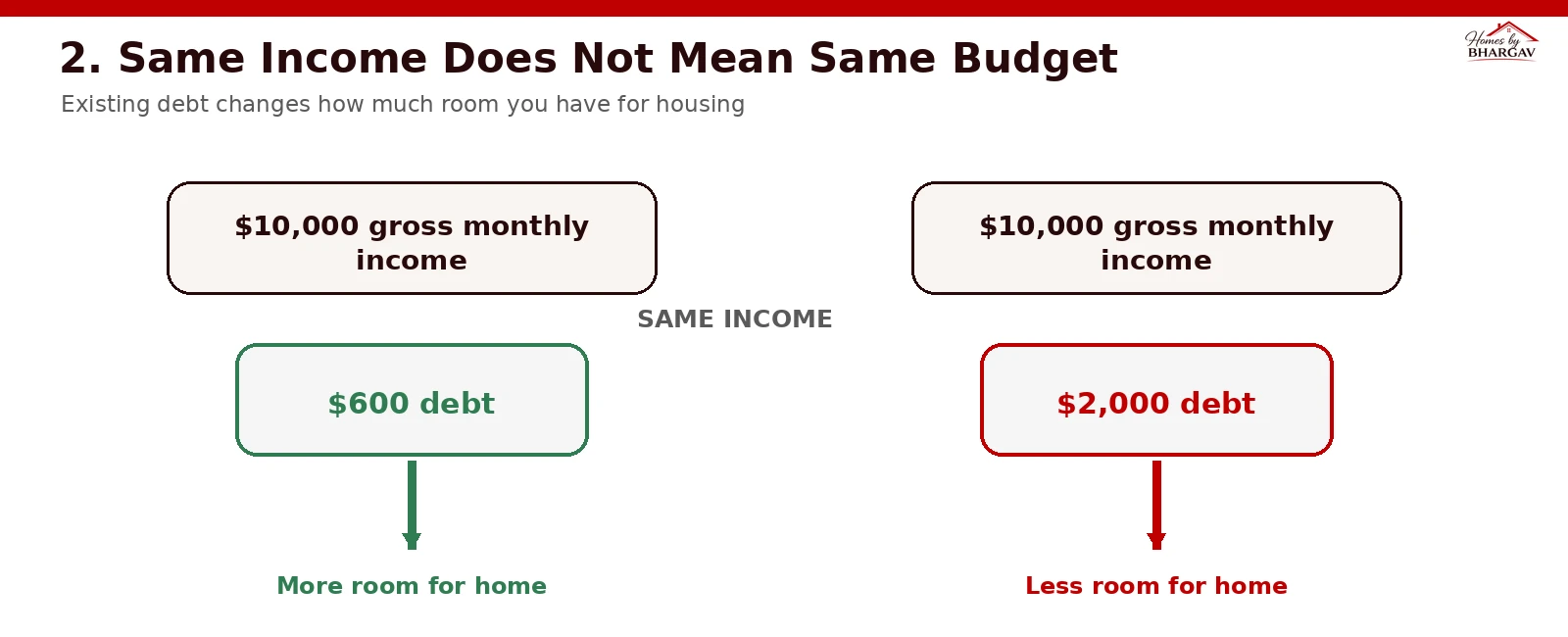
Even with identical income, Buyer A has $1,400 more room in their monthly cash flow every single month. That difference could represent over $180,000 in mortgage borrowing capacity or provide the cushion to afford a home in a higher-tax school district.
3. Understand Debt-to-Income Ratio (DTI)
Mortgage lenders use Debt-to-Income Ratio (DTI) to compare your total recurring monthly debt with your gross monthly income.
Total Required Monthly Debt ÷ Gross Monthly Income = DTI %
Example: $4,200 total monthly debt ÷ $10,000 gross income = 42% DTI
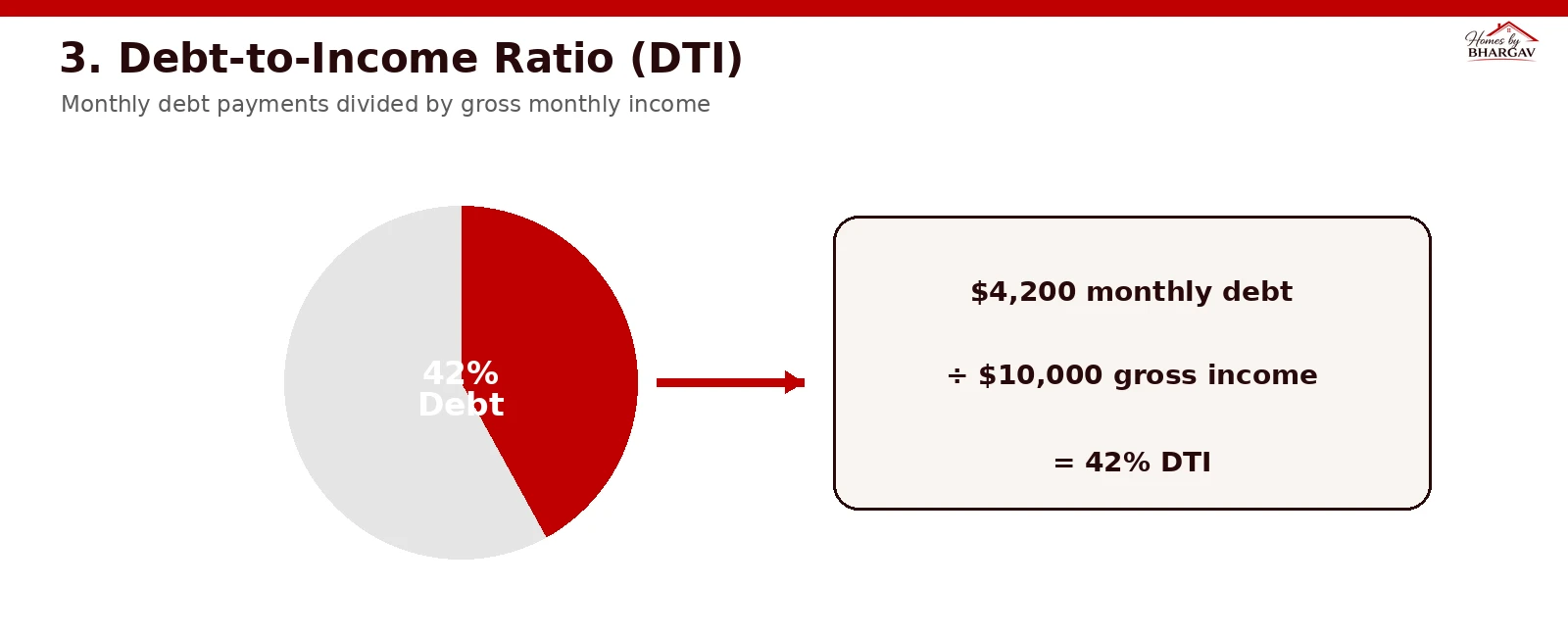
A DTI ratio by itself does not guarantee approval or denial. Loan program rules (Conventional, FHA, VA, jumbo), credit score, cash reserves, income documentation, and property specifics also govern the outcome. But the practical lesson is universal: more existing debt leaves less room for the mortgage.
4. Mortgage Rates Can Change Buying Power
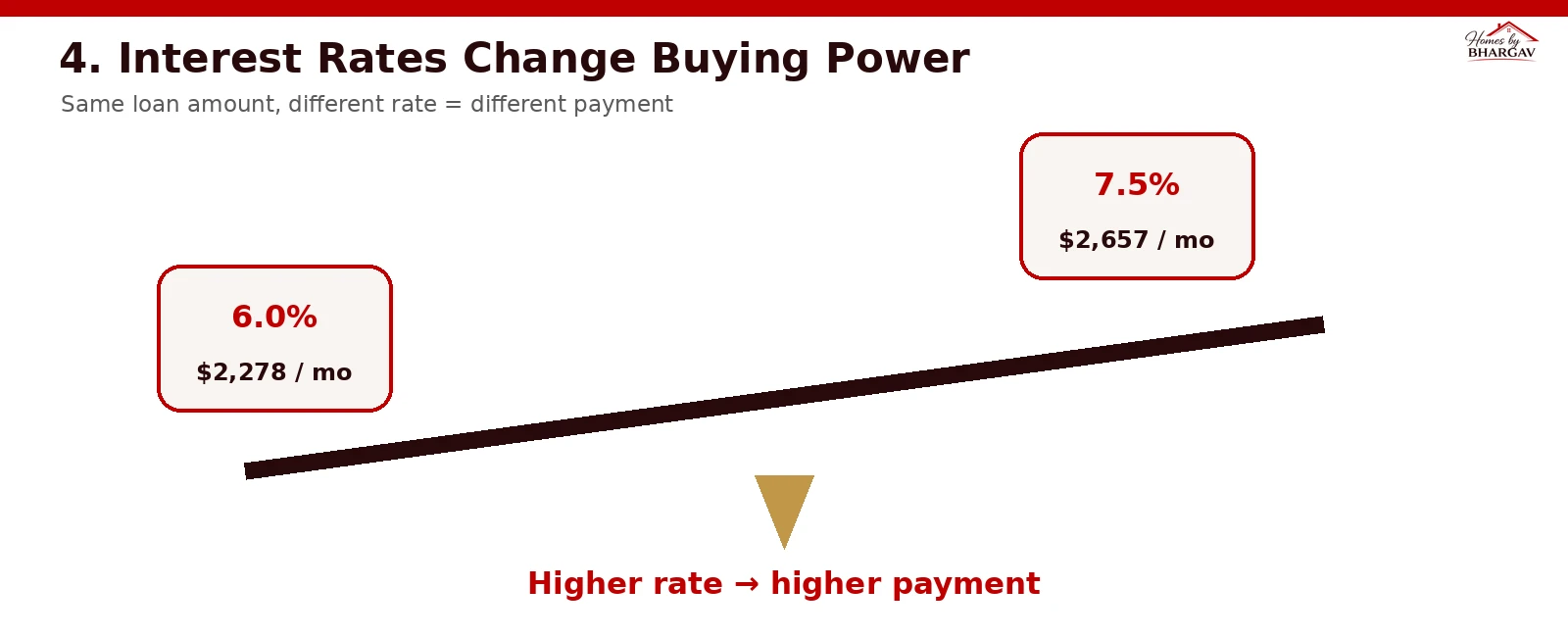
The same loan amount produces a dramatically different monthly payment depending on the interest rate.
As of October 1, 2026, Freddie Mac reported an average U.S. 30-year fixed mortgage rate of 7.28%. An individual buyer may secure a higher or lower rate depending on credit history, loan type, points, down payment, and lender pricing. Review our detailed guide on what buyers should know about interest rates for deeper context.
| Interest Rate | Illustrative $380,000 Loan (P&I) | Monthly Difference vs. 6.00% |
|---|---|---|
| 6.00% | ≈ $2,278 / month | Baseline |
| 7.28% (Oct 1, 2026 Freddie Mac) | ≈ $2,600 / month | +$322 / month (+$3,864/yr) |
| 7.50% | ≈ $2,657 / month | +$379 / month (+$4,548/yr) |
*Illustrative calculations based on a $380,000 30-year fixed loan. Property taxes, homeowners insurance, mortgage insurance, and HOA fees are not included.
5. Property Taxes Can Completely Change the Math
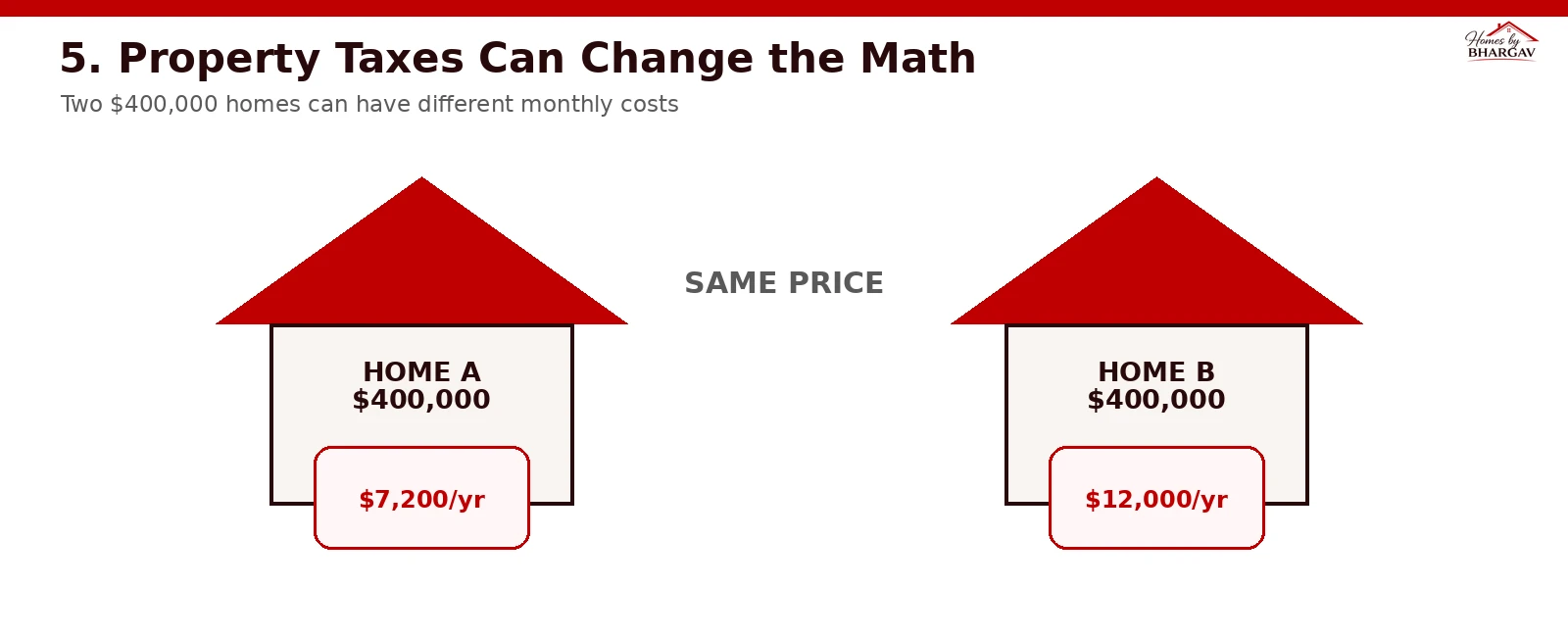
In the Chicago suburbs, property taxes are often the single largest differentiator in your monthly payment. Always compare the property tax bill — not just the asking price.
For example, two homes in neighboring towns might both carry a $400,000 listing price. House A has an annual property tax bill of $6,000 ($500/month). House B has an annual property tax bill of $11,400 ($950/month). That is a $450/month difference for the exact same purchase price. Over a 5-year ownership horizon, that amounts to $27,000 in additional cash outlay.
How to Verify Property Taxes Before Making an Offer:
- Review the most recent Cook/DuPage county tax bill on the official county portal.
- Confirm existing exemptions (Homeowner, Senior, Senior Freeze) that may expire when ownership transfers.
- Ask your lender how the anticipated unexempted tax figure will affect your qualifying payment.
- Read our guide to understanding property taxes across Cook, DuPage, and Lake counties.
6. Your Down Payment Changes the Equation
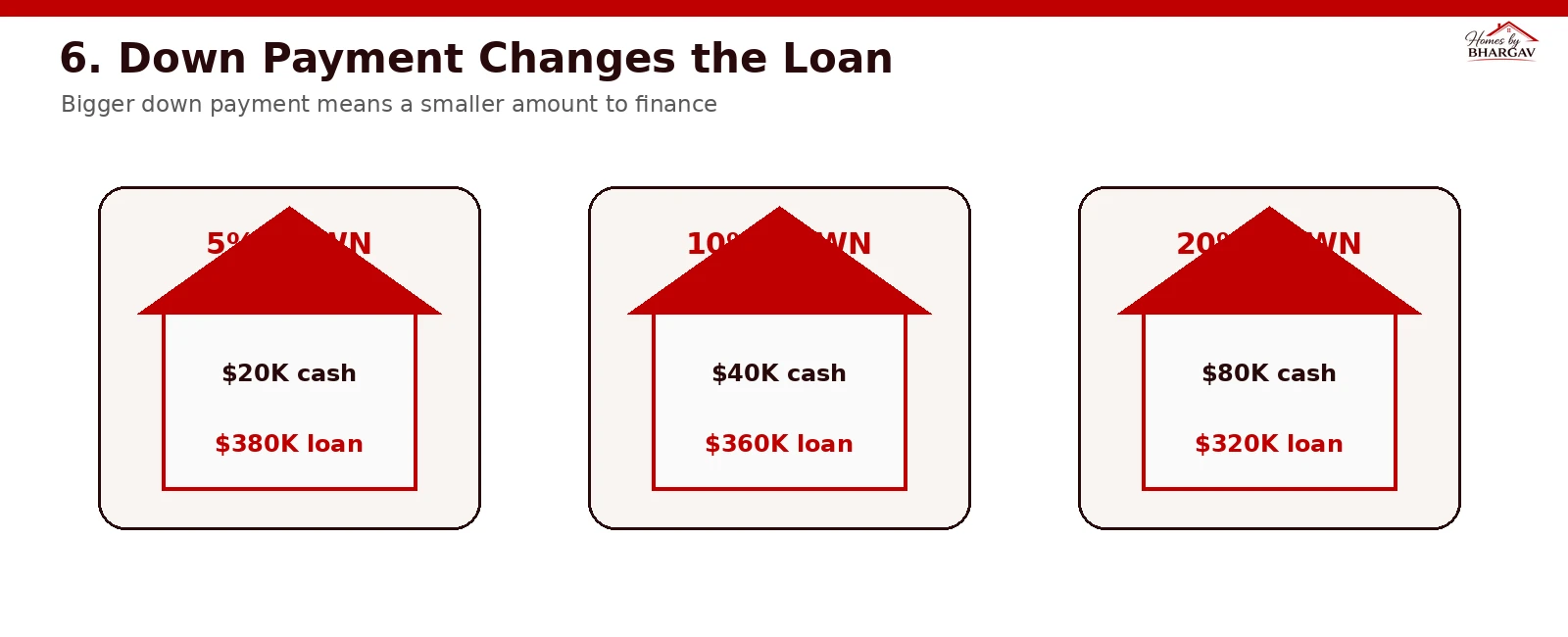
A larger down payment directly reduces your required loan balance and shields you from monthly mortgage insurance (PMI).
| Down Payment % | Cash Down on $400,000 Home | Remaining Loan Balance | Mortgage Insurance Note |
|---|---|---|---|
| 5% Down | $20,000 | $380,000 | PMI applies (~$120-$200/mo) |
| 10% Down | $40,000 | $360,000 | Lower PMI tier applies |
| 20% Down | $80,000 | $320,000 | Zero PMI required |
However, putting 20% down is not automatically the smartest strategy if it completely wipes out your bank accounts. You still require cash for closing expenses, moving costs, initial repairs, and life emergencies.
7. Do Not Forget Closing Costs
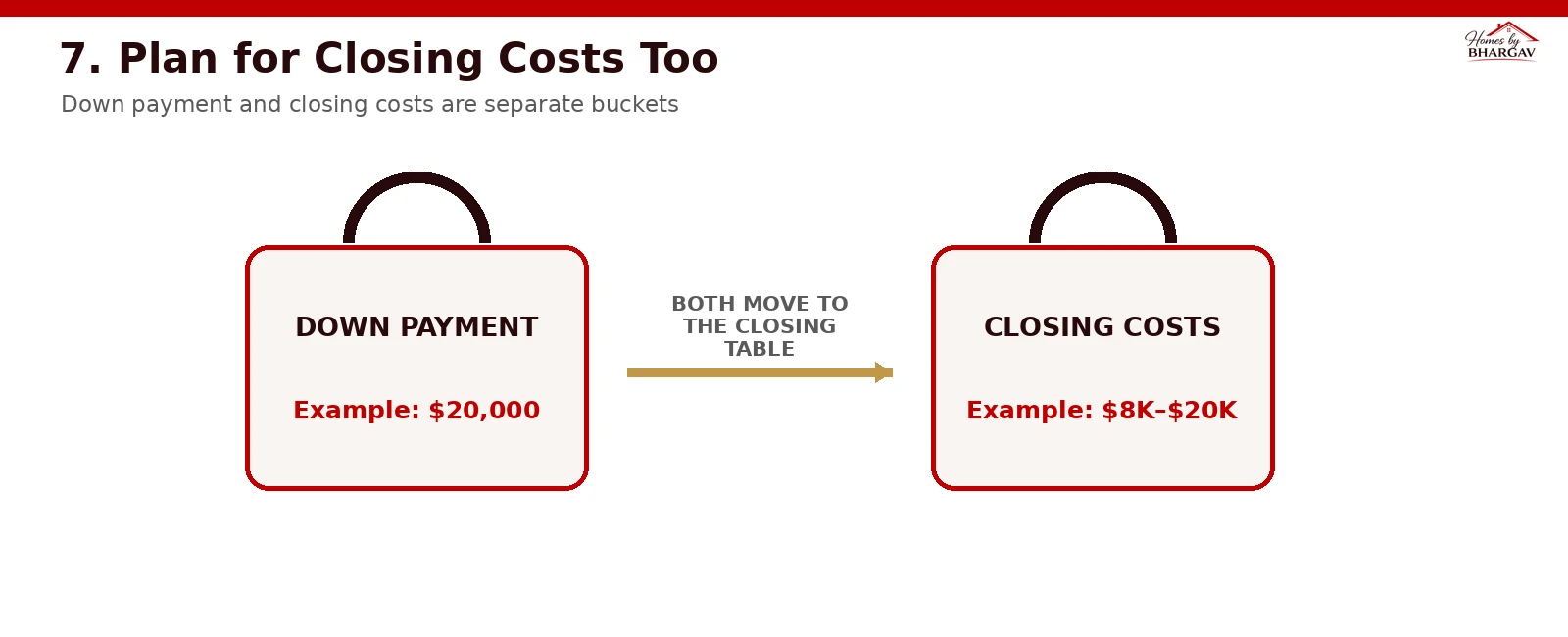
Down payment and closing costs are two separate cash requirements.
In Illinois, closing costs generally range from 2% to 5% of the purchase price. On a $400,000 home purchase, 2% equals $8,000 and 5% equals $20,000. These expenses cover:
- Lender origination, underwriting, and processing fees
- Title insurance, settlement, and closing fees
- Escrow prepaids: 6-12 months of property taxes and 12-14 months of homeowners insurance
- Property appraisal and municipal transfer stamps (where applicable)
- Attorney representation fees
8. Keep an Emergency Fund After Closing
Homeownership begins the moment you receive the keys. If a buyer has $60,000 saved, allocating the entire $60,000 toward the down payment and closing costs leaves zero margin for error.
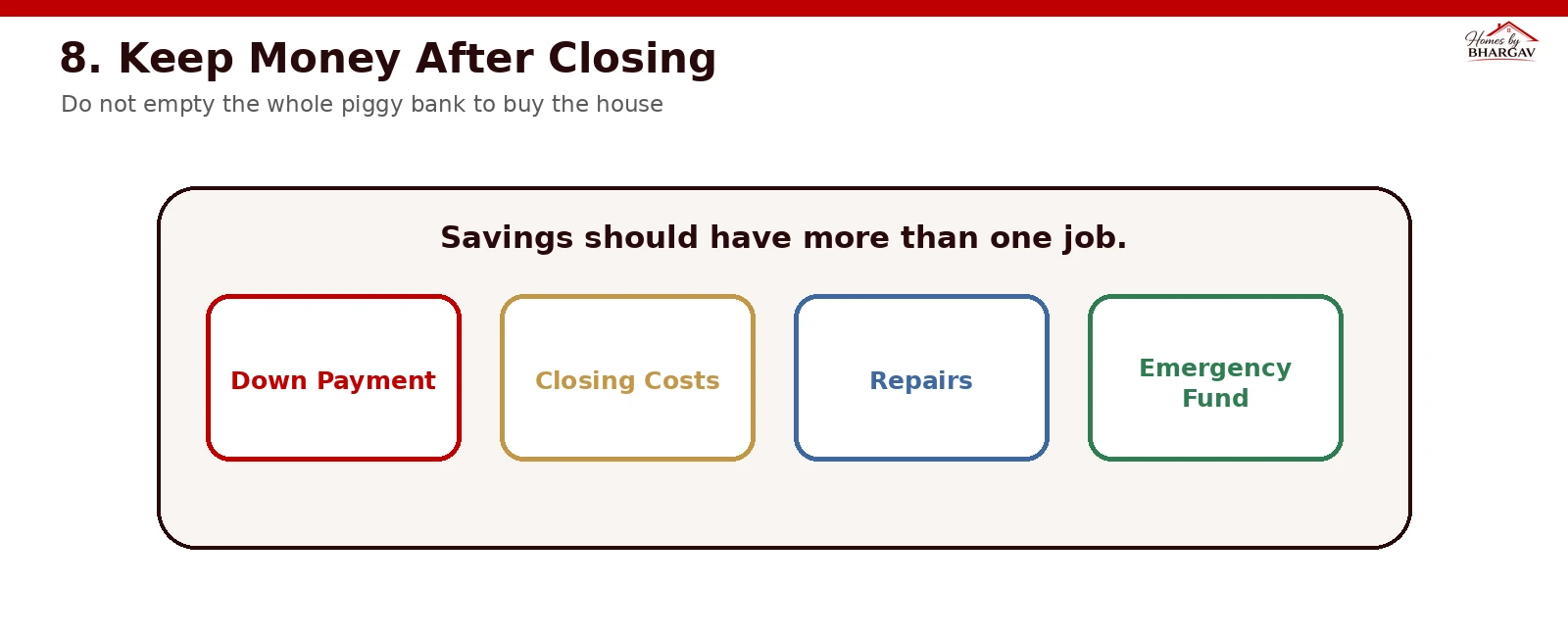
After closing on a Chicagoland home, a winter freeze, water heater replacement, sewer line backup, or unexpected car repair can occur. Maintaining 3 to 6 months of living expenses in an untouchable liquid reserve ensures you sleep soundly in your new home.
Not sure what price range fits your monthly budget?
Homes by Bhargav helps buyers compare suburbs, assess true tax bills, and build a stress-free purchase plan before scheduling tours.
9. HOA Fees Matter Too
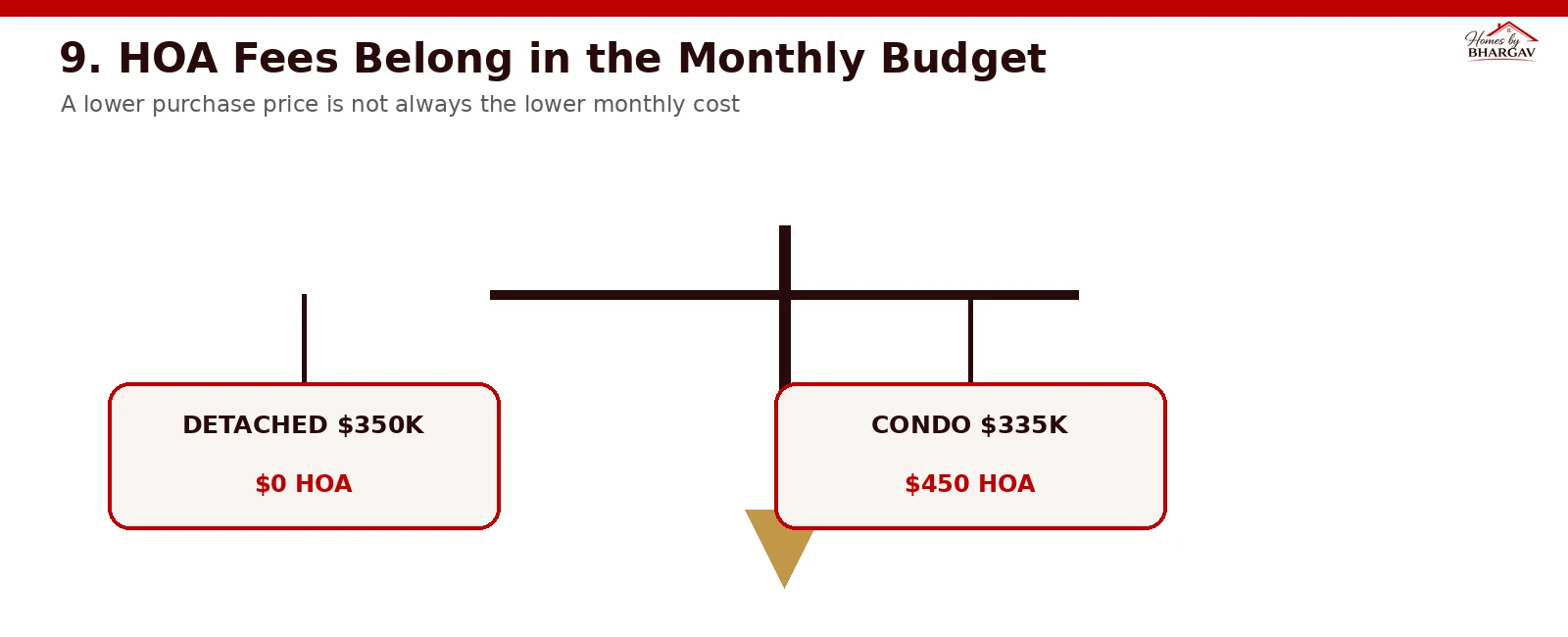
Condominiums and townhomes often feature attractive list prices compared to single-family homes, but association fees (HOA) must be accounted for in the monthly math.
A $335,000 condo with a $450/month HOA fee often produces a higher total monthly payment than a $360,000 single-family home with zero association dues. See our comprehensive comparison of condos, townhomes, and single-family homes in Chicago suburbs.
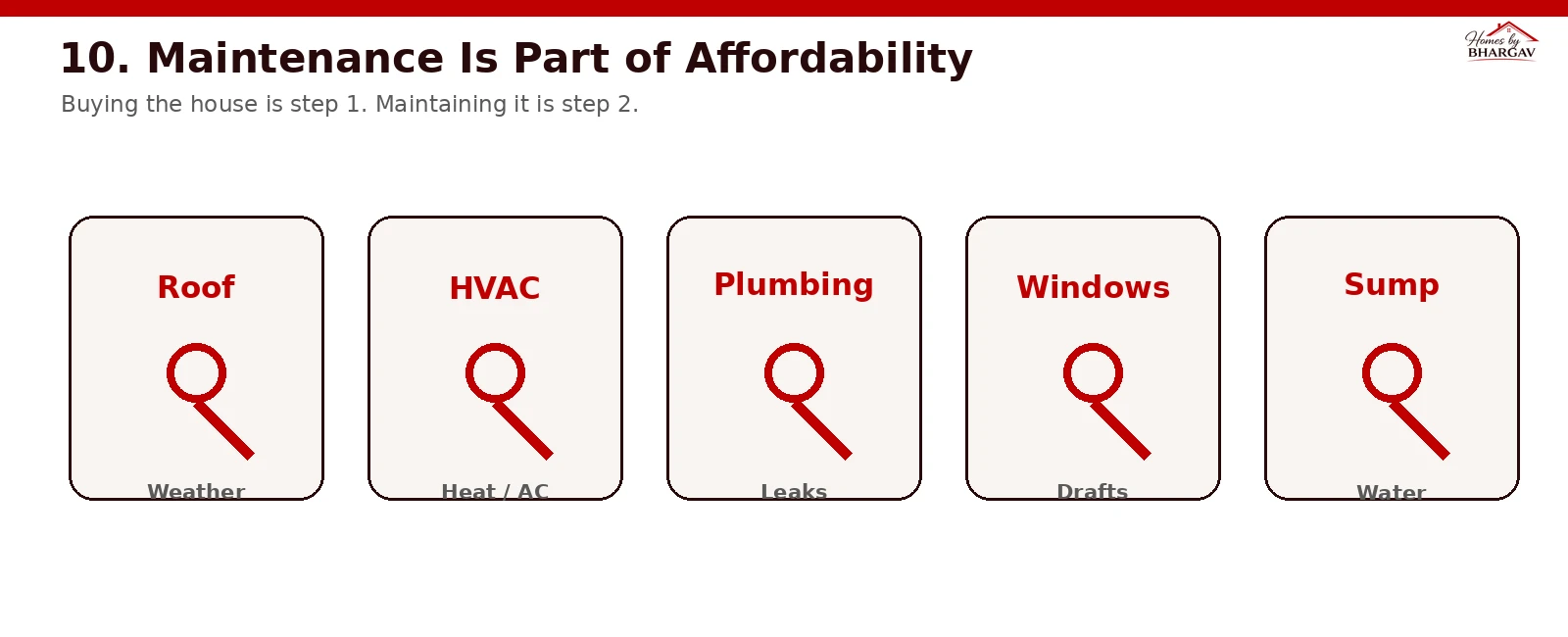
10. Maintenance Is Part of Affordability
A monthly payment may fit on paper today, but can rapidly become unmanageable if major system repairs are ignored.
In northwest suburban Chicago communities, older single-family housing stock built in the 1960s to 1980s may require capital replacements: roof shingles, furnace, air conditioning condenser, sump pumps, windows, and sewer lines.
11. The Maximum Approval Is Not Your Target Price
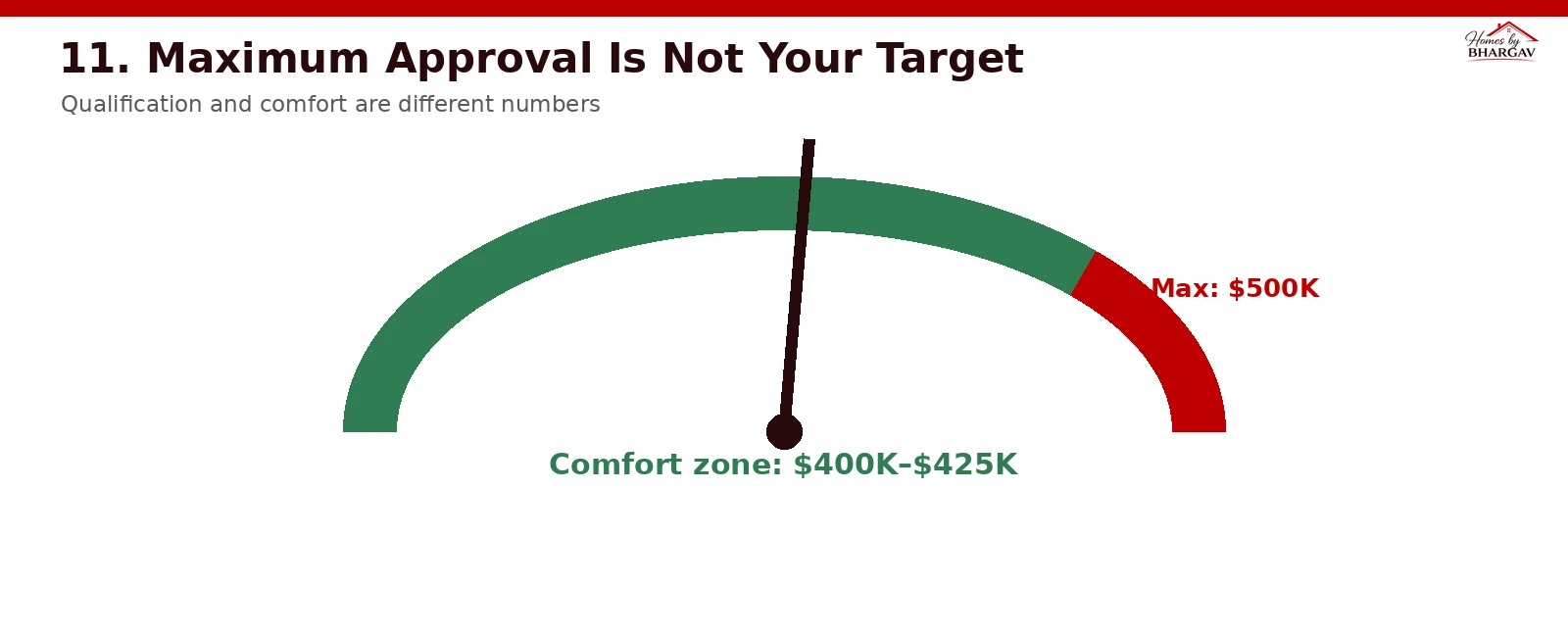
A mortgage lender’s maximum approval amount is a ceiling — not your suggested shopping target.
If a lender preapproves you for up to $500,000, that does not mean you must search for $490,000 homes. Setting your target search band between $400,000 and $425,000 preserves discretionary income for retirement, college savings, vacations, and peace of mind.
12. Use a Simple Affordability Formula — Interactive Calculator
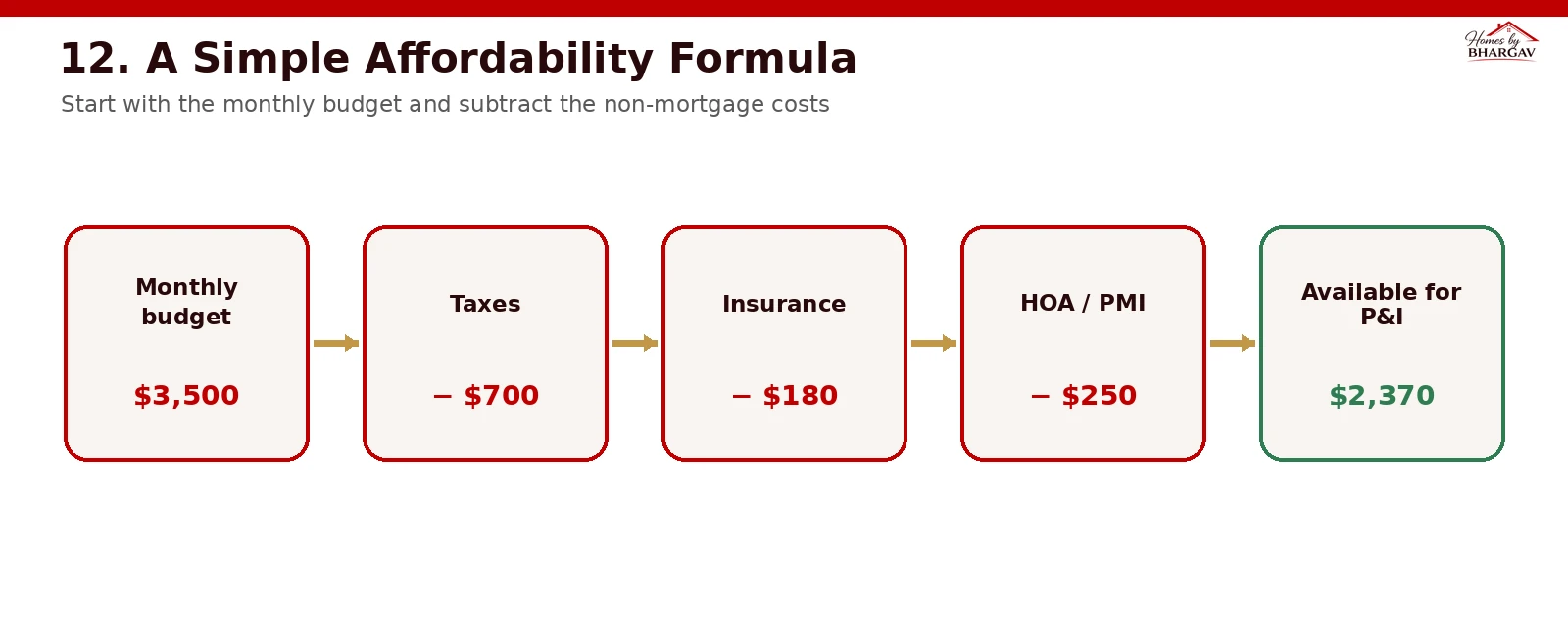
Instead of guessing, work backward using this proven mathematical sequence:
Reverse Home Affordability Calculator
$2,350 / mo
$343,461
≈ $393,461
*Educational planning estimate only. Does not constitute loan approval. Final loan qualification depends on credit, underwriting, down payment guidelines, and lender evaluation.
13. Compare Three Homes by Total Cost
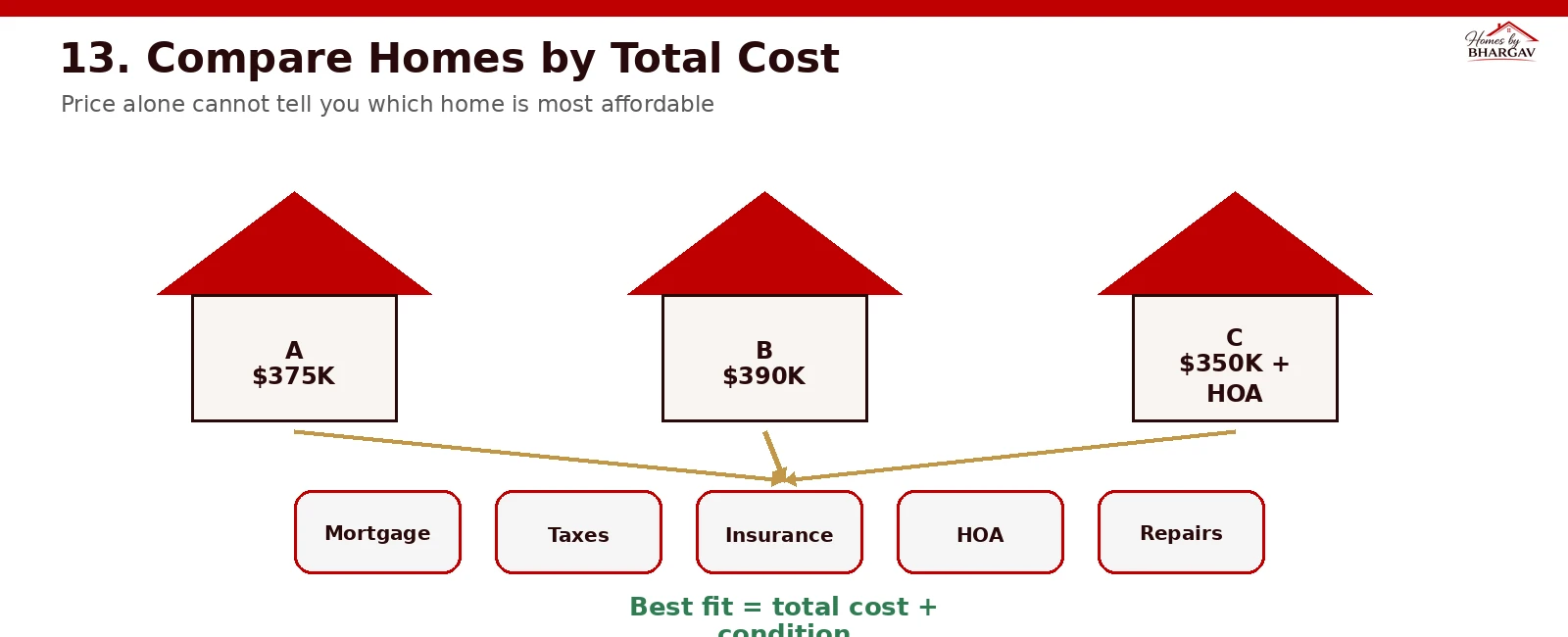
The lowest list price does not guarantee the lowest monthly housing expense. Consider this real Chicagoland scenario:
| Property | List Price | Annual Taxes | Monthly HOA | Estimated Total Monthly* |
|---|---|---|---|---|
| Home A (Single Family) | $375,000 | $6,200 ($517/mo) | $0 | ≈ $3,210 / mo |
| Home B (Updated Systems) | $390,000 | $7,400 ($617/mo) | $0 | ≈ $3,415 / mo |
| Home C (Condo) | $350,000 (Lowest Price) | $5,400 ($450/mo) | $450 / mo | ≈ $3,425 / mo (Highest Monthly!) |
*Illustrative monthly estimates include principal & interest (assuming 10% down at 7.28% rate), property tax, hazard insurance, and HOA dues.
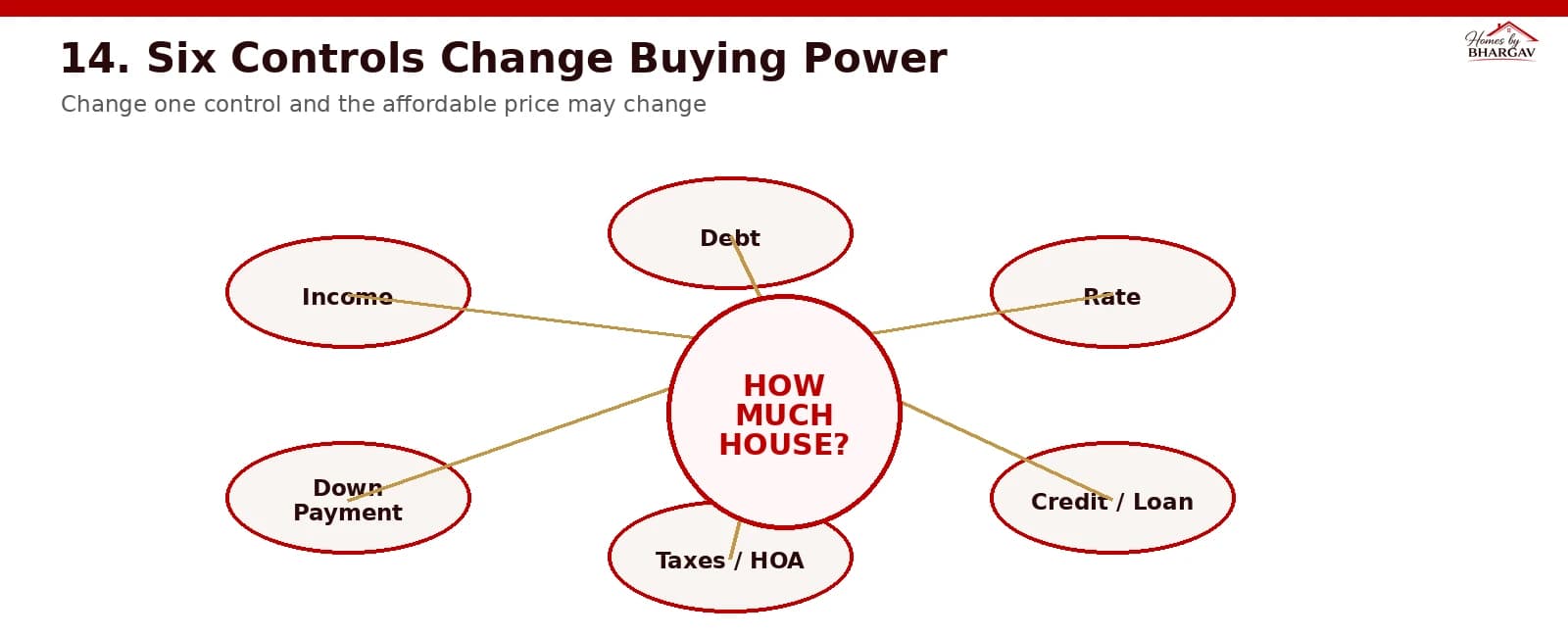
14. Know the Six Controls That Change Buying Power
Home affordability is not a single rigid number — it operates like a dashboard with six adjustable levers:
15. If the Home You Want Is Above Budget
If your desired home exceeds your comfort zone, you have much better alternatives than simply stretching your monthly payment to the breaking point:
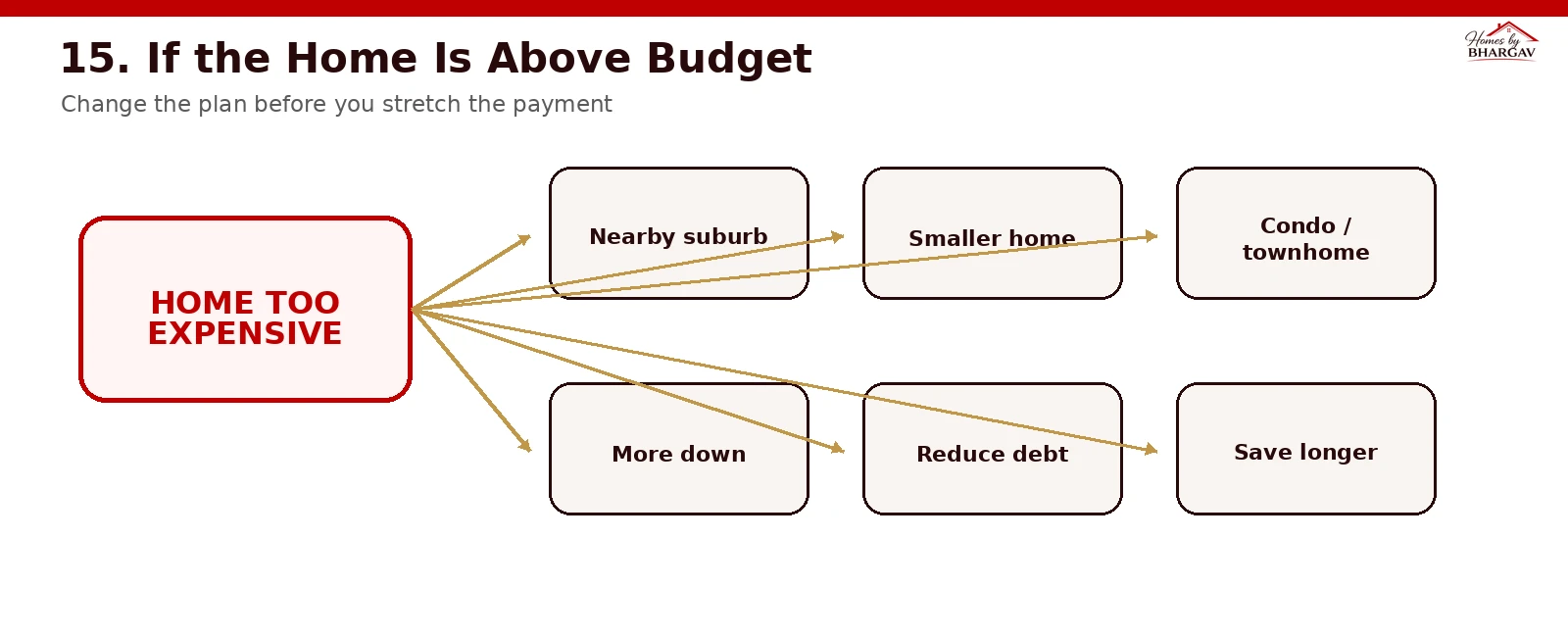
- Expand into neighboring suburbs: If homes in Arlington Heights or Northbrook exceed your target, compare nearby communities like Wheeling, Streamwood, or Palatine. Check out our first-time buyer suburbs guide.
- Consider a townhome: Townhomes often offer private entrances, garages, and modern floorplans at a significantly lower purchase entry point.
- Pay down high-interest debt: Eliminating a $500 monthly car or loan payment frees up significant mortgage capacity.
- Pause and save for a few more months: Sometimes the most profitable real estate move is allowing your savings and credit to mature rather than rushing into an uncomfortable mortgage.
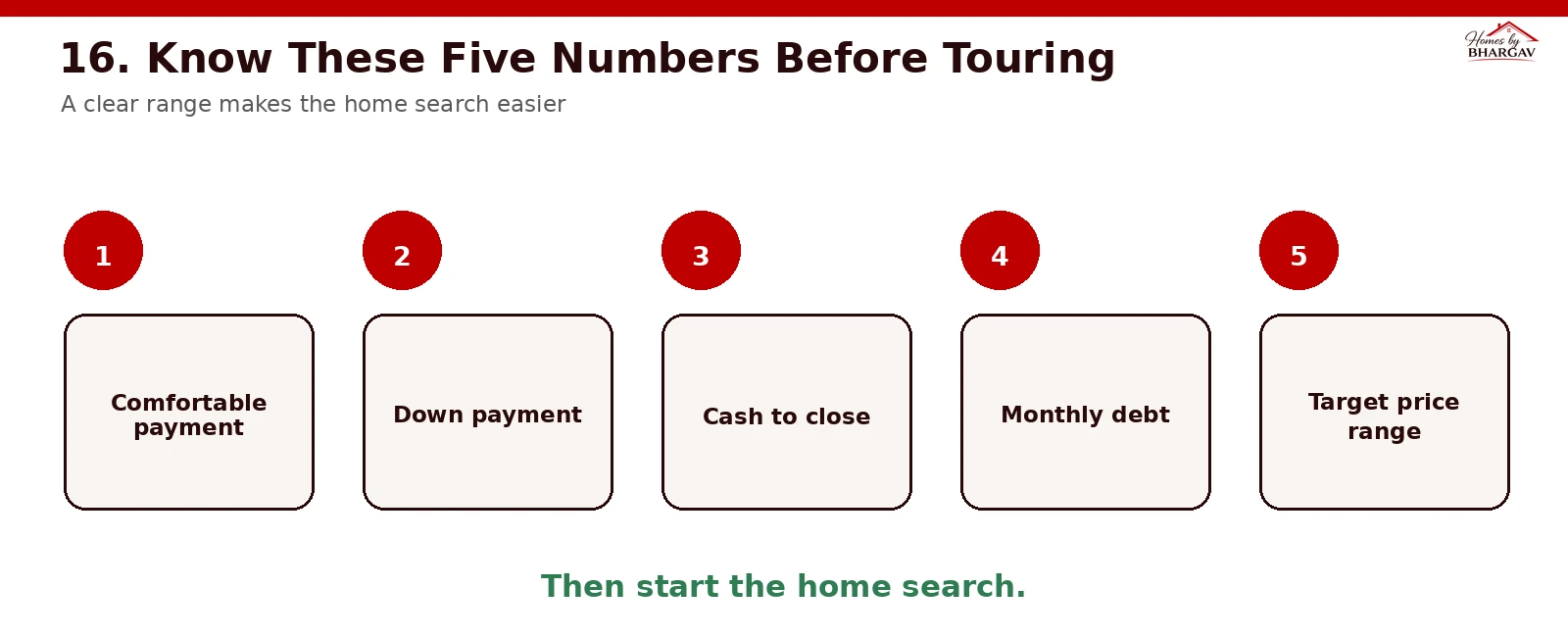
16. Know These Five Numbers Before Touring Homes
Never tour suburban open houses without locking down these five foundational numbers:
17. Questions to Ask Your Mortgage Lender
Your mortgage lender is your financing partner. Bring this exact checklist to your initial loan interview:
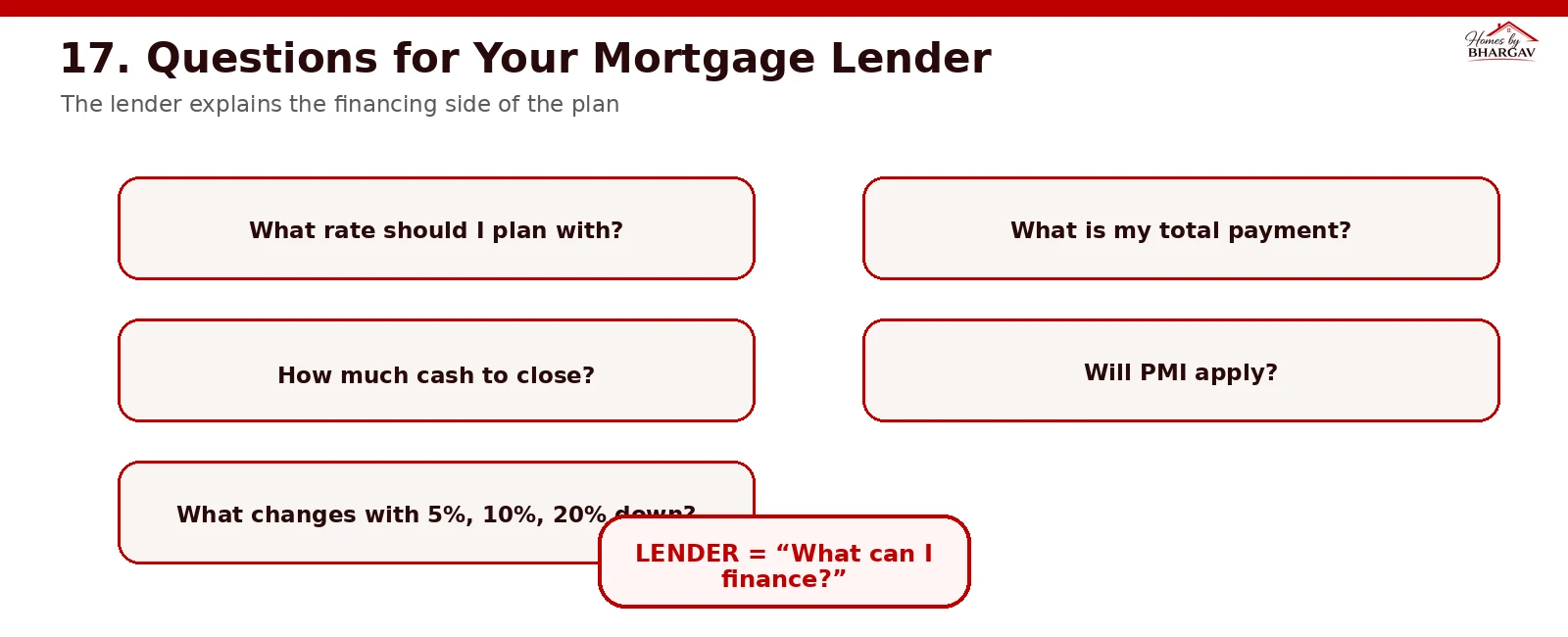
- What specific loan programs (Conventional, FHA, VA) fit my down payment and credit profile?
- What interest rate and APR should I model for my monthly payment scenarios?
- What is the complete estimated monthly payment including principal, interest, taxes, insurance, and PMI?
- How does putting 5%, 10%, or 20% down alter my monthly payment and PMI requirement?
- What will my total cash to close be on a representative $400,000 purchase?
- How will fluctuating Cook or DuPage County tax bills impact my qualification approval?
18. Questions to Ask Your Real Estate Agent
A local buyer’s agent translates your financial criteria into neighborhood reality. When working with Homes by Bhargav, we review:
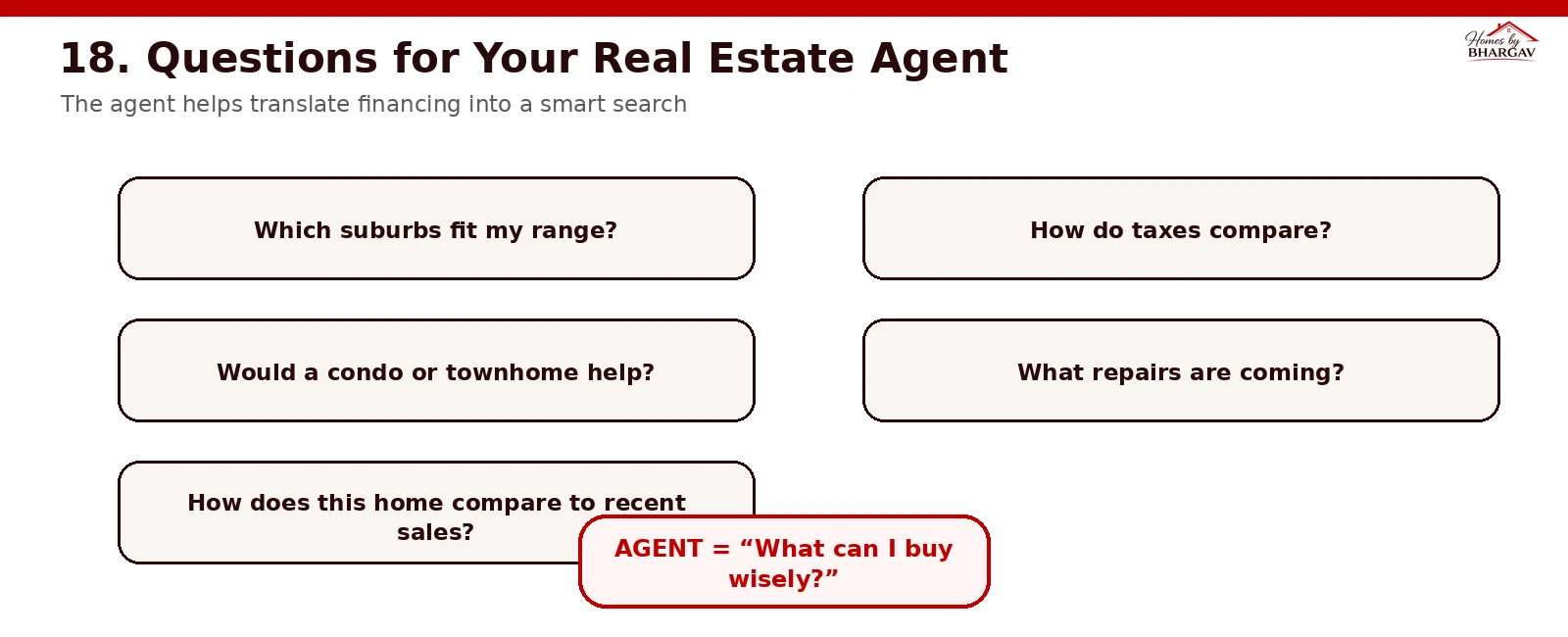
- Which specific Chicagoland suburbs offer the strongest inventory in my comfortable price band?
- How do the tax assessments compare across the specific homes on our tour shortlist?
- Would a townhome or duplex provide better space and lower maintenance for my budget?
- What major mechanical systems (roof, furnace, electrical panel) are nearing the end of their lifespan?
- How does this home’s pricing compare with verified recent comparable sales in the subdivision?
- Explore our comprehensive Chicagoland communities we serve.
19. The Best Home Fits Your Life
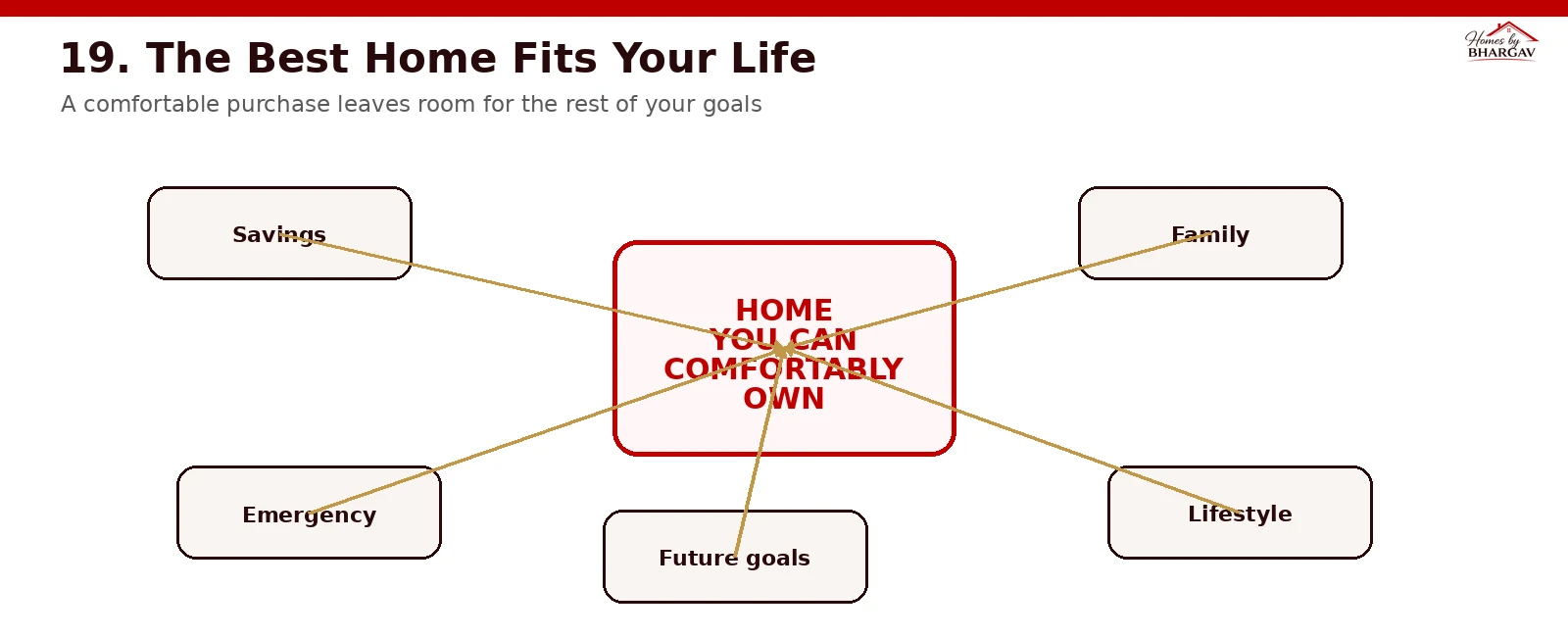
The most expensive property a lender allows you to buy is rarely the best home for your life.
A truly great home purchase leaves room for family milestones, weekend travel, hobbies, retirement savings, and peace of mind. It allows you to enjoy your home rather than feeling house-poor every time the mortgage draft clears.
20. Ready-to-Shop Checklist
Before scheduling private showings or making written purchase offers, verify every item on this ready-to-shop checklist:
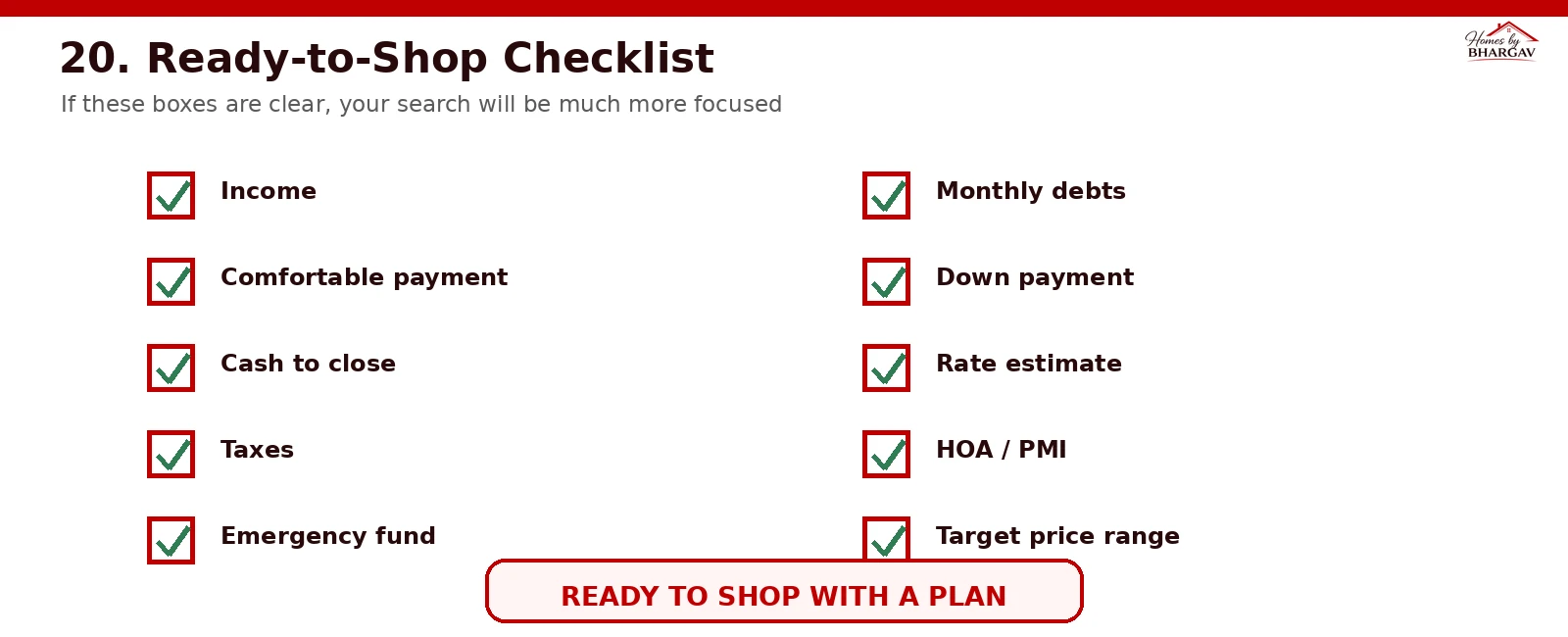
Your Verified Pre-Touring Checklist:
Ready to Find a Home That Fits Your Life?
Homes by Bhargav helps buyers compare Chicagoland homes based on the complete cost — not just the listing price. Let’s analyze tax assessments, evaluate suburban inventory, and create your personalized purchasing plan.
Bhargav Shah — REALTOR®
Homes by Bhargav